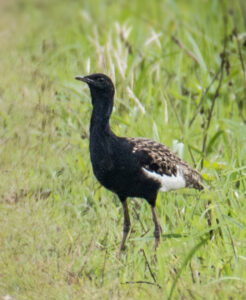
The great bustard is a huge, stately bird of open grasslands and farmland in Europe and Asia. Its populations have declined sharply as farming has intensified.
Interesting facts
- Males can weigh about three times as much as females.
- Spain holds most of the world’s great bustards.
- Great bustards became extinct in Britain in 1832.
- A reintroduction project on Salisbury Plain in England has been running since 2004.
- During display, males inflate their necks and turn their wings and tails inside out.
- They are wary birds of wide, open landscapes.
Behaviour
Great bustards live in flocks outside the breeding season. In spring, males gather at display grounds called leks to impress females.
Breeding and young
Females lay two or three eggs in a scrape on the ground and raise the chicks alone.
Threats and conservation
Intensification of farming, collisions with power lines, hunting in parts of Asia, and habitat loss.
Where to see it
- Extremadura and Villafáfila, Spain
- Castro Verde, Portugal
- Salisbury Plain, England (reintroduced)
- Steppes of Hungary and Austria
Status source: IUCN Red List. Profile last reviewed September 2026.
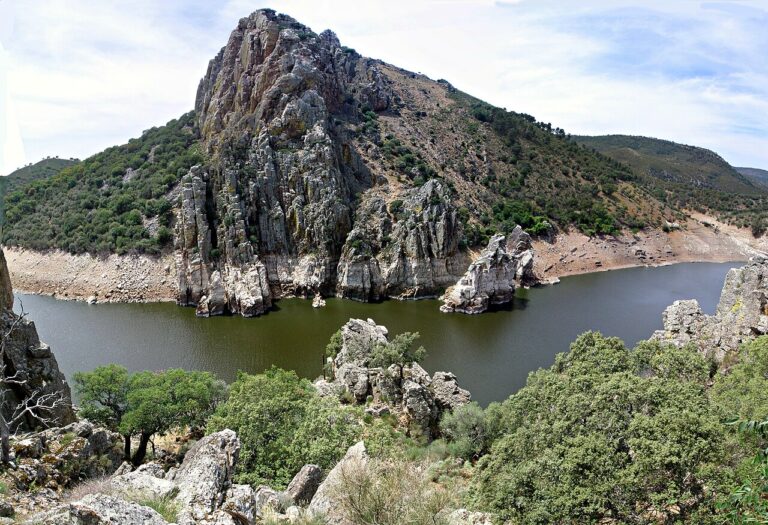 Birding in Extremadura and Monfragüe
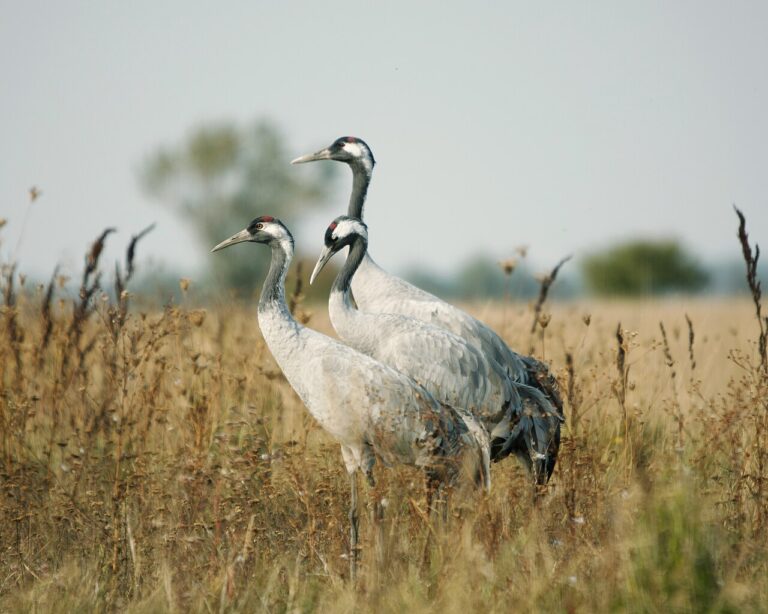 Crane Migration at Hortobágy