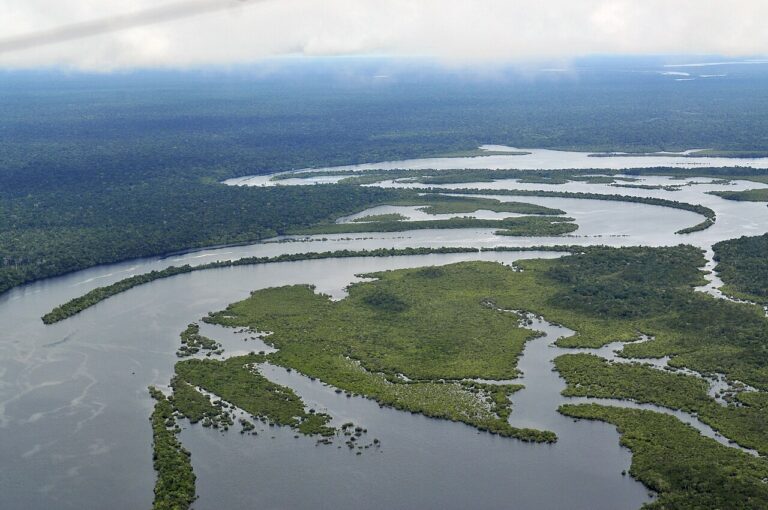
The Amazon river dolphin, or boto, is a large, pink freshwater dolphin of the Amazon and Orinoco basins. Its flexible body lets it hunt in the flooded forest, where it plays an important role in river ecosystems and in local folklore.
Interesting facts
- It is the largest river dolphin in the world.
- Unfused neck vertebrae let it turn its head up to 90 degrees to manoeuvre among roots and branches.
- Males are usually pinker than females, perhaps because of scarring from fights.
- Local legends tell of the ‘boto’ turning into a handsome man at night.
- Its small eyes and long, thin beak suit murky water, where it relies on echolocation.
- Studies in Brazil have found populations halving about every ten years.
Behaviour
Botos are usually seen alone or in small groups. They are curious and playful and have been seen carrying sticks or weeds, possibly as displays. During the high-water season, they move into flooded forests to hunt.
Breeding and young
After a gestation of about 11 months, a single calf is born, usually when water levels are high. Calves stay with their mothers for several years.
Threats and conservation
Illegal killing for use as bait in catfish fisheries, entanglement in fishing nets, mercury pollution from gold mining, dams that fragment rivers and droughts linked to climate change. In 2023, extreme heat and drought killed well over 100 dolphins in Lake Tefé, Brazil.
Where to see it
- Mamirauá Sustainable Development Reserve, Brazil
- Pacaya-Samiria National Reserve, Peru
- Amazon river cruises from Iquitos, Peru, or Manaus, Brazil
- Llanos of the Orinoco, Venezuela and Colombia
Status source: IUCN Red List. Profile last reviewed September 2026.
 Amazon Rainforest Lodges: How to Choose
 Yasuní and the Ecuadorian Amazon