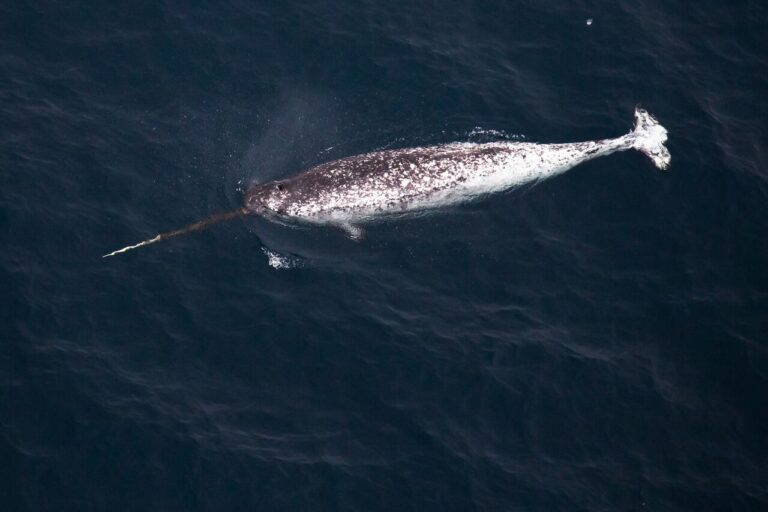
The narwhal is a medium-sized Arctic whale famous for the long, spiralled tusk of the males. It lives in some of the most remote, ice-covered waters on Earth and remains one of the least understood whales.
Interesting facts
- The tusk is usually the left canine tooth of males; some females grow tusks, and a few narwhals have two.
- In medieval Europe, narwhal tusks were sold as unicorn horns.
- Narwhals can dive deeper than 1,500 metres.
- They spend the whole year in the Arctic and winter under thick pack ice.
- Narwhals change colour with age, from grey-blue calves to mottled adults and almost white old animals.
- Drone footage has shown narwhals using their tusks to stun fish.
Behaviour
Narwhals travel in groups of a few to dozens, and gather in hundreds or thousands during migrations. In summer they feed in fjords and coastal waters, and in winter they move offshore to dense pack ice, breathing through cracks.
Breeding and young
After a gestation of about 14–15 months, a single calf is born in spring or early summer. Calves nurse for over a year.
Threats and conservation
Climate change and loss of sea ice, increasing shipping and noise, oil and gas exploration, and orcas moving further into the Arctic. Narwhals are hunted sustainably by Inuit communities.
Where to see it
- Pond Inlet (Mittimatalik) and Arctic Bay, Nunavut, Canada
- Admiralty Inlet, Baffin Island
- Northwest Greenland, near Qaanaaq
- Arctic expedition cruises in summer
Status source: IUCN Red List. Profile last reviewed September 2026.
Where to see the narwhal
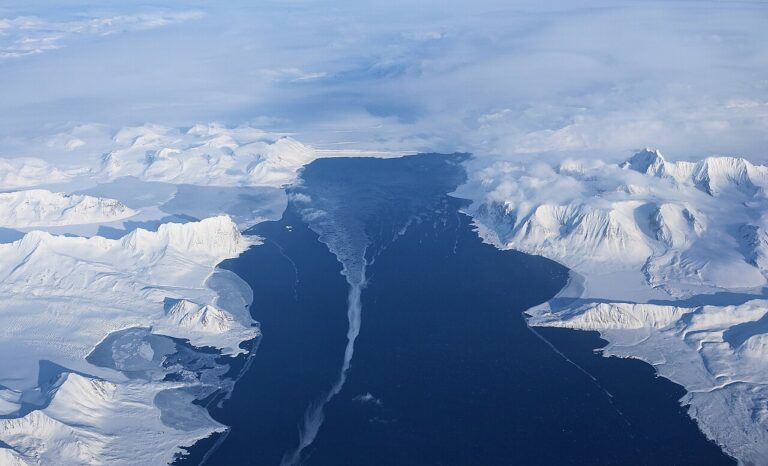 Arctic Wildlife Cruises: Svalbard, Greenland and CanadaArctic expedition cruises offer polar bears, walruses, whales and icebergs. How Svalbard, Greenland and the Canadian Arctic compare.
 Narwhal and Polar Bear Expeditions in Arctic CanadaAt the floe edge in the Canadian Arctic, narwhals, polar bears and belugas gather where the sea ice…