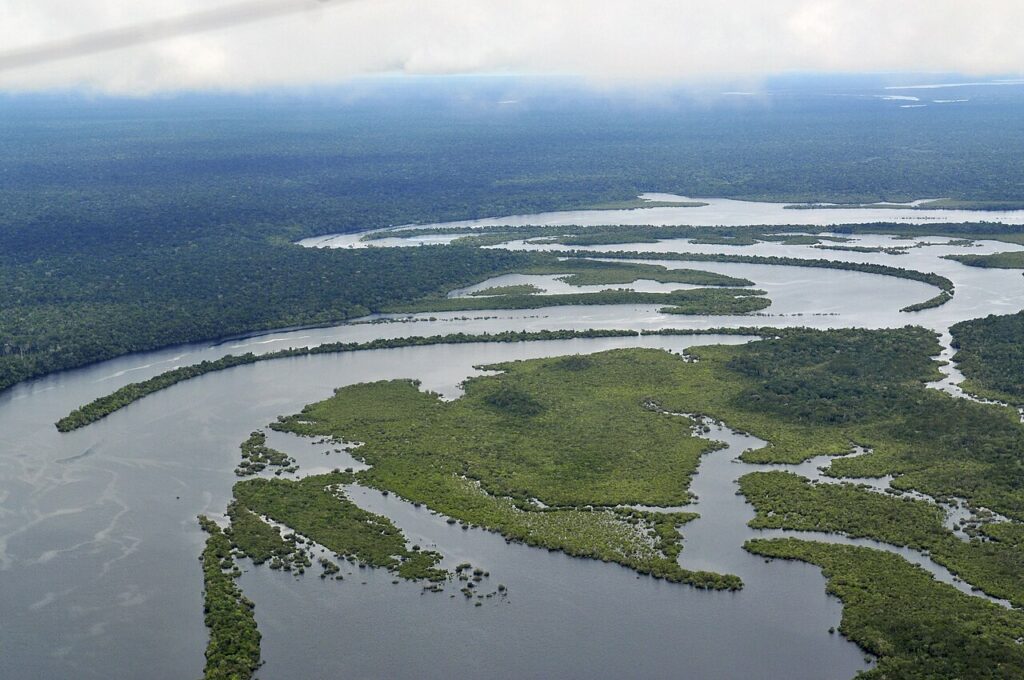
The Amazon is the largest rainforest on Earth, spread across nine countries and holding around one in ten of all known species. Choosing where to go can feel overwhelming: the wildlife you see depends far more on a lodge’s location and guides than on its luxury. Here is how to choose.
At a glance
| Best time | Year-round; high-water season (roughly December to May) and low-water season (June to November) offer different experiences |
| Main gateways | Manaus (Brazil), Iquitos and Puerto Maldonado (Peru), Coca (Ecuador), Rurrenabaque (Bolivia) |
| Time needed | 3 to 5 nights in a lodge |
| Big draws | Macaws, monkeys, giant otters, river dolphins, birds, canopy towers |
Choosing a country
| Country | Gateway | Strengths |
|---|---|---|
| Peru (south) | Puerto Maldonado | Macaw clay licks, giant otters, excellent lodges in Tambopata and Manu |
| Peru (north) | Iquitos | River cruises, pink river dolphins, flooded forest |
| Ecuador | Coca | Yasuní’s extraordinary biodiversity, canopy towers, parrot clay licks |
| Brazil | Manaus | The largest area of forest, the meeting of the waters, river cruises; wildlife near Manaus can be sparse |
| Bolivia | Rurrenabaque | Madidi National Park, pampas tours with easy wildlife viewing |
What makes a good wildlife lodge?
- Remoteness: lodges far from towns and inside or next to protected areas see more wildlife. Lodges near Manaus or Iquitos may have less.
- Canopy towers or walkways: much Amazon wildlife lives high in the trees.
- Clay licks: in south-eastern Peru and eastern Ecuador, parrots and macaws gather at clay banks.
- Oxbow lakes: good for giant otters, hoatzins and caimans. See our giant otter profile.
- Expert naturalist guides, ideally from local communities.
- Small groups (six or fewer per guide).
- Community ownership or partnership, which spreads benefits.
Lodges or river cruises?
- Lodges offer walks, canopy towers and clay licks.
- River cruises (mainly from Iquitos and Manaus) cover more ground in comfort, with skiff excursions, and suit less mobile travellers.
Wildlife to expect
- Monkeys: howler, spider, capuchin, squirrel and tamarins. See our howler monkey profile.
- Birds: macaws, toucans, hoatzins, harpy eagles (rare). See our scarlet macaw and hoatzin profiles.
- River life: pink river dolphins, caimans, giant otters. See our Amazon river dolphin profile.
- Rare sightings: jaguars, tapirs and anacondas.
- Insects, frogs and reptiles on night walks.
When to go
- High water (roughly December to May): flooded forest; canoe trips through the trees; fruit attracts monkeys.
- Low water (June to November): beaches and trails exposed; better for walks, clay licks and wildlife concentrated near rivers.
Frequently asked questions
Which country is best for the Amazon? For wildlife, south-eastern Peru (Tambopata and Manu) and eastern Ecuador (Yasuní) are often considered the best.
Can I see jaguars in the Amazon? Possibly, but they are hard to see in dense forest. For jaguars, the Pantanal is far more reliable.
How many nights should I stay? At least three nights; four or five for a deeper experience.
Is the Amazon safe? Lodge-based trips with reputable operators are generally safe. Follow health advice on vaccinations and insect protection.
Related guides
- Tambopata and Manu: macaw clay licks and giant otters
- Yasuní and the Ecuadorian Amazon
- Pantanal jaguar safari guide
- Animal profiles: Giant otter, Scarlet macaw, Amazon river dolphin
Cover photo: CIAT, CC BY-SA 2.0, via Wikimedia Commons