Yasuní National Park, in eastern Ecuador, protects about 10,000 km² of lowland Amazon rainforest. Scientists have recorded astonishing numbers of species here: in a single hectare of forest, there can be more tree species than in all of North America. With lodges along the Napo River, it is one of the most rewarding places in the Amazon for wildlife.
At a glance
| Best time | Year-round; drier from about December to March and August to September |
| Getting there | Fly from Quito to Coca (30 minutes), then a motorboat along the Napo River |
| Time needed | 4 to 5 nights |
| Big draws | Parrot clay licks, canopy towers, monkeys, birds |
| Good for | Birders, naturalists, community tourism |
Wildlife
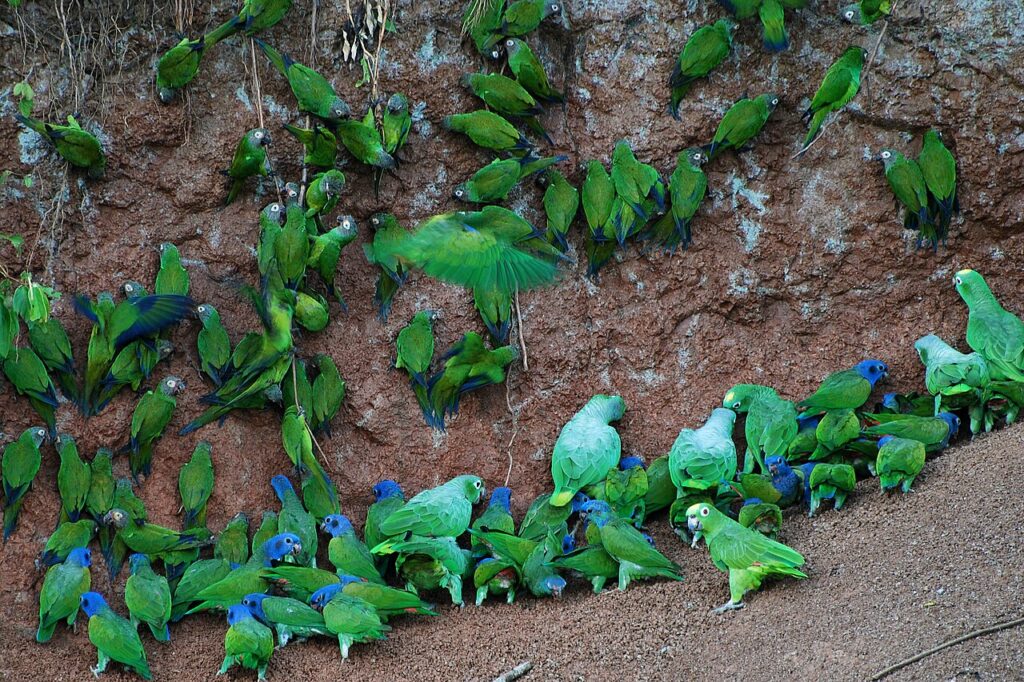
- Parrot clay licks: along the Napo River, hundreds of parrots, parakeets and sometimes macaws gather at clay licks in the morning.
- Canopy towers: several lodges have towers or walkways rising above the forest, where you can see toucans, tanagers, macaws, monkeys and raptors at eye level.
- Monkeys: up to ten species, including pygmy marmosets (the smallest monkeys), woolly monkeys, howler monkeys and saki monkeys. See our squirrel monkey profile.
- Birds: around 600 species, including hoatzins, harpy eagles (rare), antbirds and manakins. See our hoatzin profile.
- Other wildlife: giant otters, caimans, tapirs, and a huge diversity of frogs and insects.
Community lodges
Several lodges in the Yasuní area are owned or co-managed by Kichwa communities, which receive income from tourism and employ local guides with deep knowledge of the forest. Staying at a community lodge directly supports forest protection.
Oil and conservation
Beneath parts of Yasuní lie large oil reserves. In 2023, Ecuadorians voted in a national referendum to stop oil extraction in part of the park (Block 43), a landmark decision for conservation, although implementing it has been slow. Oil roads and development elsewhere continue to threaten the forest and the Indigenous peoples who live in voluntary isolation in the park.
When to go
Yasuní receives rain year-round. The drier periods (roughly December to March and August to September) have lower rivers and can be good for clay licks. Wetter months bring higher water and canoe trips through flooded forest.
Getting there
Fly from Quito to Coca (Puerto Francisco de Orellana), then travel two to three hours by motorboat along the Napo River to the lodges.
Frequently asked questions
Is Yasuní worth visiting? Yes. It is one of the most biodiverse places on Earth and has excellent lodges and guides.
What is the best lodge in Yasuní? Look for lodges with canopy towers, access to clay licks and local community involvement.
Can I see jaguars in Yasuní? Jaguars live there, but sightings are rare in dense forest.
Do I need vaccinations? Yellow fever vaccination and malaria advice may apply. Check with a travel health clinic.
Related guides
- Amazon rainforest lodges: how to choose
- Mindo cloud forest birding
- Galápagos Islands wildlife guide
- Animal profiles: Hoatzin, Squirrel monkey, Amazon river dolphin
Cover photo: Geoff Gallice from Gainesville, CC BY 2.0, via Wikimedia Commons