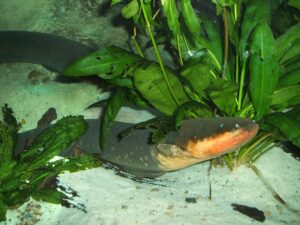
The arapaima is a giant, air-breathing fish of the Amazon. Overfishing once made it rare in many areas, but community-based management has become a model for sustainable fishing.
Interesting facts
- It is one of the largest freshwater fish in the world.
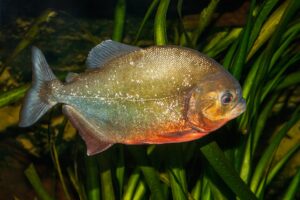
- Its tough, layered scales resist bites from piranhas and have inspired designs for body armour.
- It is called pirarucu in Brazil and paiche in Peru.
- Community-managed fishing in reserves such as Mamirauá has helped arapaima numbers increase many times over.
- Males guard their young, which swim near their heads.
- Its tongue has teeth, used to crush prey against the roof of its mouth.
Behaviour
Arapaima patrol lakes and flooded forests, surfacing regularly to breathe. In the dry season, they become concentrated in shrinking lakes.
Breeding and young
Pairs build nests in sandy lake bottoms during low water. Males guard the eggs and young for months.
Threats and conservation
Overfishing and illegal fishing, and habitat change from dams and deforestation.
Where to see it
- Mamirauá Sustainable Development Reserve, Brazil
- Pacaya-Samiria National Reserve, Peru
- Rewa and the Rupununi, Guyana
- Public aquariums worldwide
Status source: IUCN Red List. Profile last reviewed September 2026.
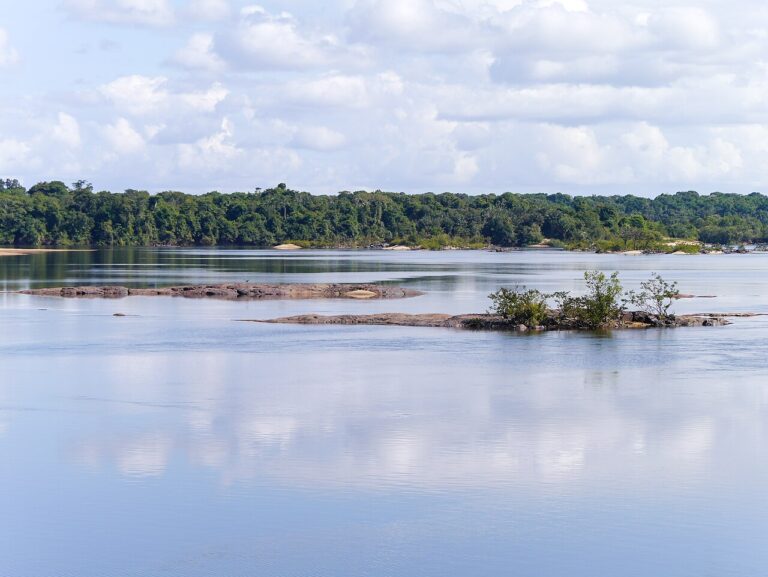 Rupununi and Iwokrama: Guyana’s Wild Interior