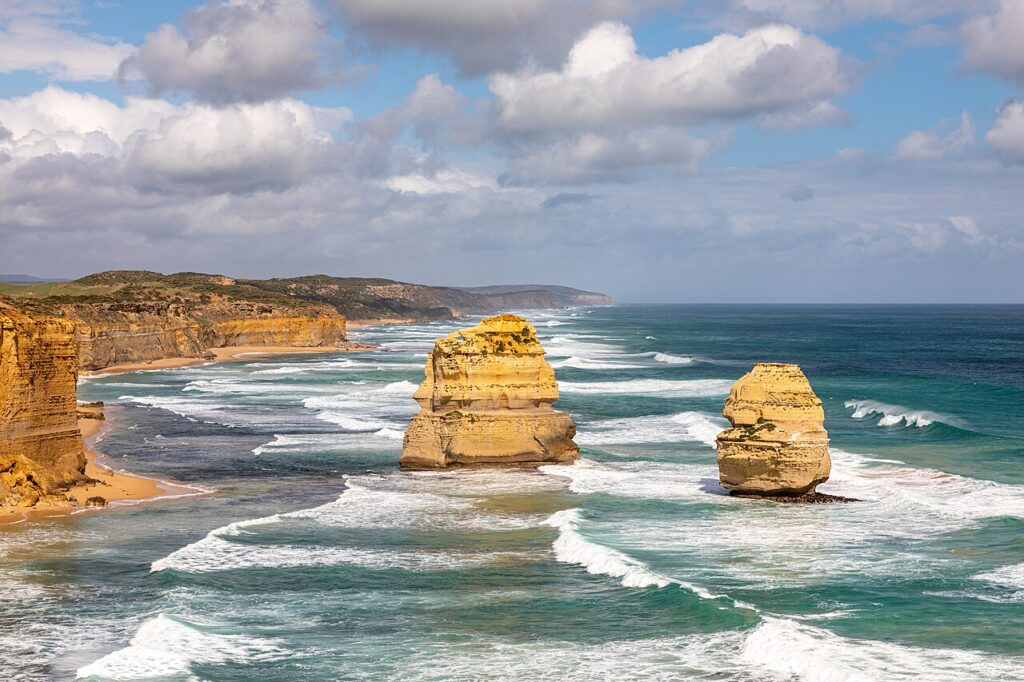
Australia’s wildlife is unlike anywhere else: marsupials, monotremes, cassowaries and some of the world’s richest reefs. Distances are huge, so a wildlife trip needs careful planning. This three-week route combines domestic flights with road trips to cover tropical Queensland, South Australia’s Kangaroo Island, Victoria’s Great Ocean Road and Tasmania.
At a glance
| Best time | September to November (spring) or March to May (autumn) |
| Start and end | Fly into Cairns; fly out of Hobart or Melbourne |
| Time needed | 21 days |
| Big draws | Reef, cassowaries, platypuses, koalas, kangaroos, wombats, devils |
| Good for | First-time visitors, families, photographers |
The itinerary
| Days | Region | Highlights |
|---|---|---|
| 1–3 | Cairns and the Great Barrier Reef | Snorkelling or diving on the outer reef with a responsible operator. See our reef guide |
| 4–5 | Daintree and Cape Tribulation | Cassowaries, Daintree River crocodile cruise, rainforest walks. See our Daintree guide |
| 6–7 | Atherton Tablelands | Platypuses at Yungaburra, tree kangaroos, spotlighting for possums |
| 8 | Fly to Adelaide | |
| 9–11 | Kangaroo Island | Sea lions at Seal Bay, kangaroos, echidnas, koalas. See our Kangaroo Island guide |
| 12 | Fly to Melbourne | Optional evening penguin parade on Phillip Island |
| 13–15 | Great Ocean Road | Koalas at Kennett River and Cape Otway, kangaroos at Anglesea, the Twelve Apostles. See our koala guide |
| 16 | Fly to Hobart | |
| 17–18 | Maria Island and the east coast | Wombats, Forester kangaroos, Cape Barren geese |
| 19–20 | Cradle Mountain | Wombats, pademelons, echidnas; devil-spotting tour. See our Tasmania guide |
| 21 | Fly home via Hobart or Launceston |
Alternatives
- Western Australia: swap Kangaroo Island for Ningaloo’s whale sharks (March to July) and Rottnest’s quokkas. See our Ningaloo guide.
- The Top End: add Kakadu (May to October) for crocodiles, birds and rock art. See our Kakadu guide.
- The outback: add Uluṟu for red kangaroos, thorny devils and desert landscapes. See our red kangaroo profile.
Travel tips
- Book domestic flights early: distances are too great to drive between regions.
- Avoid driving at dawn, dusk and night in rural areas because of kangaroos and wombats on roads.
- Protect yourself from the sun, and follow crocodile and box jellyfish warnings in the tropics.
- Choose eco-certified tour operators.
When to go
- September to November: spring; joeys, flowers, whale migration in the south.
- March to May: autumn; pleasant weather across much of the country.
- June to August: the tropical north’s dry season (best for the Daintree and Kakadu), but cold in Tasmania and Victoria.
- December to February: hot, with box jellyfish and wet season in the north.
Frequently asked questions
Is three weeks enough for Australia’s wildlife? It covers several of the best regions. Australia is vast, so you will always need to choose.
Where can I see kangaroos? Almost everywhere on this route, especially Kangaroo Island, Anglesea and Maria Island.
Should I self-drive? Yes, for the Great Ocean Road, Kangaroo Island and Tasmania. Use tours for the reef and night wildlife.
When is the best time for the Great Barrier Reef? June to October offers dry weather and no box jellyfish season in the north.
Related guides
- Great Barrier Reef: a responsible reef trip
- Tasmania wildlife guide
- Where to see a platypus in the wild
- Animal profiles: Koala, Southern cassowary, Tasmanian devil
Cover photo: Dietmar Rabich, CC BY-SA 4.0, via Wikimedia Commons