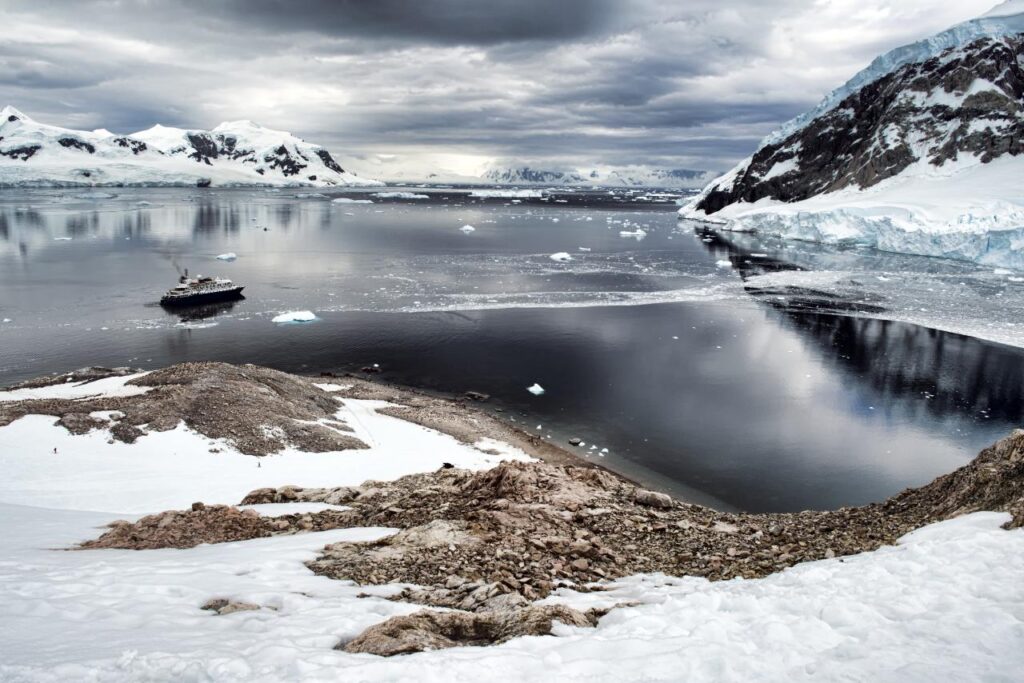
A visit to Antarctica is a once-in-a-lifetime journey to a continent without permanent human residents, where penguins, seals and whales live among glaciers and icebergs. Almost all visitors travel on small expedition ships to the Antarctic Peninsula, the most accessible part of the continent. Longer voyages add the Falkland Islands and South Georgia, home to some of the largest king penguin colonies on Earth.
Antarctica cruises at a glance
| Season | November to March (the austral summer) |
| Main departure port | Ushuaia, Argentina |
| Other routes | Fly-cruise from Punta Arenas, Chile, to King George Island; Ross Sea voyages from New Zealand or Australia |
| Typical trips | Antarctic Peninsula: 10 to 12 days; with Falklands and South Georgia: 18 to 23 days |
| Visitor rules | IAATO guidelines: small landing groups, no touching wildlife, strict biosecurity |
| Famous for | Gentoo, Adélie and chinstrap penguins; humpback whales; leopard seals; icebergs |
Routes
Classic Antarctic Peninsula
The most popular trip sails from Ushuaia across the Drake Passage, around 1,000 km of open ocean that takes about two days each way. Crossings can be calm (the “Drake Lake”) or very rough (the “Drake Shake”). Once in Antarctica, ships visit sites such as Paradise Harbour, the Lemaire Channel, Neko Harbour, Cuverville Island and the South Shetland Islands. Days are spent landing by Zodiac, cruising among icebergs and watching whales.
Fly-cruise
Several operators fly guests from Punta Arenas in Chile to King George Island, skipping the Drake Passage crossing by sea. This saves time and reduces seasickness risk, but flights can be delayed by weather.
Falklands, South Georgia and Antarctica
This longer voyage adds the wildlife-rich Falklands (black-browed albatrosses, rockhopper penguins) and South Georgia, where colonies at Salisbury Plain, St Andrews Bay and Gold Harbour hold tens of thousands of king penguins, and beaches are packed with elephant seals and fur seals. It is often considered the ultimate polar wildlife journey.
Ross Sea and East Antarctica
Rare, expensive voyages from New Zealand or Australia visit the Ross Ice Shelf, historic explorers’ huts and emperor penguin colonies in some years.
When to go
| Month | Highlights |
|---|---|
| November | Pristine snow and ice; penguin courtship and nest building; fewer visitors; cold |
| December to January | Penguin chicks hatch; nearly 24-hour daylight; warmest temperatures; peak season |
| February to March | Best whale watching; penguin chicks begin to fledge; fur seals on beaches; dramatic sunsets |
Wildlife
- Penguins: gentoo, Adélie and chinstrap penguins on the peninsula; king, macaroni and rockhopper penguins in South Georgia and the Falklands. Emperor penguins are rarely seen except on specialist trips.
- Whales: humpback, minke, fin and orca, as well as occasional southern right and blue whales.
- Seals: leopard, Weddell, crabeater, Antarctic fur and southern elephant seals.
- Birds: wandering, black-browed and light-mantled albatrosses; giant petrels; snow petrels; skuas.
All of this depends on Antarctic krill, small crustaceans that form the base of the Southern Ocean food web.
Choosing a ship
- Small ships (under 200 passengers) allow more time ashore. Under IAATO rules, no more than 100 people may be ashore at a site at once.
- Ships with more than 500 passengers are not permitted to land passengers at all, so passengers only see Antarctica from the deck.
- Look for ice-strengthened (polar class) ships, experienced expedition teams with naturalists, and activities such as kayaking, camping and citizen science.
Costs
Antarctic expeditions are expensive. As a rough guide, classic peninsula trips on standard ships start at around US$7,000 to US$10,000 per person, while longer South Georgia voyages, fly-cruises and luxury ships cost considerably more. Last-minute deals are sometimes available in Ushuaia, but choice is limited.
Visitor rules and biosecurity
- Stay at least 5 metres from penguins and seals, and more from fur seals and leopard seals.
- Clean and vacuum clothing and bags before landings to avoid introducing seeds and soil.
- Wash boots in disinfectant before and after each landing.
- Never leave anything behind or take souvenirs, including stones and bones.
Packing essentials
- Waterproof, windproof jacket and trousers (many ships provide a parka)
- Thermal layers, fleece, warm hat, neck gaiter and waterproof gloves
- Rubber boots (often provided by the ship)
- Sunglasses and high-factor sunscreen: snow and ice reflect strong UV
- Seasickness remedies
- Binoculars, camera, spare batteries and a dry bag
Frequently asked questions
When is the best time to visit Antarctica? December and January offer the warmest weather, long days and penguin chicks. November is best for pristine snow, and February to March for whales.
How rough is the Drake Passage? It varies from calm to very rough. Crossings take about two days each way. Seasickness remedies help, or you can choose a fly-cruise that avoids the crossing.
Can I see emperor penguins on a normal cruise? Rarely. Emperor penguins breed deep in the Antarctic winter away from the usual peninsula routes. Special voyages to the Weddell Sea or Ross Sea offer a better chance.
How much does an Antarctica cruise cost? Classic peninsula trips often start around US$7,000 to US$10,000 per person, with longer and luxury voyages costing much more.
Related guides
- Churchill polar bears guide
- Wildlife of Antarctica
- Wildlife photography for beginners
- Animal profiles: Emperor Penguin, Leopard Seal, Weddell Seal, Humpback Whale, Antarctic Krill, Wandering Albatross
Cover photo: Christopher Michel, CC BY 2.0, via Wikimedia Commons