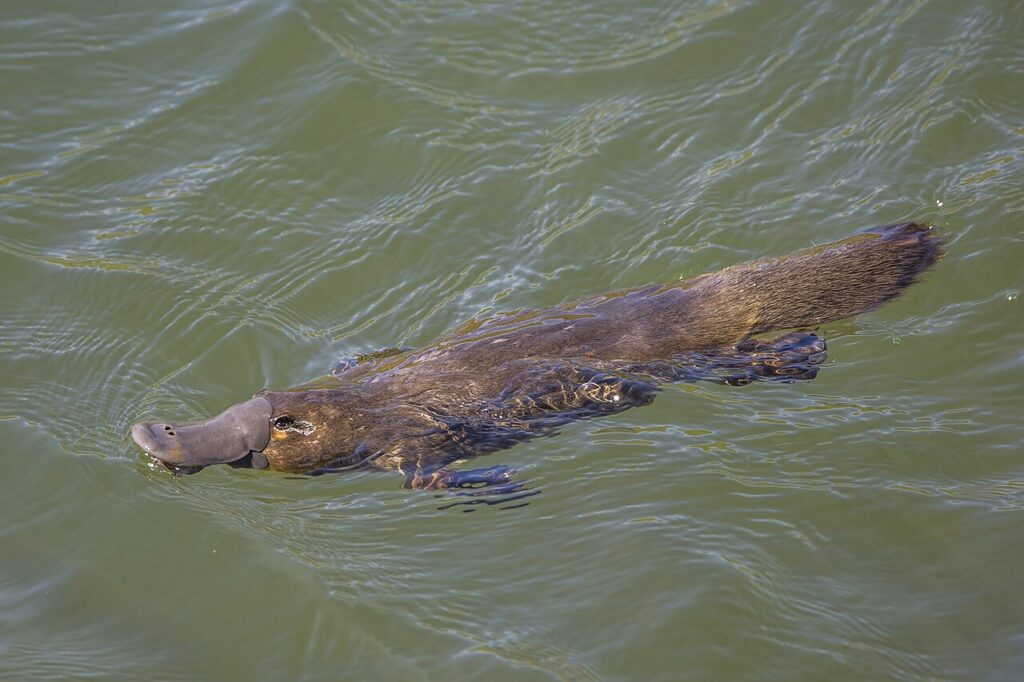
The platypus is one of the strangest animals on Earth: a furry, egg-laying mammal with a duck-like bill, webbed feet and, in males, venomous spurs. It lives only in eastern Australia and Tasmania, in rivers, creeks and lakes. Platypuses are shy and small (about 40 to 50 cm long), and many Australians have never seen one in the wild. But in the right places and at the right time, sightings are very achievable. See our platypus profile.
At a glance
| Best times | Dawn and dusk |
| Best places | Eungella (Queensland), Atherton Tablelands (Queensland), Tasmania, Victoria |
| Tips | Stand quietly by calm water and watch for ripples and bubbles |
The best places to see platypuses
Eungella National Park, Queensland
Broken River, in the rainforest-clad Eungella National Park near Mackay, has a viewing platform where platypuses are regularly seen, even in the middle of the day on overcast days. One of the most reliable sites in Australia.
Atherton Tablelands, Queensland
Peterson Creek in Yungaburra has a platypus viewing trail, and Tarzali Lakes offers good sightings. Combine with tree kangaroos and rainforest birds. See our Daintree guide.
Tasmania
- Warrawee Forest Reserve and the town of Latrobe, which calls itself the “platypus capital of the world”.
- Tasmanian Arboretum near Devonport.
- Mount Field National Park.
See our Tasmania guide.
Victoria
Lake Elizabeth in the Otway Ranges is well known for platypus-spotting canoe tours at dawn and dusk. Platypuses also live in rivers close to Melbourne, such as the Yarra.
New South Wales
The Bombala Platypus Reserve and rivers in the Blue Mountains and around Armidale.
How to spot a platypus
- Go at dawn or dusk, when platypuses are most active.
- Choose calm water: look for concentric ripples, bubbles and a small, flat head and back on the surface.
- Stand still and stay quiet: platypuses are sensitive to vibrations.
- Be patient: they dive for 30 to 140 seconds while foraging, then surface briefly to chew food.
- Avoid torches or bright lights.
Conservation
The platypus is listed as Near Threatened by the IUCN. Drought, river regulation, bushfires, pollution and fishing nets and yabby traps (which drown platypuses) are major threats. Studies suggest the platypus’s range and numbers have declined significantly since European settlement.
Frequently asked questions
Where is the best place to see a platypus? Broken River in Eungella National Park, Queensland, is one of the most reliable.
When is the best time? Dawn and dusk, when they forage.
Are platypuses venomous? Males have venomous spurs on their hind legs, used mainly against other males. Never handle a platypus.
Can I see platypuses near Melbourne or Sydney? Yes, in some rivers and lakes near both cities, though sightings require patience.
Related guides
- Tasmania wildlife guide
- Where to see koalas in the wild
- Daintree Rainforest wildlife guide
- Animal profiles: Platypus, Short-beaked echidna
Cover photo: Charles J. Sharp, CC BY-SA 4.0, via Wikimedia Commons