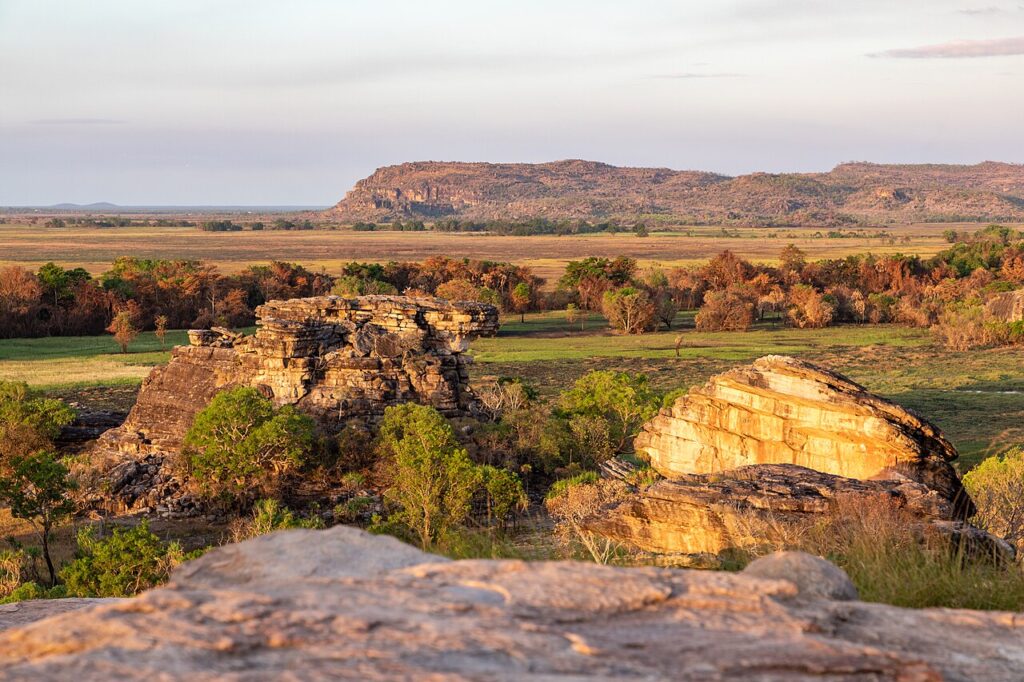
Kakadu National Park, in Australia’s Northern Territory, is the country’s largest national park, covering almost 20,000 km². It is a UNESCO World Heritage Site for both its natural and cultural values: wetlands full of crocodiles and birds, sandstone escarpments with waterfalls, and rock art created by Aboriginal people over tens of thousands of years. The park is jointly managed by its traditional owners, the Bininj/Mungguy people, and Parks Australia.
At a glance
| Best time | May to October (dry season) |
| Getting there | About 3 hours by road from Darwin |
| Time needed | 3 to 4 days |
| Big draws | Saltwater crocodiles, waterbirds, rock art, waterfalls |
| Good for | Road trips, culture and nature combined |
Wildlife
- Saltwater crocodiles: Kakadu has large numbers, and Yellow Water (Ngurrungurrudjba) cruises regularly see big crocodiles. See our saltwater crocodile profile.
- Waterbirds: vast flocks of magpie geese, whistling ducks, egrets, jabirus (black-necked storks), brolgas and jacanas. See our great egret profile.
- Raptors: white-bellied sea eagles, black kites and whistling kites.
- Wallabies: agile wallabies are common; black wallaroos live on the escarpment.
- Other wildlife: dingoes, frilled lizards, goannas and, at night, possums and flying foxes. See our frilled lizard and dingo profiles.
Aboriginal rock art
- Ubirr: rock art galleries and a sunset lookout over the Nadab floodplain.
- Burrungkuy (Nourlangie): rock shelters with paintings, including the Lightning Man.
- Guided cultural tours led by Bininj guides share stories and knowledge.
Waterfalls and landscapes
Jim Jim and Twin Falls (accessible by 4×4 in the dry season), Gunlom and Maguk plunge pools, and the escarpment country. Swim only in designated areas where crocodile management is in place.
The six seasons
Bininj/Mungguy people recognise six seasons, from Gudjewg (monsoon, around January to March) to Gurrung (hot and dry, around August to September). For visitors, the main distinction is:
- Dry season (May to October): roads open, pleasant temperatures, wildlife concentrated at shrinking waterholes.
- Wet season (November to April): storms, floods and some road closures, but dramatic waterfalls, green landscapes and huge bird numbers.
Safety
Crocodiles live in rivers, billabongs and coastal waters. Never swim outside designated areas, stay away from the water’s edge and obey warning signs.
Frequently asked questions
When is the best time to visit Kakadu? The dry season, May to October, when roads are open. Late in the dry season, wildlife concentrates at waterholes.
Where can I see crocodiles in Kakadu? On Yellow Water cruises, and at Cahills Crossing on the East Alligator River at high tide.
Is it safe to swim in Kakadu? Only in designated swimming areas. Crocodiles can be present in any waterway.
Do I need a park pass? Yes, a Kakadu park pass is required.
Related guides
- Daintree Rainforest wildlife guide
- Australia wildlife itinerary: 3 weeks
- Great Barrier Reef guide
- Animal profiles: Saltwater crocodile, Frilled lizard, Dingo
Cover photo: Dietmar Rabich, CC BY-SA 4.0, via Wikimedia Commons