Each year, from about May to July, huge shoals of sardines (Southern African pilchards) move north along South Africa’s east coast with a tongue of cold water. They draw one of the greatest gatherings of marine predators on Earth: thousands of common dolphins, Cape gannets diving from the sky, sharks, seals and whales. The Sardine Run is often called the ocean’s version of the Great Migration, but it is far less predictable.
At a glance
| Best time | Mid-June to mid-July |
| Getting there | Operators are based on the Wild Coast (Eastern Cape) and KwaZulu-Natal south coast |
| Time needed | A trip of 5 to 10 days on the water |
| Big draws | Bait balls, dolphins, sharks, diving gannets, humpback whales |
| Good for | Experienced snorkellers and divers, underwater photographers |
What happens
When conditions are right, cold water pushes up the coast and sardines follow it, forming shoals that can stretch for kilometres. Predators herd parts of the shoal into tight “bait balls” near the surface. Dolphins drive the fish up, gannets plunge into the water at high speed, and sharks and even Bryde’s whales tear through the ball. A bait ball can form and vanish within minutes.
Wildlife
- Common dolphins: superpods of hundreds or thousands.
- Sharks: copper (bronze whaler) sharks, dusky sharks and blacktip sharks.
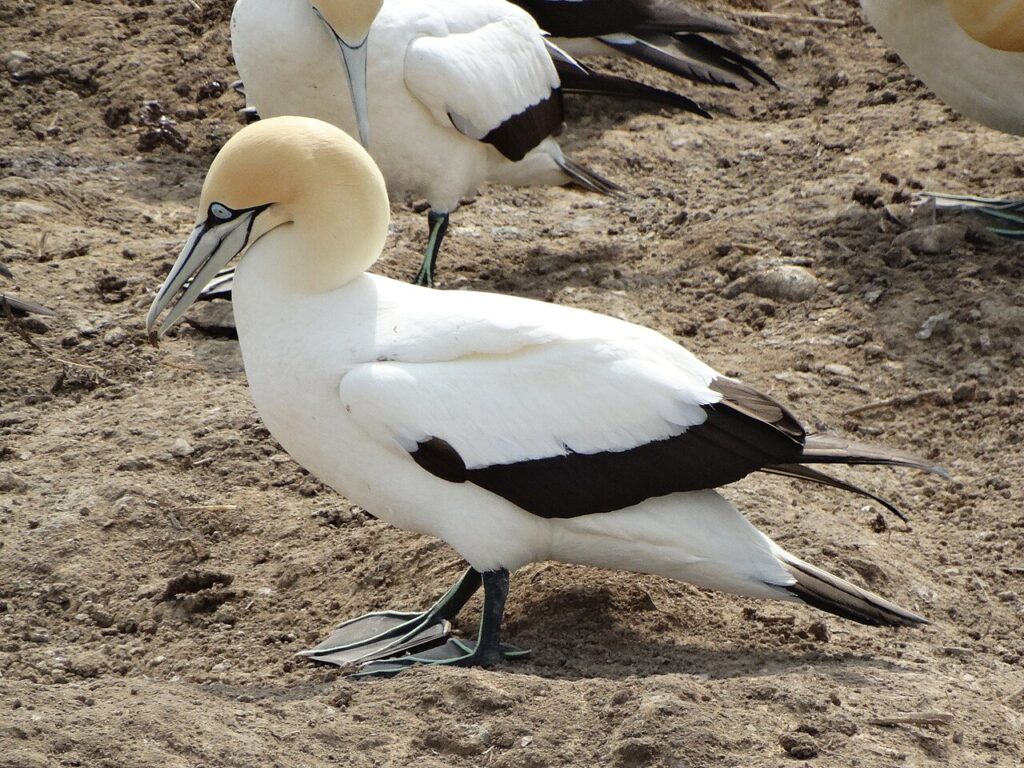
- Cape gannets: diving in their hundreds.
- Whales: humpback whales migrate north at the same time, and Bryde’s whales feed on the bait balls. See our humpback whale profile.
- Cape fur seals also follow the shoals.
Diving and snorkelling
- Much of the action is best seen by snorkelling, as bait balls move too fast for divers to follow. Divers join when a ball stays stable.
- Boats (usually rigid inflatables) launch through the surf, which can be rough, and spend long days at sea searching.
- Water temperatures are typically 17 to 21°C, so a thick wetsuit is needed.
- Operators often use spotter planes or microlights to find activity.
- You should be a confident swimmer and snorkeller, and divers should have open water experience in ocean conditions.
Where it happens
The best-known bases are on the Wild Coast around Port St Johns, Coffee Bay and East London, and further north on the KwaZulu-Natal south coast. The run’s timing and location vary from year to year, and some years the sardines barely appear.
Choosing an operator
- Choose experienced operators with strong safety records and marine permits.
- Book a trip of at least five to seven days, because activity is unpredictable.
- Ask about group size, the ratio of guides to guests and how they use spotter aircraft.
- Ask what happens on days with no sardines: many operators offer alternative dives or whale watching.
Frequently asked questions
When is the Sardine Run? Usually from late May to late July, with the best action often between mid-June and mid-July.
Is the Sardine Run guaranteed? No. It depends on ocean conditions, and some years there is little activity. Longer trips improve your chances.
Do I need to be a diver? No. Snorkelling is often the best way to see bait balls. You do need to be a confident swimmer in open, sometimes rough, water.
Is it dangerous? The sharks are focused on the sardines, and serious incidents are very rare. Operators brief you on behaviour in the water. The biggest challenges are rough seas and cold.
Related guides
- Swimming with whale sharks and mantas in Tofo
- Hluhluwe-iMfolozi and iSimangaliso
- Cape Town wildlife guide
- Animal profiles: Bottlenose dolphin, Northern gannet, Humpback whale
Cover photo: Avitopia www.avitopia.net, CC BY-SA 3.0, via Wikimedia Commons