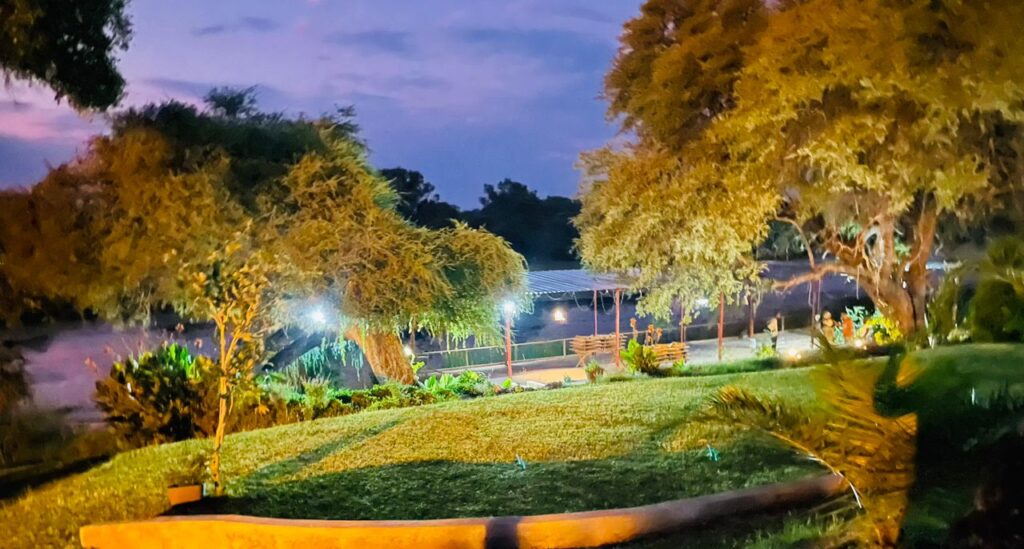
Moremi Game Reserve protects about 5,000 km² of the Okavango Delta, including Chief’s Island and the Mopane Tongue. It combines permanent swamps, seasonal floodplains, islands and mopane woodland, and supports some of the densest wildlife in Botswana. It was also a conservation pioneer: in 1963 the BaTawana people, led by Mrs Pulane Moremi, set the land aside, making it one of the first reserves in Africa created by local residents.
At a glance
| Best time | July to October |
| Getting there | Light aircraft from Maun, or 4×4 self-drive from Maun |
| Time needed | 3 to 5 nights |
| Big draws | Wild dogs, lions, leopards, cheetahs, water and land activities |
| Good for | Fly-in safaris, experienced self-drivers |
Areas of Moremi
- Xakanaxa: lagoons and channels in the heart of the reserve, excellent for boat trips, leopards and heronries.
- Third Bridge: famous for its log bridges and lion prides, reached by water crossings during the flood.
- South Gate (Maqwee) and the Mopane Tongue: woodland and floodplains, good for wild dogs, elephants and buffalo.
- Chief’s Island: the largest island in the delta, home to exclusive camps and very high predator densities.
- Khwai: a community concession just outside the north gate, where camps can offer night drives, off-road driving and walks that are not allowed inside the reserve.
Wildlife
- Predators: lions, leopards, cheetahs, spotted hyenas and, above all, African wild dogs. Moremi and Khwai are among the best places in Africa to see them, especially when packs are denning from about June to August.
- Herbivores: elephants, buffalo, giraffes, zebras, red lechwe, tsessebe, kudu, and sitatunga in the papyrus swamps.
- Birds: over 500 species, including Pel’s fishing owl, wattled cranes, slaty egrets and huge breeding colonies of storks and herons.
When to go
- July to October: the dry season on land coincides with the peak of the Okavango flood, which arrives from Angola months after the rains. Wildlife gathers on the islands and floodplains. The best, and busiest, time.
- November to March: summer rains, green landscapes, baby animals and migrant birds; some roads become difficult.
- April to June: flood waters rise, and many consider this a good-value shoulder season.
Activities
Game drives, boat trips and mokoro (dugout canoe) excursions, depending on water levels. Walking and night drives are only possible in private concessions and Khwai.
Getting there
- By air: scheduled light aircraft from Maun reach airstrips inside and around Moremi in 20 to 40 minutes.
- Self-drive: South Gate is about 100 km from Maun. A fully equipped, high-clearance 4×4 is essential, and you need experience with deep sand and water crossings.
Where to stay
- Lodges: permanent tented camps in Xakanaxa, on Chief’s Island and in Khwai, mostly all-inclusive.
- Campsites: public campsites at South Gate, Third Bridge, Xakanaxa and North Gate must be booked in advance through their concession operators. They are unfenced, so animals, including lions and elephants, walk through.
Self-drive tips
- Book campsites and park permits well before you arrive; you may be turned away without proof of booking.
- Carry recovery gear, spare tyres, extra fuel and at least 5 litres of water per person per day.
- Never drive through water without checking its depth and bottom, and ask locally about crossing points in flood season.
- Stay inside your vehicle or tent at night.
Frequently asked questions
What is the difference between Moremi and the Okavango Delta? Moremi is a game reserve within the Okavango Delta. Much of the rest of the delta is divided into private concessions. See our Okavango Delta guide.
Can I self-drive in Moremi? Yes, with a well-equipped 4×4, experience and pre-booked campsites.
Is Moremi good for wild dogs? Yes, it is one of the best places in Africa for them, especially during the denning season.
How many days do I need? Three to five nights, ideally combining two areas, such as Xakanaxa and Khwai.
Related guides
- Okavango Delta safari guide
- Where to see African wild dogs
- Makgadikgadi Pans and the zebra migration
- Animal profiles: African wild dog, Lion, Leopard
Cover photo: Mothusi Sekhomba, CC BY-SA 4.0, via Wikimedia Commons