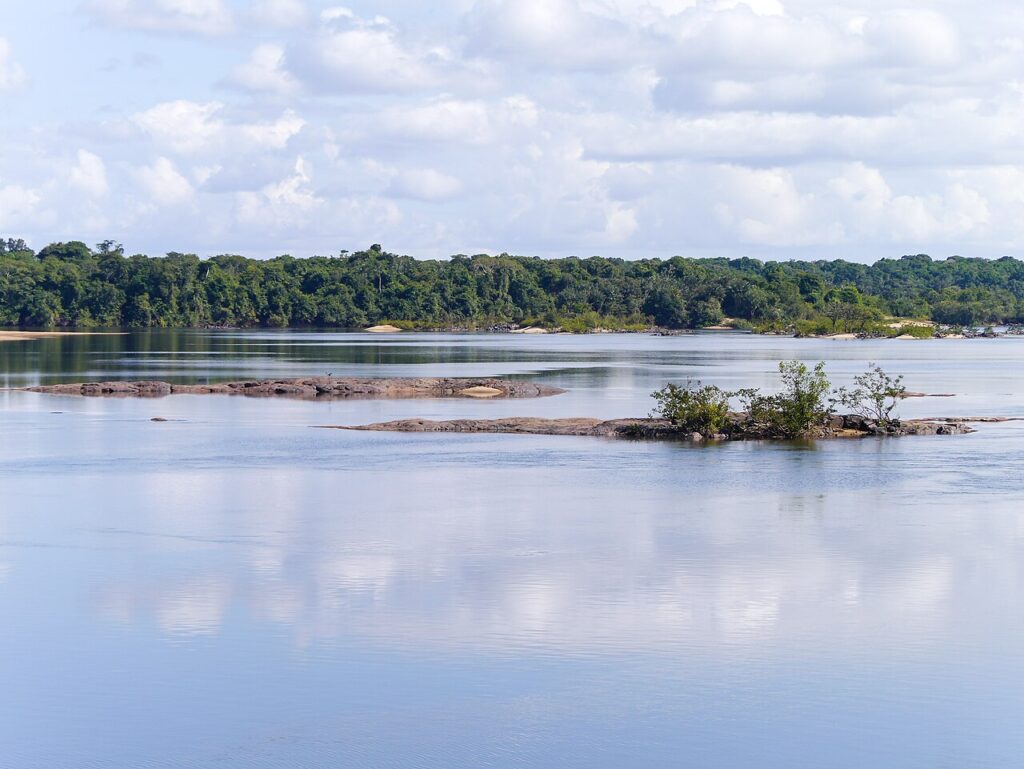
Guyana, on the north-eastern shoulder of South America, is one of the most forested countries on Earth, with a small population concentrated on the coast. Its interior of rainforest, rivers and savanna is largely intact, and a network of community-run lodges offers some of the best and least crowded wildlife experiences in the Americas.
At a glance
| Best time | September to April (drier months) |
| Getting there | Fly to Georgetown, then small planes or the road south |
| Time needed | 10 to 14 days |
| Big draws | Giant anteaters, jaguars, harpy eagles, giant otters, Kaieteur Falls |
| Good for | Adventurous travellers, birders, community tourism |
Kaieteur Falls
A single-drop waterfall about 226 metres high, several times the height of Niagara Falls, set in rainforest. Day flights from Georgetown land close to the falls. Look for golden rocket frogs in giant bromeliads and the Guianan cock-of-the-rock.
Iwokrama Forest
- A million-acre rainforest reserve managed for conservation and sustainable use, with a river lodge and research centre.
- Canopy walkway at Atta Rainforest Lodge for birds and monkeys.
- Jaguars: the road through Iwokrama is one of the better places in South America to see jaguars crossing, though sightings remain lucky. See our jaguar profile.
- Harpy eagles: nests are sometimes accessible with local guides. See our harpy eagle profile.
- Surama: a Makushi village running its own eco-lodge, with forest walks and river trips.
The Rupununi savannas
- Giant anteaters: the savannas around Karanambu and Caiman House are among the best places in the world to see them, often on morning walks. See our giant anteater profile.
- Giant otters: Karanambu is known for giant otter conservation. See our giant otter profile.
- Black caimans: at Caiman House, researchers catch and study them, and visitors can join. See our black caiman profile.
- Arapaima: one of the world’s largest freshwater fish, recovering through community-managed fisheries. See our arapaima profile.
- Birds: jabirus, macaws, sunbitterns and many raptors.
Community tourism
Many of Guyana’s interior lodges are owned or run by Indigenous communities, who benefit directly from visitors. It is a model of how tourism can support both people and conservation.
When to go
- September to April: generally drier, the best time for travel and wildlife.
- May to August: rainy season; savannas flood and some roads become difficult.
Getting there
Fly to Georgetown. Small planes connect to Annai, Lethem and other interior airstrips, or you can travel overland on the road south through Iwokrama, which is unpaved in sections.
Frequently asked questions
Is Guyana good for wildlife? Yes, it is one of South America’s best-kept secrets, with giant anteaters, jaguars and excellent birds.
Can I see jaguars in Guyana? Possibly, especially along the Iwokrama road, but sightings are not guaranteed.
Is Guyana safe? The interior lodges are welcoming and safe. Take normal precautions in Georgetown and check current advice.
How do I get around? Small planes and 4×4 transfers, usually arranged by a specialist tour operator.
Related guides
- Where to see jaguars in the wild
- Amazon rainforest lodges: how to choose
- Pantanal jaguar safari guide
- Animal profiles: Giant anteater, Harpy eagle, Arapaima
Cover photo: M M from Switzerland, CC BY-SA 2.0, via Wikimedia Commons