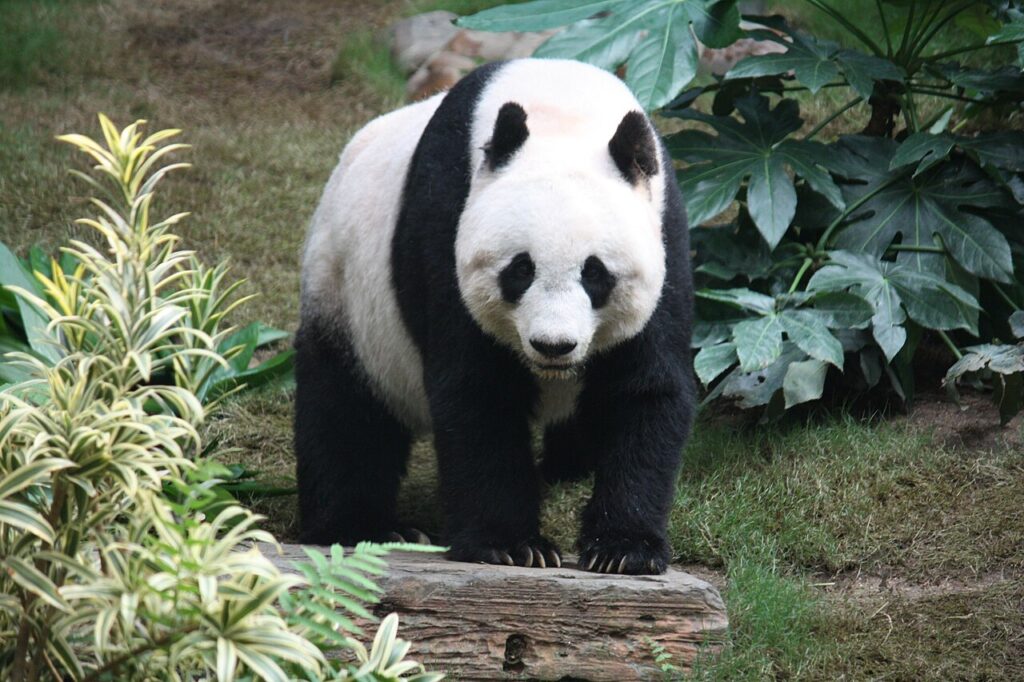
The giant panda is a global symbol of conservation, and a success story: thanks to habitat protection and breeding programmes, the IUCN downgraded it from Endangered to Vulnerable in 2016, and China’s latest surveys counted more than 1,800 pandas in the wild. Wild pandas live only in the mountain forests of Sichuan, Shaanxi and Gansu provinces. See our giant panda profile.
At a glance
| Best time | Year-round for centres; winter to early spring for wild pandas |
| Getting there | Fly to Chengdu (Sichuan) or Xi’an (Shaanxi) |
| Big draws | Giant pandas, red pandas, golden snub-nosed monkeys |
| Good for | Families (centres), dedicated wildlife enthusiasts (wild pandas) |
Breeding and research centres
Chengdu Research Base of Giant Panda Breeding
- The most visited panda centre, on the edge of Chengdu, with dozens of pandas in large, landscaped enclosures, and red pandas.
- Go at opening time: pandas are most active in the early morning, especially at feeding time.
- It can be very crowded, especially on weekends and holidays.
Dujiangyan, Wolong and Bifengxia
- Operated by the China Conservation and Research Centre for the Giant Panda, these centres are set in mountain landscapes closer to the pandas’ natural habitat.
- Wolong’s Shenshuping base lies within the Wolong Nature Reserve, part of the Sichuan Giant Panda Sanctuaries World Heritage Site.
- Some centres have run panda “volunteer” programmes; check what is currently offered and whether it fits your values.
Wild pandas
Seeing a panda in the wild is rare and requires patience.
- Foping National Nature Reserve (Qinling Mountains, Shaanxi) has one of the highest densities of wild pandas and is known for the best chances of a sighting, often in winter and early spring, when pandas descend to lower altitudes. Specialist tours use local trackers.
- Qinling pandas have slightly browner fur than Sichuan pandas and are considered a distinct subspecies.
- Tangjiahe and Labahe reserves in Sichuan offer wild panda habitat, with golden snub-nosed monkeys, takins and many pheasants, though pandas themselves are seldom seen.
Other wildlife in panda country
- Golden snub-nosed monkeys: blue-faced monkeys that live in snowy forests. See our golden snub-nosed monkey profile.
- Takins, red pandas, tufted deer and many pheasants, such as golden pheasants and blood pheasants. See our takin and red panda profiles.
Giant Panda National Park
In 2021, China formally established the Giant Panda National Park, covering about 22,000 km² across Sichuan, Shaanxi and Gansu, to connect fragmented panda habitats.
Frequently asked questions
Can you see giant pandas in the wild? Yes, but it is rare. Foping in the Qinling Mountains offers the best chances, usually on specialist tours in winter.
When is the best time to see pandas at Chengdu? Early in the morning, soon after opening, when they are fed and most active.
Are giant pandas still endangered? They are listed as Vulnerable by the IUCN, having been downgraded from Endangered in 2016.
Can I hold a panda? Panda holding was stopped at the main centres. Avoid any attraction that offers direct contact.
Related guides
- Red panda trekking in Nepal
- Snow monkeys and winter wildlife in Japan
- Wildlife tourism to avoid
- Animal profiles: Giant panda, Golden snub-nosed monkey, Takin
Cover photo: J. Patrick Fischer, CC BY-SA 3.0, via Wikimedia Commons