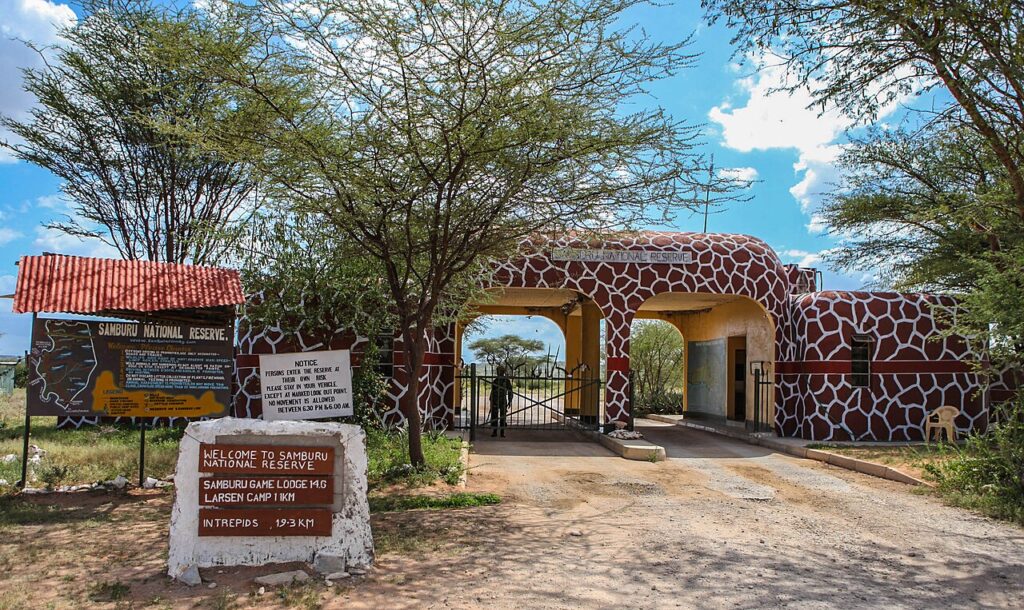
Samburu National Reserve lies in the hot, dry north of Kenya, where red earth, doum palms and rocky hills line the Ewaso Ng’iro River. It feels completely different from the grasslands of the south, and it is home to a group of dry-country animals found in few other places. Together with neighbouring Buffalo Springs and Shaba reserves, Samburu is the best place to see the “Samburu Special Five”.
At a glance
| Best time | Late December to March and June to October |
| Getting there | About 5 to 6 hours by road from Nairobi, or a 1-hour flight |
| Time needed | 2 to 3 nights |
| Big draws | The Special Five, leopards, elephants, community conservancies |
| Good for | Second safaris, photographers, combining with Laikipia and the Maasai Mara |
The Samburu Special Five
- Grevy’s zebra: the largest and most endangered zebra, with narrow stripes and big rounded ears. Fewer than 3,000 remain, almost all in northern Kenya and Ethiopia. See our Grevy’s zebra profile.
- Reticulated giraffe: a giraffe with bold, clean-edged patches like a net. See our giraffe profile.
- Somali ostrich: males have blue-grey necks and legs, unlike the pink of the common ostrich.
- Gerenuk: a long-necked antelope that stands on its hind legs to browse.
- Beisa oryx: a straight-horned oryx adapted to heat and drought.
Other wildlife
- Leopards are seen regularly in the riverine woodland and rocky outcrops.
- Elephants gather at the river and cross between the reserves. Save the Elephants has studied them for decades from its research camp.
- Lions, cheetahs and striped hyenas are present, and wild dogs pass through occasionally.
- Birds: over 450 species, including the vulturine guineafowl with its cobalt-blue chest, golden-breasted starling and several dry-country specialities.
When to go
- Late December to March and June to October: the dry seasons. Animals concentrate along the Ewaso Ng’iro River, which is the key to Samburu’s wildlife.
- April to May and November: rains bring green scenery and baby animals, but some tracks become difficult.
- Samburu is hot year-round, often above 30°C in the afternoon, so game drives focus on mornings and late afternoons.
Community conservancies
Much of northern Kenya’s wildlife lives on community land. Conservancies such as Kalama, Westgate and Namunyak, supported by the Northern Rangelands Trust, offer walking safaris, night drives and cultural visits run by Samburu communities.
- Reteti Elephant Sanctuary, in Namunyak, is the first community-owned elephant sanctuary in Africa. It rescues orphaned elephants and returns them to the wild. Visits must be booked in advance.
- Staying in a conservancy supports local livelihoods and gives exclusive game viewing.
Getting there
Samburu is about 350 km north of Nairobi on a paved road via Nanyuki and Isiolo. Scheduled flights from Nairobi’s Wilson Airport land at Kalama and Buffalo Springs airstrips in about an hour.
Where to stay
Tented camps and lodges line the river in Samburu and Buffalo Springs, from mid-range to luxury. Camps in the conservancies are generally smaller and more exclusive.
Sample itinerary: northern Kenya in 6 days
| Day | Plan |
|---|---|
| 1 | Fly or drive from Nairobi to Samburu; afternoon game drive |
| 2 | Full day for the Special Five and leopards along the river |
| 3 | Morning drive; visit Reteti or a conservancy; transfer to Laikipia |
| 4–5 | Ol Pejeta or Lewa for rhinos, chimpanzees and walking |
| 6 | Return to Nairobi or fly on to the Maasai Mara |
Tips
- Carry water, a hat and sunscreen: Samburu is hot and dry.
- Ask your guide to spend time along the river. Leopards and elephants move along it throughout the day.
- Combine Samburu with the Maasai Mara for two completely different faces of Kenya.
- Choose conservancy camps for walks and night drives, which are not allowed in the national reserve.
Frequently asked questions
What are the Samburu Special Five? Grevy’s zebra, reticulated giraffe, Somali ostrich, gerenuk and beisa oryx: five dry-country animals rarely found in southern Kenya’s parks.
Is Samburu safe? The reserves and conservancies used by tourists are generally safe, and many travellers visit every year. As with anywhere, check current government travel advice and travel with a reputable operator.
Is Samburu better than the Maasai Mara? It is different. The Mara has more animals and the migration. Samburu has unique species, fewer vehicles and a strong community conservation story. Many safaris include both.
How many days do I need in Samburu? Two to three nights is enough to see the Special Five and explore the river.
Related guides
- Laikipia and Ol Pejeta: rhinos and walking safaris
- Maasai Mara safari guide
- Where to see leopards in Africa
- Animal profiles: Grevy’s zebra, Leopard, Common ostrich
Cover photo: ninara, CC BY 2.0, via Wikimedia Commons