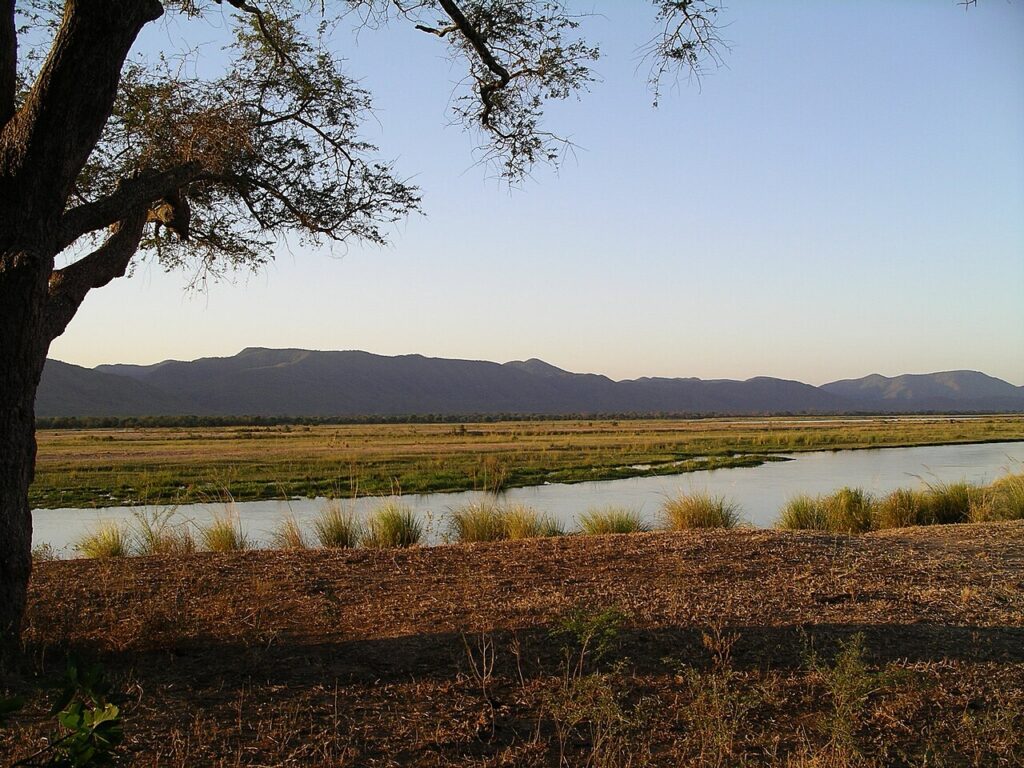
Mana Pools National Park lies on the southern bank of the Zambezi River in northern Zimbabwe. Its name means “four” in Shona, after the four large pools left by the river as it changed course. Towering winterthorn and mahogany trees shade open floodplains where elephants, buffalo and antelope graze. Together with neighbouring areas, it forms a UNESCO World Heritage Site, and it is one of Africa’s finest places for walking safaris.
At a glance
| Best time | July to October |
| Getting there | Light aircraft from Harare, Kariba or Victoria Falls; or a long drive from Harare |
| Time needed | 3 to 5 nights |
| Big draws | Walking among elephants, wild dogs, canoeing, cathedral-like forests |
| Good for | Walkers, photographers, experienced safari-goers |
Walking in Mana Pools
- Mana Pools is famous for walking. The open floodplain under tall trees gives good visibility, and animals here are used to people on foot.
- Most visitors walk with professional guides, who are highly trained in Zimbabwe. Historically the park has also allowed visitors to walk unguided at their own risk, which is almost unique in Africa, but a guide is strongly recommended.
- A famous sight is elephant bulls standing on their hind legs to reach the pods of winterthorn trees (Faidherbia albida), which ripen in the dry season.
Wildlife
- Elephants and buffalo in large numbers on the floodplain. See our African elephant profile.
- Wild dogs: Mana’s packs featured in the BBC series Dynasties, and sightings are good, especially from June to September. See our African wild dog profile.
- Lions, leopards and spotted hyenas.
- Eland, waterbuck, kudu, impala and zebras.
- Hippos and crocodiles in the river and pools.
- Birds: over 380 species, including carmine bee-eaters and Lilian’s lovebirds.
Canoeing
Multi-day canoe trails and half-day paddles on the Zambezi, facing Zambia’s Lower Zambezi National Park, offer a peaceful way to see elephants and hippos from the water with a licensed guide.
When to go
- July to October: the dry season. The floodplain is at its best, animals concentrate near the river, and the winterthorn pods draw elephants. October is very hot.
- November to March: the rains. Much of the park closes or becomes inaccessible, and most camps close.
- April to June: the park reopens; green and quiet.
Getting there
- By air: charter flights from Harare, Kariba or Victoria Falls land at Mana Pools airstrip.
- By road: about six hours from Harare, the last section on a rough track that requires a 4×4.
Where to stay
A handful of seasonal tented camps sit along the river, some moving between sites. The public Nyamepi campsite and exclusive campsites are booked through Zimbabwe Parks.
Tips
- Walk with an experienced professional guide, even if unguided walking is permitted.
- Bring neutral-coloured clothing and good walking shoes.
- Combine Mana Pools with Hwange and Victoria Falls for a classic Zimbabwe circuit.
- Book early: the dry season fills fast.
Frequently asked questions
Is it safe to walk in Mana Pools? With a professional guide and by following instructions, walking safaris have a good safety record. Unguided walking carries real risks.
What is the best month for Mana Pools? September and October for wildlife concentrations and elephants feeding on winterthorn pods, though it is hot.
Is Mana Pools good for wild dogs? Yes, it is one of the best places in Zimbabwe to see them.
Can I visit Mana Pools in the rainy season? Most of the park is closed or inaccessible from about November to March.
Related guides
- Lower Zambezi canoe safaris
- Hwange National Park guide
- Walking safaris: where to go
- Animal profiles: African elephant, African wild dog, Hippopotamus
Cover photo: Unknown author, Public domain, via Wikimedia Commons