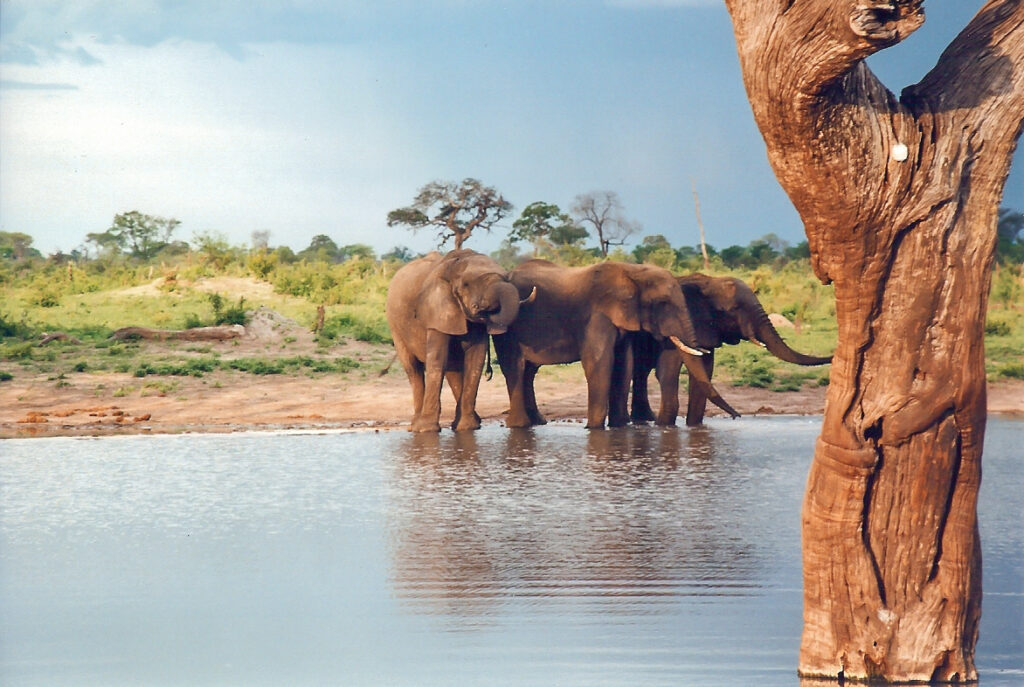
Hwange National Park, in western Zimbabwe, is the country’s largest park at about 14,650 km². It sits on the edge of the Kalahari sands, with teak forest, grassland and mopane woodland, and it is known above all for elephants: the wider Hwange ecosystem holds tens of thousands. In the dry season, hundreds can gather at a single waterhole.
At a glance
| Best time | July to October |
| Getting there | About 2 hours by road from Victoria Falls, or light aircraft |
| Time needed | 3 to 4 nights |
| Big draws | Elephant herds, lions, wild dogs, sable antelope |
| Good for | Combining with Victoria Falls and Mana Pools; value safaris |
Wildlife
- Elephants: Hwange’s herds are among the largest in Africa, and dry-season waterholes offer extraordinary viewing. See our African elephant profile.
- Lions: Hwange’s lions have been studied for decades; the park became world famous in 2015 when a collared lion named Cecil was killed by a trophy hunter just outside it.
- Wild dogs: Hwange is an important stronghold. The Painted Dog Conservation centre near Main Camp explains the work to protect them.
- Other species: buffalo, giraffes, zebras, sable and roan antelope, leopards, cheetahs, spotted and brown hyenas, and more than 400 bird species.
Waterholes
Hwange has few natural rivers, so many waterholes are kept filled by pumps, increasingly solar-powered, to sustain wildlife through the dry season. This is controversial, as it keeps elephant numbers high and affects vegetation, but it creates remarkable wildlife viewing. Hides and platforms at some waterholes allow close views.
Areas
- Main Camp and the east: the most accessible area, with a network of roads and waterholes such as Nyamandhlovu Pan, which has a viewing platform.
- Linkwasha and the south-east: private concessions with open vleis (grassy plains), rich in game and predators.
- Sinamatella and Robins: the wilder north and north-west, hilly and less visited.
When to go
- July to October: dry season, the best for game viewing at waterholes. It becomes very hot by October.
- November to April: rains, lush vegetation, baby animals and migrant birds. Animals disperse, and some areas are harder to reach.
Getting there
Hwange Main Camp is about 2 hours by road from Victoria Falls airport, and there is also an airport near the park. Light aircraft fly to private camp airstrips.
Where to stay
- Private concessions: luxury tented camps with guided drives, walks and night drives.
- Public camps: Main Camp, Sinamatella and Robins have affordable chalets and campsites run by Zimbabwe Parks.
- Just outside the park: lodges near Main Camp gate and along the road from Victoria Falls.
Frequently asked questions
Is Hwange good for a first safari? Yes, especially for elephants, and it combines easily with Victoria Falls.
Can I self-drive in Hwange? Yes, in the public areas around Main Camp and Sinamatella. Some roads need a 4×4, particularly in the rainy season.
What is the best month to visit Hwange? September and October for the biggest elephant gatherings at waterholes.
Is Hwange safe? Yes. Hwange is a popular, well-established safari destination.
Related guides
- Victoria Falls wildlife and adventure guide
- Mana Pools National Park
- Where to see African wild dogs
- Animal profiles: African elephant, Sable antelope, Lion
Cover photo: JackyR, CC BY-SA 3.0, via Wikimedia Commons