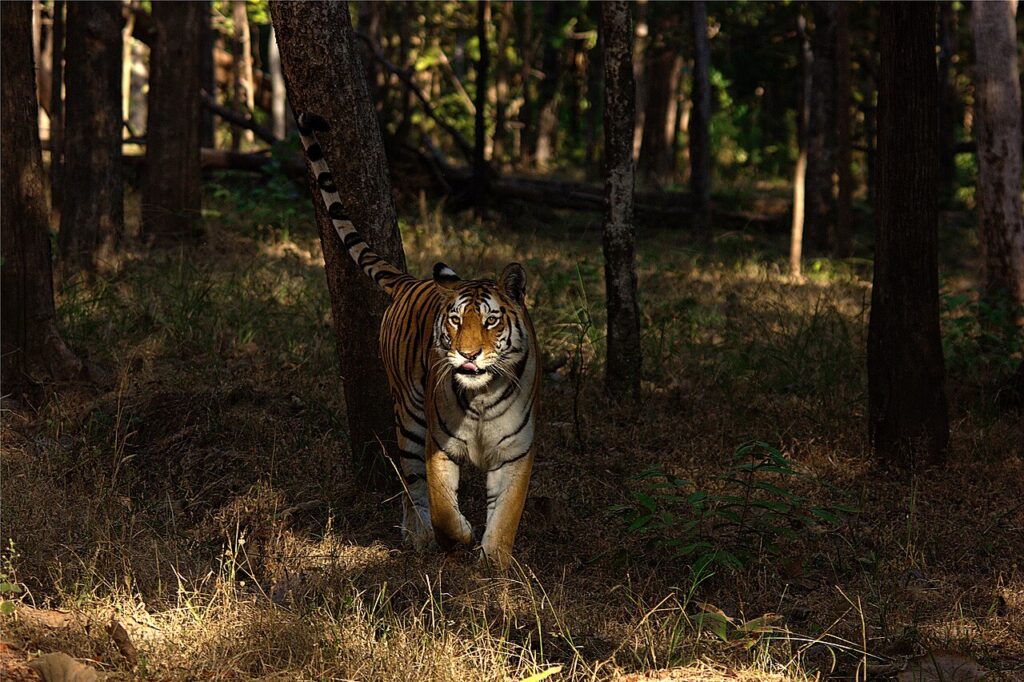
Central India’s tiger reserves are among the best places on Earth to see wild tigers. This itinerary links three of them, Bandhavgarh, Kanha and Pench, in a loop that starts in Jabalpur and ends in Nagpur, with around 12 to 14 jeep safaris. It maximises your chances of tiger sightings while showing you very different forests.
At a glance
| Best time | February to May (best sightings); October to January (cooler) |
| Start and end | Fly into Jabalpur; fly out of Nagpur |
| Safaris | About 12 to 14 jeep safaris |
| Big draws | Tigers, leopards, dholes, sloth bears, barasingha |
| Good for | Tiger enthusiasts, photographers |
The itinerary
| Day | Plan |
|---|---|
| 1 | Arrive in Delhi or Mumbai; fly to Jabalpur and drive to Bandhavgarh (4 to 5 hours) |
| 2–4 | Bandhavgarh: morning and afternoon safaris across Tala, Magadhi and buffer zones |
| 5 | Drive to Kanha (about 5 to 6 hours); afternoon at leisure |
| 6–8 | Kanha: safaris in the Kanha, Kisli and Mukki zones; barasingha in the meadows |
| 9 | Drive to Pench (about 5 hours) |
| 10–11 | Pench: safaris in the Turia and Karmajhiri zones; Pench River landscapes |
| 12 | Morning safari; drive to Nagpur (about 2 hours) for your flight |
The reserves
- Bandhavgarh: very high tiger density, rocky hills and the ancient fort. See our Bandhavgarh guide.
- Kanha: sal forests and meadows, barasingha and dholes. See our Kanha guide.
- Pench: teak forest along the Pench River, famous as a setting linked to The Jungle Book and for the tigress “Collarwali”, who gave birth to around 29 cubs. Good for leopards and dholes.
Alternative: swap Pench for Tadoba
Tadoba, about 3 hours from Nagpur, is one of India’s most reliable reserves for tigers and sloth bears. You can replace Pench with Tadoba, or add two nights there.
Booking tips
- Book safari permits as soon as booking opens, especially for core zones from February to May. Madhya Pradesh and Maharashtra each have official online booking portals.
- Mix core and buffer zones: buffers often have excellent sightings and are easier to book.
- Use lodges with experienced naturalists; they improve sightings and understanding.
- Remember that core zones close for the monsoon (about July to September) and on certain days or afternoons each week.
When to go
- February to May: the best time for tigers as water becomes scarce. April and May are very hot.
- October to January: cooler and greener, with fewer sightings but beautiful landscapes.
Getting around
Private car transfers with a driver are the norm. Roads are generally good, though journeys are slow through villages.
Frequently asked questions
How many safaris do I need to see a tiger in central India? With 10 or more safaris across three reserves in the peak season, most visitors see several tigers, but nothing is guaranteed.
Can I include Ranthambore? Yes, but it is in Rajasthan, far to the north-west. Combine it with Delhi, Agra and Jaipur instead. See our Ranthambore guide.
Is 12 days too long? For tiger enthusiasts, 12 days allows enough safaris to maximise sightings. A shorter version could focus on two reserves over 7 to 8 days.
What should I pack? Neutral clothing, a warm layer for winter mornings, a hat and scarf for dust, binoculars and a camera with a zoom lens.
Related guides
- Best places to see tigers in India
- Tiger safari in India vs Nepal
- Wildlife photography for beginners
- Animal profiles: Tiger, Dhole, Barasingha
Cover photo: Nconnet, CC BY-SA 4.0, via Wikimedia Commons