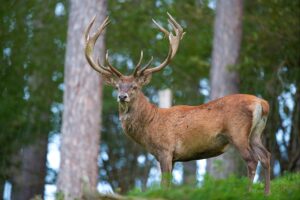
The barasingha is a large, graceful deer of India’s and Nepal’s grasslands and swamps. Once widespread, it now survives in a few protected areas and is a symbol of successful conservation in Kanha.
Interesting facts
- ‘Barasingha’ means ‘twelve-tined’ in Hindi, after its many-pointed antlers.
- It is also called the swamp deer.
- There are three subspecies, living in Kanha, the Terai grasslands and Assam.
- It is the state animal of Madhya Pradesh, India.
- Shuklaphanta National Park in Nepal has one of the largest herds.
- Stags bugle loudly during the rut.
Behaviour
Barasingha live in herds, which can number hundreds in the rut. They graze in the morning and evening and rest in shade during the day.
Breeding and young
After about eight months, a single fawn is born, usually in autumn or winter.
Threats and conservation
Loss of grasslands and wetlands to agriculture, poaching, and competition with livestock.
Where to see it
- Kanha National Park, Madhya Pradesh, India
- Shuklaphanta National Park, Nepal
- Dudhwa National Park, Uttar Pradesh, India
- Kaziranga National Park, Assam, India
Status source: IUCN Red List. Profile last reviewed September 2026.
Where to see the barasingha
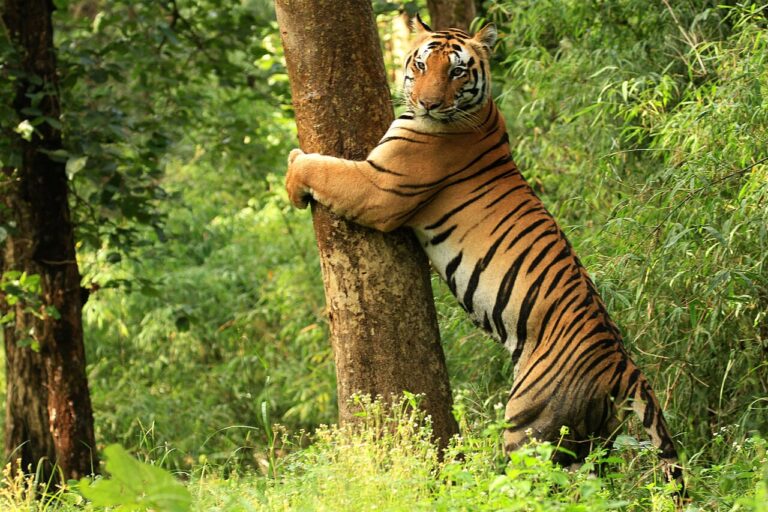 Kanha National Park: Tigers, Barasingha and Sal ForestsKanha's sal forests and grassy meadows are one of India's most beautiful tiger landscapes, and home to the…
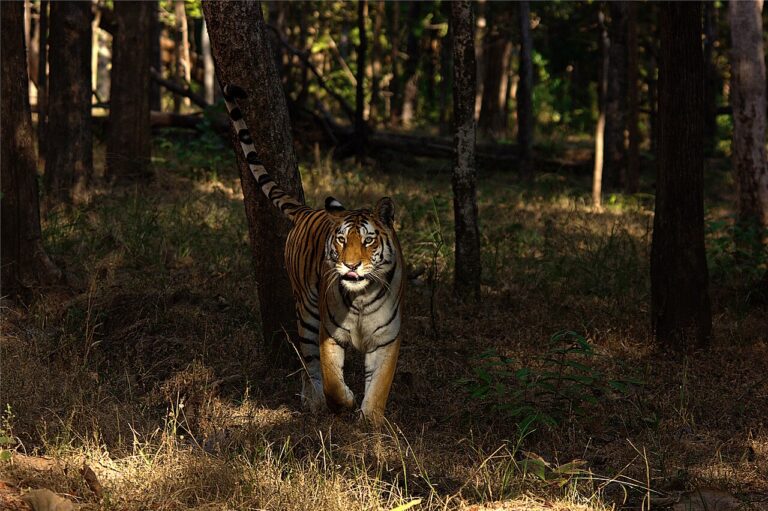 Central India Tiger Safari Itinerary: 12 DaysThree of India's best tiger reserves in twelve days. A practical itinerary with safari counts, travel times and…