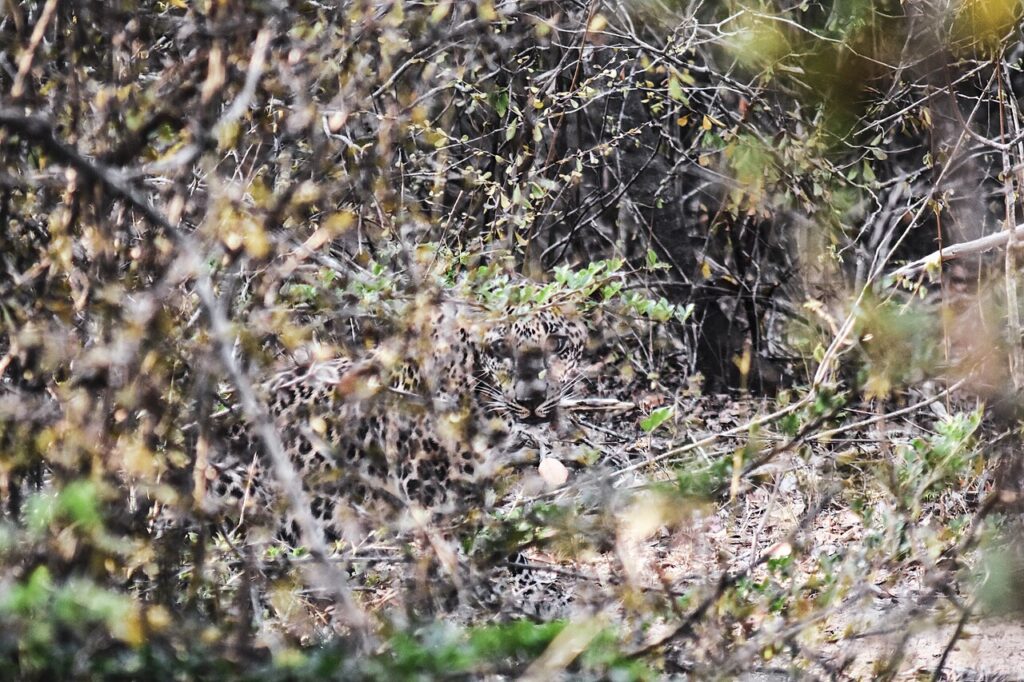
Yala National Park, on Sri Lanka’s southeast coast, is famous for leopards. Its Block 1, the most visited section, is often cited as having one of the highest leopard densities anywhere in the world. The Sri Lankan leopard is an endemic subspecies and the island’s top predator, since there are no tigers or lions. Without competition from larger cats, Yala’s leopards are often active and visible in daylight, lounging on rocks or crossing the tracks.
Yala at a glance
| Location | Southern and Uva provinces, around 300 km from Colombo |
| Base town | Tissamaharama (Tissa) or Kataragama |
| Best time | February to July, when the dry season draws animals to waterholes |
| Annual closure | Usually part of September to mid-October (dates vary each year) |
| Safaris | Half-day or full-day jeep safaris with a licensed tracker |
| Famous for | Leopards, sloth bears, elephants, mugger crocodiles, birds |
Blocks and zones
Yala is divided into five blocks, plus neighbouring protected areas.
- Block 1 is the most visited and has the highest leopard density. It also gets the most jeeps.
- Block 5 and Lunugamvehera National Park are quieter and often combined for a less crowded experience.
- Block 2 and other blocks have more limited access.
When to go
- February to July is the dry season in the southeast. Water holes shrink, vegetation thins, and leopard and sloth bear sightings are best. Sloth bears are most often seen around June and July, when palu trees fruit.
- September to mid-October: Block 1 usually closes for part of this period to let wildlife rest during the driest time. Check the dates before booking.
- November to January: the northeast monsoon brings rain; the park is green and birdlife excellent.
Wildlife highlights
- Sri Lankan leopard, Panthera pardus kotiya
- Sloth bear, shy and more often seen in June and July
- Asian elephant, including small herds and lone bulls
- Mugger crocodile, water buffalo, spotted deer, sambar and wild boar
- Birds: more than 200 species, including painted storks, lesser adjutants, Sri Lanka junglefowl (the national bird), Indian peafowl and crested serpent eagles
Avoiding crowds
Yala’s popularity can create “jeep jams” at leopard sightings, with dozens of vehicles pushing for a view. To improve your experience:
- Book a full-day safari. Most jeeps leave at midday; the park is much quieter in the middle of the day.
- Choose a responsible operator who respects distances, speed limits and the rule against leaving the track.
- Consider Block 5 or Lunugamvehera in addition to Block 1.
- Visit on weekdays and avoid Sri Lankan public holidays.
Alternatives and combinations
- Wilpattu National Park: Sri Lanka’s largest park, on the northwest coast. It is quieter, with natural lakes (villus), leopards and sloth bears.
- Udawalawe National Park: arguably the most reliable place in Sri Lanka to see elephants, plus the Elephant Transit Home, where orphans are rehabilitated for release.
- Minneriya and Kaudulla national parks: famous for “The Gathering”, when hundreds of elephants congregate around reservoirs, usually between July and September.
- Kumana National Park: next to Yala’s eastern edge, known for waterbirds and nesting colonies.
- Sinharaja Forest Reserve: a UNESCO rainforest with many endemic birds.
- Mirissa and Trincomalee: whale watching for blue whales, depending on season.
Getting there
Yala is around five hours by road from Colombo via the Southern Expressway, and about two hours from the southern beach towns such as Mirissa. Most visitors stay in Tissamaharama or at lodges on the edge of the park.
Tips
- Bring binoculars and a telephoto lens.
- Wear neutral colours and carry a hat, sunscreen and water.
- Morning safaris start before sunrise; lodges provide breakfast boxes.
- Pay park entry fees through your operator, and confirm what is included (jeep, tracker, entry fees and taxes).
Frequently asked questions
Is Yala worth visiting for leopards? Yes. Block 1 has a very high leopard density, and many visitors see one on a full-day safari. Crowds can be an issue, so choose a responsible operator and consider quieter blocks.
Half day or full day in Yala? A full-day safari gives the best chance of leopards and a quieter midday experience when most jeeps leave the park.
When is Yala closed? Block 1 usually closes for part of September and early October each year. Exact dates vary, so check before booking.
Can I see sloth bears in Yala? Yes, but they are shy. Sightings are most likely in June and July, when palu trees are fruiting.
Related guides
- Wildlife of Asia
- Responsible wildlife tourism
- Animal profiles: Leopard, Asian Elephant, Blue Whale
Cover photo: Eli Solidum, CC BY-SA 4.0, via Wikimedia Commons