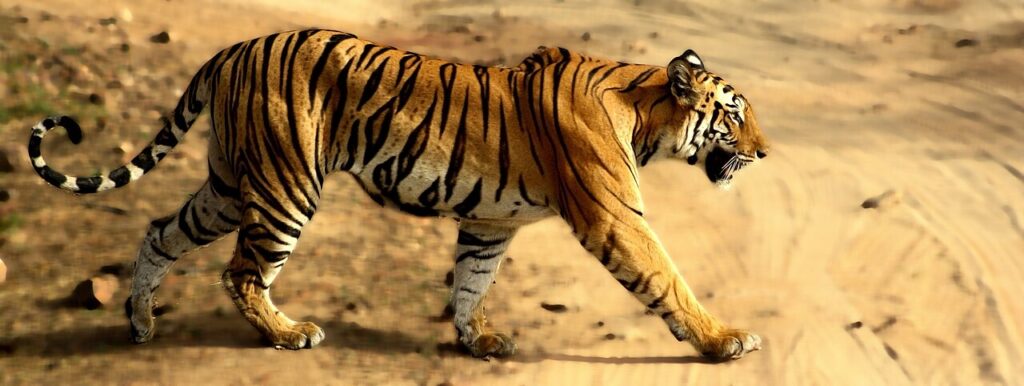
Bandhavgarh National Park, in the Vindhya hills of Madhya Pradesh, is famous for having one of the highest densities of Bengal tigers in India. Its core zone is small, but its mix of sal forest, bamboo, grassy meadows and rocky hills makes tigers relatively easy to see. Above it all stands Bandhavgarh Fort, built on a plateau more than 2,000 years ago.
At a glance
| Best time | February to May for tigers; October to January for pleasant weather |
| Getting there | About 4 to 5 hours by road from Jabalpur; Umaria railway station is 35 km away |
| Time needed | 3 to 4 nights (5 to 6 safaris) |
| Big draws | Tigers, leopards, sloth bears, wild elephants, the fort |
| Good for | Tiger enthusiasts, photographers |
Wildlife
- Tigers: Bandhavgarh’s tigers have become famous over the years, from the legendary male Charger to the tigress Sita, once featured on the cover of National Geographic. See our tiger profile.
- Leopards, sloth bears, dholes (Asian wild dogs), jungle cats and striped hyenas.
- Wild elephants: a herd moved into the park from neighbouring Chhattisgarh in 2018 and has stayed.
- Deer and antelope: chital, sambar, barking deer, nilgai and chinkara.
- Birds: more than 250 species, including Malabar pied hornbills, crested serpent eagles and Indian vultures.
Safari zones
The park is divided into core zones and buffer zones, and each safari permit is for a specific zone.
| Zone | Notes |
|---|---|
| Tala | The most famous core zone, with meadows, the fort area and high tiger density |
| Magadhi | A core zone with open meadows and good tiger sightings |
| Khitauli | A quieter core zone with good birding |
| Buffer zones | Such as Panpatha, Manpur and Dhamokhar; fewer vehicles and sometimes excellent sightings |
How safaris work
- Safaris take place in open Gypsy jeeps with a driver and a compulsory forest guide, with up to six visitors per vehicle.
- There are morning and afternoon safaris, each lasting about four hours.
- Permits for core zones are limited and are booked online through the Madhya Pradesh Forest Department’s official portal, often months in advance for the peak season. Lodges and operators can book for you.
- Core zones close for the monsoon from about 1 July to 30 September, and some safari slots are closed on set days (for example, Wednesday afternoons in Madhya Pradesh reserves). Check current rules.
When to go
- October to January: cool, green and pleasant. Tigers are seen, but vegetation is thicker.
- February to June: the hot season. Water becomes scarce and tigers visit waterholes, making sightings more likely. April to June is very hot (over 40°C).
- July to September: monsoon; core zones closed, some buffer zones open.
Getting there
Jabalpur, with flights from Delhi, Mumbai and other cities, is the usual gateway (4 to 5 hours by road). Umaria and Katni are the nearest railway stations. Bandhavgarh is often combined with Kanha (about 5 to 6 hours away) and Pench.
Where to stay
The village of Tala, next to the main gate, has lodges and resorts for every budget, from simple guesthouses to luxury jungle lodges.
Tips
- Book core zone permits as early as possible for February to May.
- Do at least five or six safaris across different zones.
- Wear neutral colours, and bring a scarf or mask for dust.
- Visit the fort area if your safari route allows, or ask about current access rules.
Frequently asked questions
Is Bandhavgarh the best park for tigers in India? It is one of the best, thanks to its high tiger density. Ranthambore, Tadoba, Kanha and Corbett are also excellent.
How many safaris do I need to see a tiger? Most visitors on four to six safaris see at least one tiger in the peak season, but there are no guarantees.
Can I book safaris myself? Yes, on the official Madhya Pradesh Forest Department website, but lodges and operators can handle it for you.
Which zone is best in Bandhavgarh? Tala is the most famous, but tigers move, and Magadhi and the buffer zones often have excellent sightings.