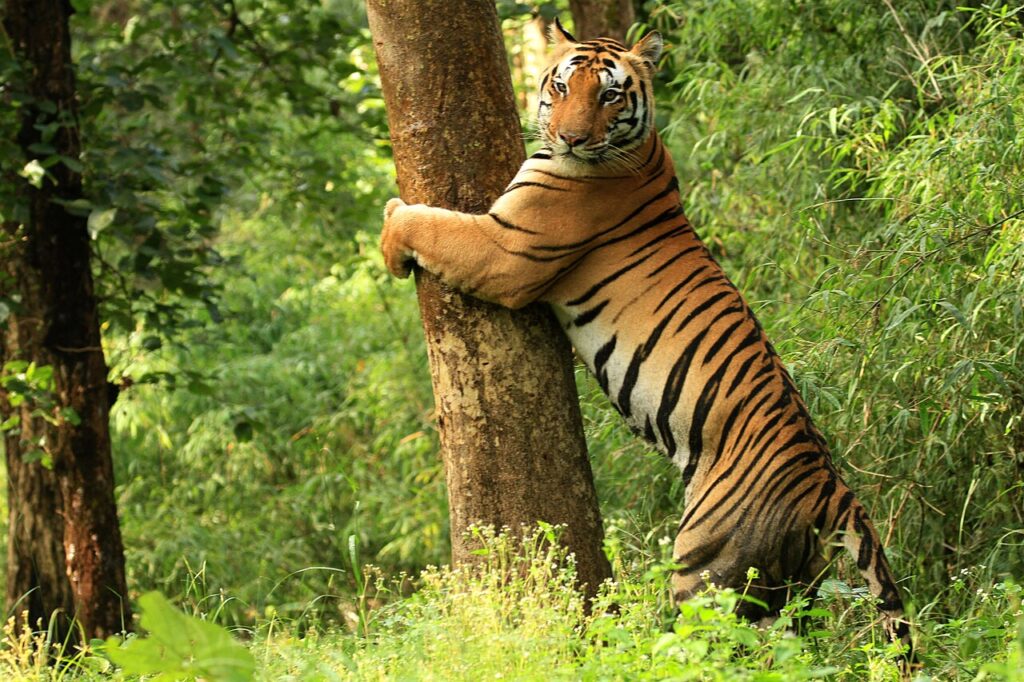
Kanha National Park, in the Maikal hills of Madhya Pradesh, is one of India’s largest and best-managed tiger reserves. Its tall sal forests, bamboo thickets and open meadows (called maidans) are said to have inspired the jungles of Rudyard Kipling’s The Jungle Book. Kanha is also famous for bringing back the hard-ground barasingha from the brink of extinction.
At a glance
| Best time | February to May for tigers; October to January for pleasant weather |
| Getting there | About 4 hours by road from Jabalpur, or 6 hours from Nagpur or Raipur |
| Time needed | 3 to 4 nights |
| Big draws | Tigers, barasingha, dholes, gaur, landscapes |
| Good for | Tiger enthusiasts, photographers, people who love forests |
Wildlife
- Tigers: Kanha has a healthy tiger population, often seen crossing meadows or resting by streams. See our tiger profile.
- Barasingha: the hard-ground swamp deer is found only here in the wild in central India. By 1970, only about 66 remained. Habitat management and captive breeding have increased the population to more than a thousand. See our barasingha profile.
- Dholes, leopards, sloth bears, gaur (Indian bison), chital, sambar and barking deer. See our gaur profile.
- Birds: more than 300 species, including Indian rollers, racket-tailed drongos, crested serpent eagles and Indian pittas in the monsoon.
Safari zones
Kanha’s core has four main zones: Kanha, Kisli, Mukki and Sarhi, plus buffer zones such as Khatia and Phen. The Kanha zone’s meadows are the best place for barasingha, and all core zones offer good tiger chances.
How safaris work
- Jeep safaris with a guide, in the morning and afternoon, with up to six visitors per vehicle.
- Permits are booked through the Madhya Pradesh Forest Department’s official portal. Book early for the peak season.
- Core zones close from about 1 July to 30 September for the monsoon.
When to go
- October to January: cool, green and misty mornings; excellent for photography.
- February to June: hot and dry, with tigers visiting water; the best tiger sightings. May and June are extremely hot.
- July to September: monsoon; core zones closed.
Getting there
Jabalpur is about 4 hours away and has flights from major cities. Nagpur and Raipur are about 6 hours away. Kanha combines well with Bandhavgarh and Pench on a central India circuit.
Where to stay
Lodges near the Mukki and Kisli gates range from simple to luxury, many with naturalists who accompany safaris.
Tips
- Visit the Kanha zone meadows for barasingha, especially in winter, when stags have impressive antlers.
- Stay at least three nights to explore several zones.
- Visit the park museum at Kanha for background on the forest and its conservation.
- Bring warm layers for winter mornings in open jeeps.
Frequently asked questions
Is Kanha or Bandhavgarh better for tigers? Bandhavgarh has a higher tiger density, but Kanha is larger, more varied and arguably more beautiful. Many itineraries include both.
Can I see barasingha at Kanha? Yes. Kanha is the only place in the wild to see the hard-ground barasingha, and sightings in the meadows are common.
Is Kanha the Jungle Book forest? Kipling set his stories in the Seoni hills of central India. Kanha shares the same landscapes and is often associated with the book.
When does Kanha close? Core zones close for the monsoon, from about July to September.
Related guides
- Bandhavgarh National Park
- Central India tiger safari itinerary
- Best places to see tigers in India
- Animal profiles: Barasingha, Tiger, Gaur
Cover photo: Davidvraju, CC BY-SA 4.0, via Wikimedia Commons