The great hornbill is one of the largest hornbills and a symbol of Asia’s tropical forests. It needs large old trees for nesting and is threatened by logging and hunting.
Interesting facts
- Its wings make a loud whooshing sound in flight.
- The yellow casque on top of the bill is hollow.
- Birds rub preen-gland oil on the casque, making it more yellow.
- Figs are among its most important foods.
- Hornbills are major seed dispersers of large-fruited trees.
- It is the state bird of Kerala and Arunachal Pradesh in India.
Behaviour
Great hornbills live in pairs or small groups and gather in large numbers at fruiting trees and roosts.
Breeding and young
The female lays one or two eggs in a sealed tree cavity and stays inside, moulting her flight feathers, until the chick is well grown.
Threats and conservation
Loss of large nesting trees, deforestation and hunting for meat, casques and feathers.
Where to see it
- Valparai and Western Ghats, India
- Chitwan, Nepal
- Khao Yai, Thailand
- Namdapha, India
Status source: IUCN Red List. Profile last reviewed September 2026.
Where to see the great hornbill
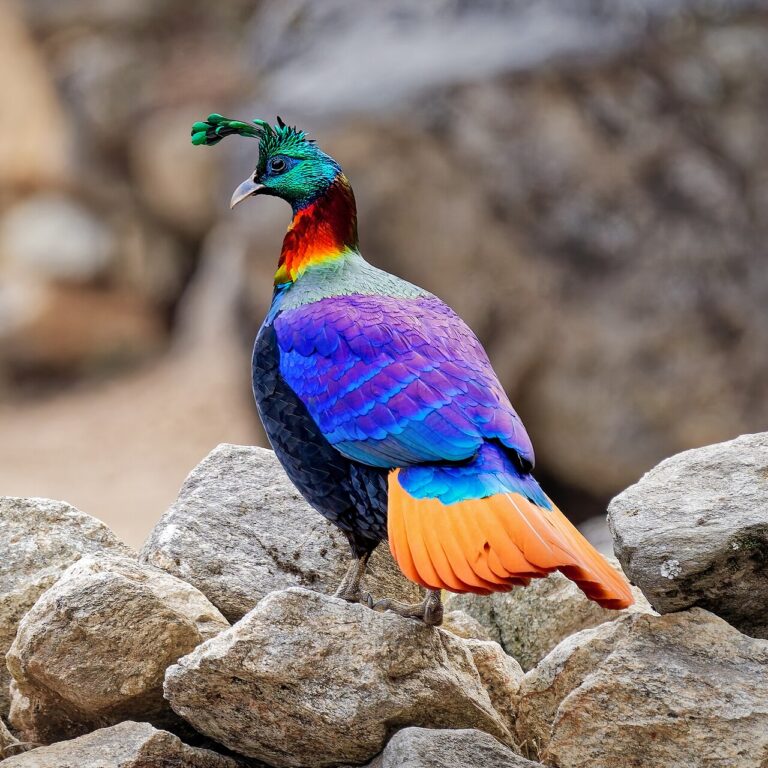 Birdwatching in Nepal: Best Birding Sites, Seasons and SpeciesFrom Bengal floricans in the Terai to Himalayan monals above the treeline, Nepal packs about 8 percent of…
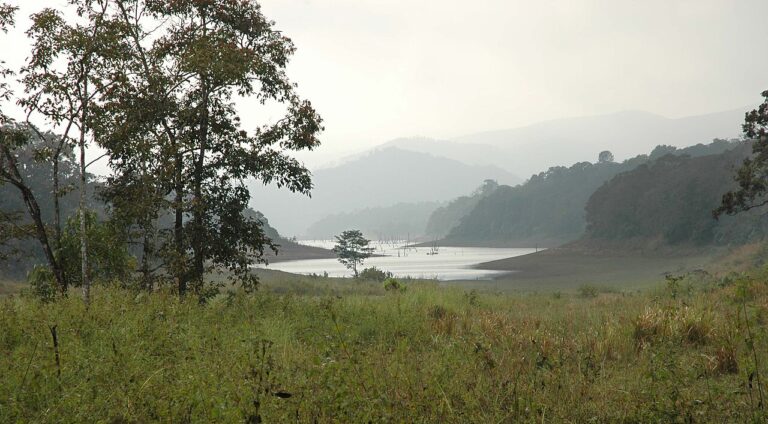 Periyar and the Western Ghats: Elephants and EndemicsThe Western Ghats are one of the world's biodiversity hotspots. Periyar, Munnar and the surrounding hills offer elephants,…
 Kinabatangan River Cruise GuideSabah's longest river is one of the best places in Borneo to see wildlife from a boat. What…