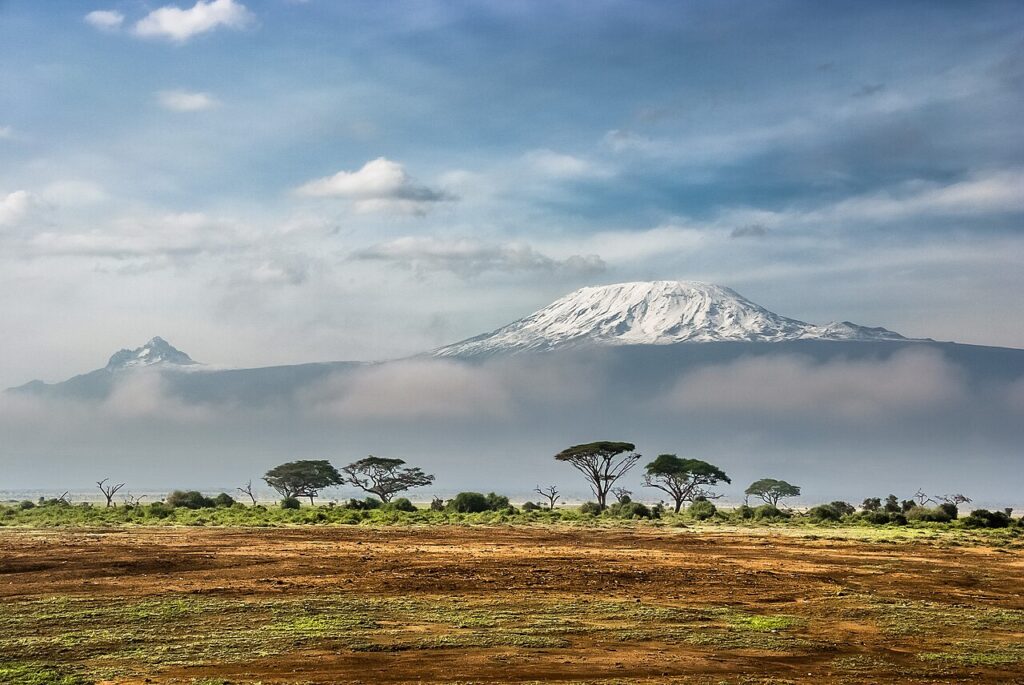
Amboseli National Park is small, just 392 km², but it delivers one of the great images of Africa: elephants walking across open plains with the snowy summit of Kilimanjaro behind them. The park lies in southern Kenya on the Tanzanian border, and its elephants have been studied continuously since 1972 by the Amboseli Trust for Elephants, making them some of the best-known wild animals on Earth.
At a glance
| Best time | June to October and January to February |
| Getting there | About 4 hours by road from Nairobi, or a 45-minute flight |
| Time needed | 2 to 3 nights |
| Big draws | Elephants, including big tuskers; Kilimanjaro views |
| Good for | Photographers, elephant lovers, combining with Tsavo or the Maasai Mara |
Why the elephants are special
- Amboseli’s elephants are relaxed around vehicles, so you can watch family life closely: matriarchs leading herds, calves playing and bulls wallowing in the swamps.
- The ecosystem is home to some of Africa’s last “big tuskers”, bulls with tusks so long they almost touch the ground. The famous bull Tim, who died in 2020, was one of them.
- Long-term research here has shaped what we know about elephant memory, family bonds and communication. See our African elephant profile.
Other wildlife
- Swamps: underground water from Kilimanjaro feeds permanent swamps such as Enkongo Narok and Longinye, drawing hippos, buffalo, elephants and waterbirds even in the driest months.
- Predators: lions, cheetahs and spotted hyenas are present, though in smaller numbers than in the Maasai Mara.
- Grazers: zebras, wildebeest, Grant’s and Thomson’s gazelles, giraffes and fringe-eared oryx.
- Birds: more than 400 species, including grey crowned cranes, pelicans, flamingos on Lake Amboseli when it holds water, and many raptors.
When to go
- June to October: dry season, excellent game viewing around the swamps. Dust can haze the mountain in the afternoon.
- January and February: a short dry spell between the rains, often with clear skies and good Kilimanjaro views.
- March to May and November: rainy seasons, green scenery and fewer visitors.
- Kilimanjaro views: the summit is clearest in the early morning and sometimes at sunset; clouds often cover it during the day.
Getting there
Amboseli is about 240 km from Nairobi, a drive of around four hours. Daily scheduled flights from Nairobi’s Wilson Airport take about 45 minutes. Many safaris combine Amboseli with Tsavo West (about three hours away) or fly on to the Maasai Mara.
Where to stay
- Inside the park: lodges near Ol Tukai in the centre are ideal for early starts.
- Community conservancies: camps in the surrounding Maasai group ranches and conservancies, such as Kimana, Selenkay and the area below the Chyulu Hills, offer walking safaris, night drives and fewer vehicles, and share income with local communities.
- Budget: lodges and camps near the Kimana and Iremito gates.
Costs and park fees
Kenya Wildlife Service charges a daily park fee. Kenya revised its park fees in 2025, and Amboseli is one of the more expensive parks for non-residents, so check the current rate with KWS or your operator before booking.
Sample itinerary: Amboseli and Tsavo in 5 days
| Day | Plan |
|---|---|
| 1 | Nairobi to Amboseli; afternoon drive to the swamps |
| 2 | Sunrise with Kilimanjaro; full day with the elephant families; Observation Hill at sunset |
| 3 | Morning in Amboseli, then drive to Tsavo West; Mzima Springs |
| 4 | Tsavo West: Ngulia Rhino Sanctuary and Shetani lava flow |
| 5 | Return to Nairobi or continue to the coast |
Tips
- Get out at dawn: the light is best, the mountain is clearest and elephants leave the forests to cross the plains.
- Climb Observation Hill for a view over the swamps and to stretch your legs.
- Bring a dust cover for your camera in the dry season.
- Visit a Maasai village only through a community-run programme where fees go to the community.
Conservation note
Amboseli’s elephants spend much of their time outside the park on Maasai land. Community conservancies and elephant corridors to Tsavo and Kilimanjaro are essential for their future, and tourism revenue helps make wildlife pay for landowners.
Frequently asked questions
Is Amboseli worth visiting? Yes, especially for elephant lovers and photographers. It is one of the best places in Africa to watch relaxed elephant families at close range.
How many days do I need in Amboseli? Two nights is ideal: one full day plus a morning. Three nights allow a conservancy activity or a walk.
Can you see Kilimanjaro from Amboseli? Yes, on clear days, most reliably at sunrise. The mountain is in Tanzania, but the best views are from the Kenyan side.
Does Amboseli have the Big Five? Elephants, buffalo, lions and leopards occur, though leopards are rarely seen. There are no rhinos in the park itself.
Related guides
- Tsavo East and West safari guide
- Maasai Mara safari guide
- Nairobi National Park
- Animal profiles: African elephant, Grey crowned crane
Cover photo: Sergey Pesterev, CC BY-SA 4.0, via Wikimedia Commons