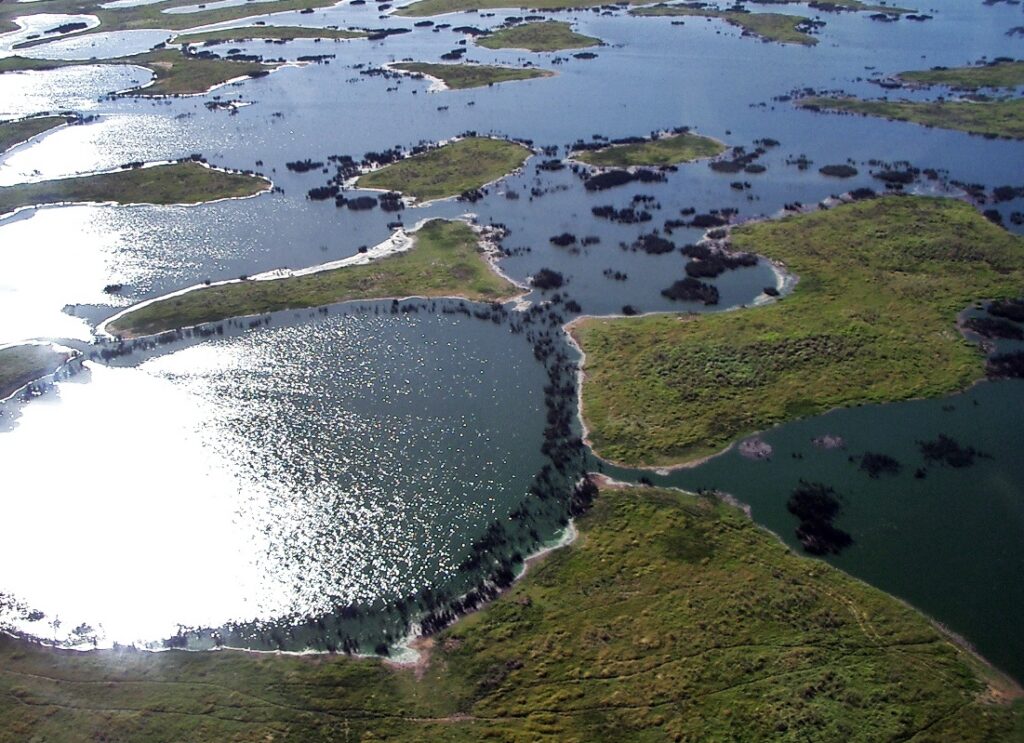
The Pantanal is the world’s largest tropical wetland, a seasonally flooded plain covering around 150,000 to 180,000 km² across Brazil, Bolivia and Paraguay, with most of it in Brazil. It is the best place in the world to see wild jaguars. In the dry season, cats patrol the riverbanks near Porto Jofre, hunting caimans and capybaras, and many visitors watch several jaguars in a single day. Add giant otters, hyacinth macaws and huge concentrations of waterbirds, and the Pantanal is one of the great wildlife destinations of the Americas.
Pantanal at a glance
| Best time | July to October (dry season); August and September are peak for jaguars |
| Gateway (north) | Cuiabá, Mato Grosso |
| Gateway (south) | Campo Grande, Mato Grosso do Sul |
| Jaguar hub | Porto Jofre, at the end of the Transpantaneira road |
| Recommended stay | 3 to 4 days of jaguar boat trips, plus 2 to 4 days elsewhere in the Pantanal |
| Famous for | Jaguars, giant otters, hyacinth macaws, caimans, capybaras, jabirus |
The Transpantaneira road
The Transpantaneira (MT-060) runs about 147 km south from Poconé to Porto Jofre, crossing more than 100 wooden bridges over lagoons and channels. The road itself is a wildlife drive, with caimans basking, capybaras grazing, jabiru storks nesting and hyacinth macaws in the palms. Many visitors spend a night or two at fazendas (ranch lodges) along the road before reaching Porto Jofre.
Jaguar boat safaris at Porto Jofre
From Porto Jofre, speedboats explore the Cuiabá River and its tributaries, such as the Três Irmãos and Piquiri, and the Encontro das Águas State Park. Jaguars here are well studied and habituated to boats. Guides use radios to share sightings, and boats wait at a respectful distance as jaguars rest, swim or hunt. In the peak season, sightings are very likely over a stay of three or four days.
Typical days start at dawn, include a return to the lodge or a floating hotel at midday, and end with a sunset boat trip.
Other wildlife
- Giant otters: family groups fishing and calling in the rivers.
- Hyacinth macaws, the largest parrots in the world.
- Yacare caimans: millions live in the Pantanal.
- Capybaras, the world’s largest rodents.
- Giant anteaters, lowland tapirs, marsh deer, ocelots and crab-eating foxes.
- Birds: more than 450 recorded species, including jabiru storks, toco toucans, roseate spoonbills and huge heronries.
Southern Pantanal
The southern Pantanal, reached from Campo Grande, offers a different experience. Lodges such as those near Aquidauana and Miranda have been involved in long-term jaguar projects, with some cats habituated to vehicles on land. The south is also good for giant anteaters, and it can be combined with Bonito, famous for crystal-clear rivers and snorkelling.
Seasons
| Season | Months | What to expect |
|---|---|---|
| Dry | July to October | Water levels fall; wildlife concentrates along rivers; best jaguar sightings; hot in September and October |
| Rising water | November to December | Rains begin; birds breeding; fewer tourists |
| Wet (flood) | January to March | Much of the plain floods; roads difficult; jaguars harder to see; excellent birding |
| Receding water | April to June | Transitional; good general wildlife; jaguars improving from June |
Conservation
In 2020, wildfires burned roughly a quarter to a third of the Pantanal, killing millions of animals and affecting jaguar territories. Fires returned in 2024. Tourism is a key reason for ranchers and communities to value jaguars rather than persecute them for killing cattle. Some projects compensate ranchers or promote livestock protection.
Tips
- Book early for August and September, when the best lodges and boats fill up.
- Bring a long lens (at least 400 mm) and binoculars.
- Wear sun protection, light long sleeves and insect repellent.
- Combine the Pantanal with Iguaçu Falls, Bonito or the Amazon.
- Choose operators who respect viewing rules and limit the number of boats per jaguar.
Frequently asked questions
How likely am I to see a jaguar in the Pantanal? In the peak season from July to October, sightings are very likely on a three to four day stay at Porto Jofre, and many visitors see several jaguars.
Northern or southern Pantanal? The north, around Porto Jofre, is best for boat-based jaguar viewing. The south offers land-based jaguar viewing at some lodges, and easier combinations with Bonito.
How do I get to Porto Jofre? Fly to Cuiabá, then drive south via Poconé along the Transpantaneira. The drive takes most of a day with wildlife stops, so many visitors break it at lodges along the road.
Is the Pantanal good for families? Yes. Boat trips, horse riding and easy wildlife viewing suit families, although the heat in September and October can be intense.
Related guides
- Wildlife of South America
- Costa Rica wildlife guide
- Wildlife photography for beginners
- Animal profiles: Jaguar, Giant Otter, Capybara, Giant Anteater, Toco Toucan
Cover photo: Alicia Yo, CC BY-SA 3.0, via Wikimedia Commons