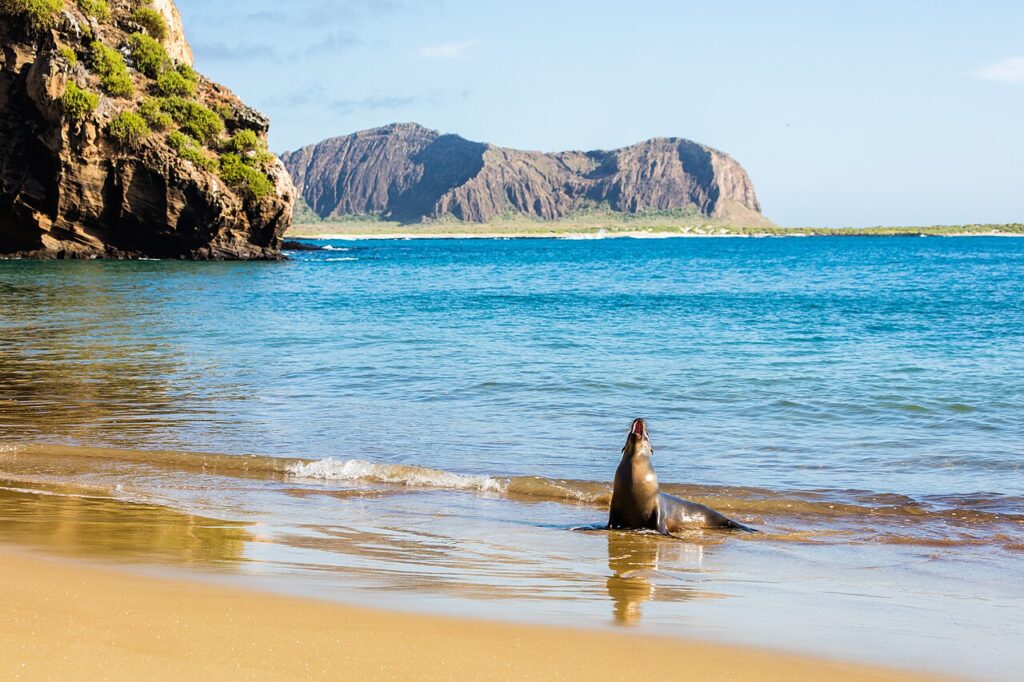
The Galápagos Islands, about 1,000 km off the coast of Ecuador, are one of the world’s greatest wildlife destinations. But the biggest decision for most travellers is not when to go. It is how to explore: on a small expedition cruise, or by staying in hotels on the inhabited islands and taking day trips. Both can be wonderful, but they suit different people and budgets, and they give access to different sites.
Quick comparison
| Cruise (liveaboard) | Land-based (island hopping) | |
|---|---|---|
| Access to remote islands | Excellent: Genovesa, Fernandina, Española, western Isabela | Limited to day-trip sites near Santa Cruz, San Cristóbal and Isabela |
| Wildlife time | Maximum: you travel at night and land at sites early | Less: time is lost on ferries and transfers |
| Cost | Higher (mid-range to luxury) | Flexible; can be budget-friendly |
| Seasickness | Possible, especially June to November | Ferries between islands can be rough, but nights are on land |
| Flexibility | Fixed itineraries set by the national park | Choose your own pace and activities |
| Comfort | Cabins can be small on budget boats | Hotel rooms, restaurants and towns |
| Best for | Wildlife enthusiasts, photographers, birders | Families, divers, budget travellers, people prone to seasickness |
How cruises work
Galápagos cruises range from small yachts with 16 passengers to expedition ships with up to 100 passengers, the maximum allowed. Itineraries of four to fifteen days are set by the Galápagos National Park to spread visitor pressure across sites. Each group is led by a certified naturalist guide, and landings are in small groups of up to 16 guests. Boats move between islands overnight, so each day brings a new landscape: walking on lava fields, snorkelling with sea lions, or watching boobies nest.
Only a cruise can reach sites such as:
- Genovesa: red-footed boobies, frigatebirds, swallow-tailed gulls and short-eared owls.
- Fernandina and western Isabela: flightless cormorants, Galápagos penguins and huge colonies of marine iguanas.
- Española (also possible on some day trips): waved albatrosses (roughly April to December), blue-footed boobies and colourful marine iguanas.
How land-based trips work
Travellers stay in towns on Santa Cruz (Puerto Ayora), San Cristóbal (Puerto Baquerizo Moreno) and Isabela (Puerto Villamil), and take public ferries between them. From there, they join day tours to nearby islands, such as North Seymour (blue-footed boobies, frigatebirds), Bartolomé, South Plaza (land iguanas), Santa Fe and, from San Cristóbal, Española. Many sites near towns, such as Tortuga Bay, the Santa Cruz highlands (giant tortoises), Concha de Perla and Los Túneles on Isabela, can be visited independently or with local guides.
Costs and fees
Every foreign adult visitor pays:
- US$200 Galápagos National Park entrance fee (paid on arrival); and
- US$20 Transit Control Card, bought at the airport in mainland Ecuador.
Cruises typically cost several hundred to over a thousand US dollars per person per night, depending on the boat’s class. Land-based trips can be much cheaper, especially if you book day tours locally, but popular day trips often cost US$150 to US$250 or more each.
Seasons
- December to May (warm season): warmer air and water, calmer seas, occasional rain showers, green landscapes, sea turtle nesting and land bird breeding.
- June to November (cool, garúa season): cooler, misty and choppier, but nutrient-rich Humboldt Current waters bring more marine life, including penguins, whales and schooling fish. Blue-footed booby courtship and waved albatrosses are highlights.
Which should you choose?
- Choose a cruise if seeing the widest range of species is your priority, if you want the remote western and northern islands, and if you can afford at least a 7-night itinerary on a good boat.
- Choose land-based if you are on a budget, travel with young children, get very seasick, want to dive or surf, or prefer flexibility and evenings ashore.
- Combine both: a few nights on land followed by a four or five night cruise is increasingly popular.
Tips
- Book cruises 6 to 12 months ahead for the best boats and dates.
- Pick your itinerary by the islands and species it includes, not just the boat.
- Bring seasickness remedies, reef-safe sunscreen, a hat and a light wetsuit in the cool season.
- Never touch wildlife. Stay at least 2 metres away and follow the guide.
Frequently asked questions
Is a Galápagos cruise worth the extra cost? If seeing the most species and remote islands is your priority, yes. Cruises reach sites such as Genovesa and Fernandina that land-based trips cannot.
Can I visit the Galápagos without a tour? Yes. Many visitors stay on Santa Cruz, San Cristóbal and Isabela, travel between them by ferry and book day tours locally. Guides are required at most visitor sites within the national park.
How many days do I need in the Galápagos? At least five to eight days. On a cruise, a seven-night itinerary offers the best balance; on land, a week lets you visit three islands.
What is the best month to visit? There is no bad month. December to May brings calmer seas and warmer water; June to November brings cooler, richer seas and more marine life.
Related guides
- Galápagos Islands wildlife guide
- Wildlife of South America
- Responsible wildlife tourism
- Animal profiles: Galápagos Giant Tortoise, Marine Iguana, Great Hammerhead Shark
Cover photo: Diego Delso, CC BY-SA 4.0, via Wikimedia Commons