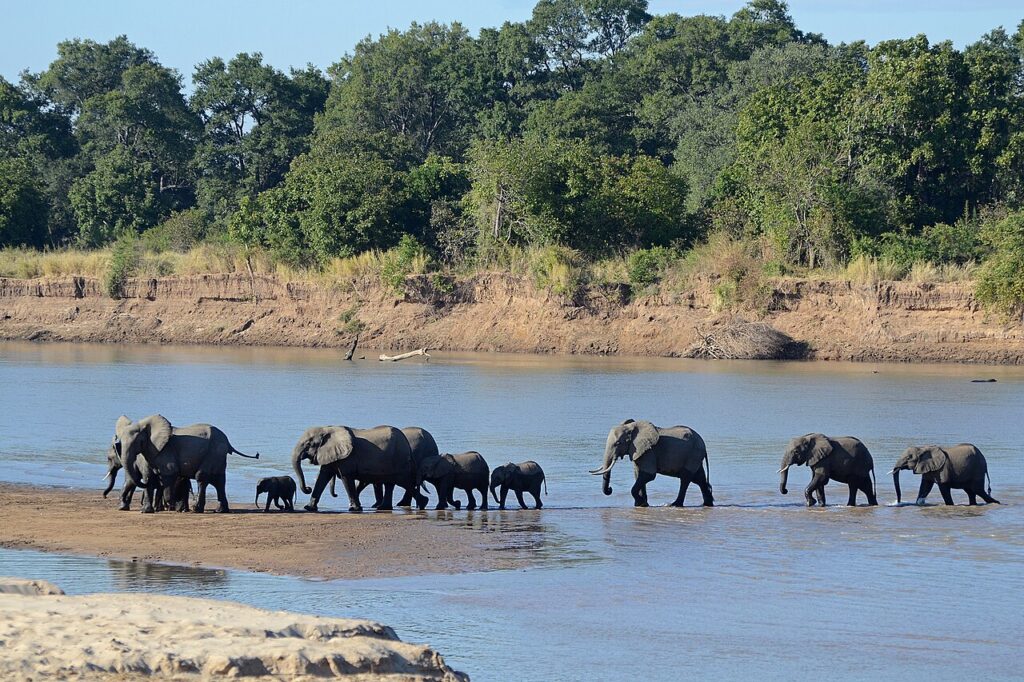
South Luangwa National Park in eastern Zambia is often called the birthplace of the walking safari. In the 1950s the conservationist Norman Carr began leading visitors on foot through the Luangwa Valley. Today the park combines expert walking guides, excellent leopard sightings, night drives and an oxbow-lined river full of hippos. Many seasoned safari-goers call it Africa’s most authentic wildlife experience.
South Luangwa at a glance
| Size | About 9,050 km² |
| Best time | June to October (dry season); walking season from about June to early November |
| Gateway | Mfuwe Airport, with flights from Lusaka and other regional hubs |
| Famous for | Walking safaris, leopards, night drives, hippos, Thornicroft’s giraffe |
| Style | Riverside lodges near Mfuwe and small seasonal bush camps in remote areas |
Why walk?
A walking safari is less about getting close to big animals and more about everything else: tracks and dung, termite mounds and medicinal plants, the alarm calls of birds and the smell of a buffalo herd upwind. You notice the small, silent world that vehicles pass by. Many guests say a walking day is the moment they truly understood the bush.
How a walk works
- Groups are small, typically a maximum of six guests.
- Each walk is led by a licensed walking guide and accompanied by an armed scout from Zambia’s Department of National Parks and Wildlife (DNPW). Many camps add a tea bearer.
- Walks usually start early, around 6:00, and last three to four hours, when it is cool and animals are active.
- You walk in single file, quietly, and follow hand signals. Guides keep a safe distance from dangerous animals and never approach them head on.
- Participants usually need to be at least 12 to 16 years old, depending on the camp.
Multi-day walking safaris are also available. Guests walk from one small bush camp to another, with luggage moved ahead by vehicle or porters.
Wildlife highlights
- Leopards: South Luangwa has one of the highest leopard densities in Africa, and night drives make sightings frequent.
- Thornicroft’s giraffe: a subspecies found only in the Luangwa Valley.
- Crawshay’s zebra and Cookson’s wildebeest: regional forms of the plains zebra and wildebeest.
- Hippos: the Luangwa River supports one of the densest hippo populations in Africa.
- Lions, African wild dogs (seasonally), elephants and large buffalo herds.
- Birds: more than 400 species, including spectacular colonies of southern carmine bee-eaters nesting in the riverbanks from about August to November.
Rhinos were poached out of the valley by the late 1980s, so South Luangwa is not a Big Five destination. Black rhinos have been reintroduced to the separate North Luangwa National Park.
Seasons
| Season | Months | What to expect |
|---|---|---|
| Early dry | May to July | Green bush drying out, cool nights, bush camps begin to open |
| Peak dry | August to October | Best game viewing, animals at the river, hot by October |
| Emerald season | November to April | Rain, lush scenery, migrant birds, newborns, boat trips on the swollen river in some camps; many bush camps close |
Night drives
Unlike many national parks in Africa, Zambian parks allow licensed operators to take night drives. A spotlight operator scans for leopards, genets, civets, porcupines, bushbabies and hunting lions. It is a real highlight of South Luangwa.
Where to stay
- Mfuwe area: riverside lodges near the main gate. They have larger bases, good value and easy access. Some lodges are famous for elephants walking through their reception areas, especially in November when the wild mango trees fruit.
- Remote bush camps: small seasonal camps with four to eight guests, often built afresh each year from reeds and canvas. These are the best choice for serious walking.
- Self-drive and camping: possible around Mfuwe with a well-equipped vehicle, but most visitors use full-board camps.
Getting there
- Fly from Lusaka to Mfuwe (around 1 hour 15 minutes). There are also connections from Livingstone, Lower Zambezi and Lilongwe (Malawi) at certain times of the year.
- Road access is via Chipata; the drive from Lilongwe is around five to six hours.
- Combine South Luangwa with the Lower Zambezi (canoeing) and Victoria Falls for a classic Zambian itinerary.
Tips
- Wear neutral colours (khaki, olive, brown) on walks, and avoid white and bright colours.
- Bring comfortable, broken-in walking shoes, a hat and a small daypack.
- Choose at least three nights, ideally split between a riverside lodge and a bush camp.
- Visit in September or October for bee-eaters and peak predator action; expect temperatures above 35 °C in late October.
Frequently asked questions
Are walking safaris safe? Walking safaris in South Luangwa are led by highly trained, licensed guides with an armed scout, and serious incidents are very rare. Following instructions and walking quietly in single file are essential.
Do I need to be fit for a walking safari? A moderate level of fitness is enough. Walks are usually at a slow pace for three to four hours in the cool of the morning.
Can children go on walking safaris? Most camps set a minimum age of 12 to 16 for walking. Younger children can enjoy game drives and boat trips where offered.
What is the best month to visit South Luangwa? September and October offer the best game viewing and carmine bee-eater colonies, but they are hot. June and July are cooler and still excellent.
Related guides
- Where to see the Big Five
- First African safari planning guide
- Responsible wildlife tourism
- Animal profiles: Leopard, Hippopotamus, Giraffe, African Wild Dog
Cover photo: Geoff Gallice, CC BY 2.0, via Wikimedia Commons