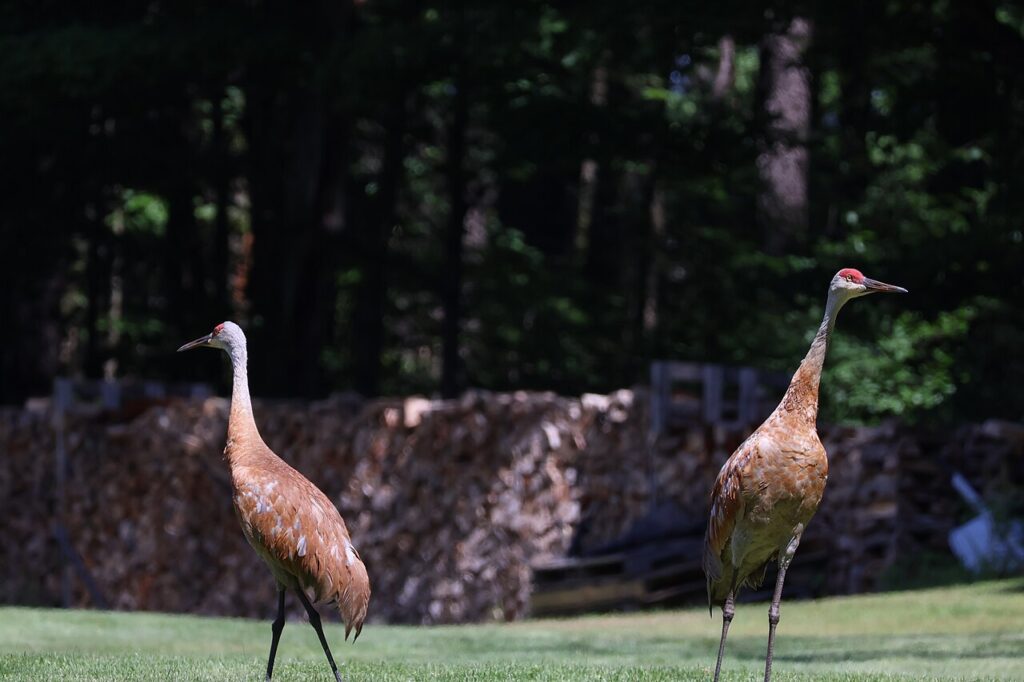
Every spring, a stretch of the Platte River in central Nebraska hosts one of North America’s greatest wildlife spectacles. From late February to early April, as many as a million sandhill cranes, the large majority of the world’s population, stop here on their migration from the southern United States and Mexico to breeding grounds in Canada, Alaska and Siberia. They feed in cornfields by day and roost on the river’s sandbars at night, filling the sky with their rattling calls.
At a glance
| Best time | Mid-March (peak), from late February to early April |
| Getting there | Kearney and Grand Island, Nebraska, on Interstate 80 |
| Time needed | 2 to 3 days |
| Big draws | Hundreds of thousands of cranes, dawn and dusk roosts |
| Good for | Birders, photographers, families |
The cranes
- Sandhill cranes are tall, grey birds with red crowns and a loud, rolling call. They are among the oldest living bird species; fossils suggest cranes much like them have existed for millions of years. See our whooping crane profile for their rare relative.
- On the Platte, they put on fat by eating waste corn and invertebrates before continuing north.
- Cranes perform courtship dances in the fields, leaping, bowing and throwing sticks.
Where to watch
- Iain Nicolson Audubon Center at Rowe Sanctuary (near Kearney): guided viewing from blinds on the river at dawn and dusk, when cranes arrive at or leave their roosts. Book well in advance.
- Crane Trust Nature and Visitor Center (near Grand Island): blinds, trails and viewing areas.
- Bridges and viewing platforms: the Fort Kearny Hike-Bike Trail bridge and public viewing decks along the river.
- Country roads: cranes feed in fields during the day; drive slowly and stay in your car to avoid disturbing them.
Whooping cranes
A few of the endangered whooping cranes, the tallest birds in North America, sometimes stop on the Platte in spring, mostly in April. Their population has recovered from just 15 or so birds in 1941 to several hundred today.
Tips
- Dusk and dawn are the highlights; be in position early.
- Dress warmly: March mornings on the river can be well below freezing.
- Do not get out of your car near feeding cranes or approach roosts.
- Visit during the Audubon Nebraska Crane Festival, usually in March.
When to go
Cranes begin arriving in late February, peak in mid to late March and leave by early April.
Frequently asked questions
When is the best time to see the sandhill crane migration? Mid to late March, when numbers peak.
How many cranes gather on the Platte River? Estimates in recent years have reached around a million at the peak.
Where is the best place to watch? Guided blinds at Rowe Sanctuary and the Crane Trust offer the closest views at dawn and dusk.
Can I see whooping cranes? Occasionally, mostly in April, but they are rare.
Related guides
- Crane migration at Hortobágy
- Monarch butterfly reserves in Mexico
- Snow monkeys and winter wildlife in Hokkaido
- Animal profiles: Whooping crane, Canada goose, Sarus crane
Cover photo: HappiestFish, CC BY 4.0, via Wikimedia Commons