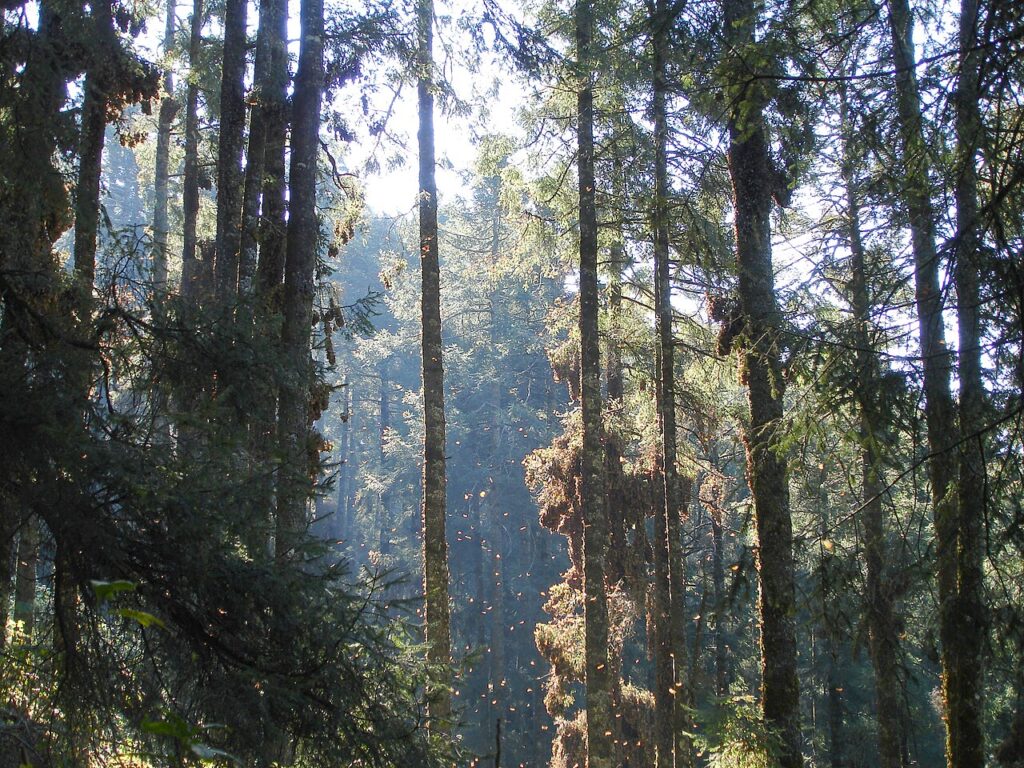
Each autumn, monarch butterflies from the eastern United States and Canada fly up to about 4,000 km south to spend the winter in a small area of high-altitude oyamel fir forest in central Mexico. There, millions cluster so densely on the trees that branches bend under their weight. When the sun warms them, they take flight in orange clouds. The Monarch Butterfly Biosphere Reserve, spanning the states of Michoacán and México, is a UNESCO World Heritage Site.
At a glance
| Best time | Late December to early March (peak January to February) |
| Getting there | About 3 to 4 hours by road from Mexico City |
| Time needed | 2 to 3 days |
| Big draws | Millions of monarch butterflies, mountain forest |
| Good for | Families, photographers, nature lovers |
The migration
- No single butterfly makes the round trip. The monarchs that fly south in autumn are a special “super generation” that lives up to about eight months; their descendants over several generations fly north again in spring. See our monarch butterfly profile.
- Scientists measure the colonies by the area of forest they cover. It has varied greatly from year to year, with long-term declines linked to habitat loss, pesticides, loss of milkweed in North America, and extreme weather.
The sanctuaries
| Sanctuary | State | Notes |
|---|---|---|
| El Rosario | Michoacán | The largest and most visited; a steep hike or horseback ride |
| Sierra Chincua | Michoacán | Quieter; a longer, gentler walk or horseback ride |
| Piedra Herrada | México state | Closest to Mexico City; a steep climb |
| Cerro Pelón | México/Michoacán | Remote and less visited; horseback ride |
Visitors walk or ride horses (hired from local communities) up trails at altitudes of about 3,000 to 3,300 m to reach the colonies.
When to go
- Late November to December: butterflies arrive and settle.
- January to February: the peak, when colonies are largest and butterflies are most active on warm, sunny afternoons.
- March: butterflies begin mating and leave for the north.
How to visit responsibly
- Hire local guides and horses from community cooperatives: tourism income helps protect the forest.
- Stay quiet and keep to the trails.
- Do not touch butterflies or pick them up from the ground.
- Visit on weekdays to avoid crowds.
- Bring warm layers: mornings are cold at altitude.
Getting there
Most visitors stay in the towns of Angangueo, Zitácuaro or Valle de Bravo, about 3 to 4 hours from Mexico City. Tours from Mexico City and Morelia are available.
Safety
Parts of Michoacán have had security problems, though the sanctuaries themselves receive many visitors. Check current government advice and travel with reputable local operators.
Frequently asked questions
When is the best time to see monarch butterflies in Mexico? January and February, on sunny days around midday and early afternoon.
Which sanctuary is best? El Rosario is the largest and most accessible from Angangueo; Sierra Chincua is quieter and easier on the legs.
How high are the sanctuaries? Around 3,000 m or more, so walk slowly if you are not used to altitude.
Are monarchs endangered? Migratory monarch populations have declined significantly. The IUCN has assessed the migratory monarch as Vulnerable, and it faces many threats.
Related guides
- Grey whale watching in Baja California
- Sandhill crane migration on the Platte River
- Christmas Island red crab migration
- Animal profile: Monarch butterfly
Cover photo: hspauldi, CC BY-SA 2.0, via Wikimedia Commons