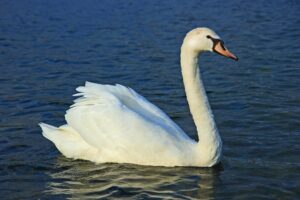
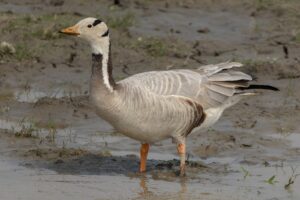
The Canada goose is a large goose with a black head and neck and a white chinstrap. Once rare in some areas, it has become extremely common in parks and farmland.
Interesting facts
- Canada geese were introduced to Britain in the 1600s for King Charles II’s waterfowl collection.
- Pairs usually mate for life and defend their goslings fiercely.
- The smaller cackling goose was recognised as a separate species in 2004.
- Populations have grown enormously in cities and suburbs with lawns and ponds.
- Canada geese struck the engines of US Airways Flight 1549, which landed on the Hudson River in 2009.
- Their honking calls help flocks stay together during migration.
Behaviour
Canada geese graze on land and water, often in flocks. Many populations migrate, but others stay year-round in cities.
Breeding and young
Females lay about four to seven eggs in a nest near water. Both parents guard the goslings, which can swim within a day.
Threats and conservation
The species is abundant and is managed where it causes problems.
Where to see it
- Parks and lakes across North America
- Horicon Marsh, Wisconsin, during migration
- Lakes and parks across Britain
- Farmland and wetlands throughout its range
Status source: IUCN Red List. Profile last reviewed September 2026.
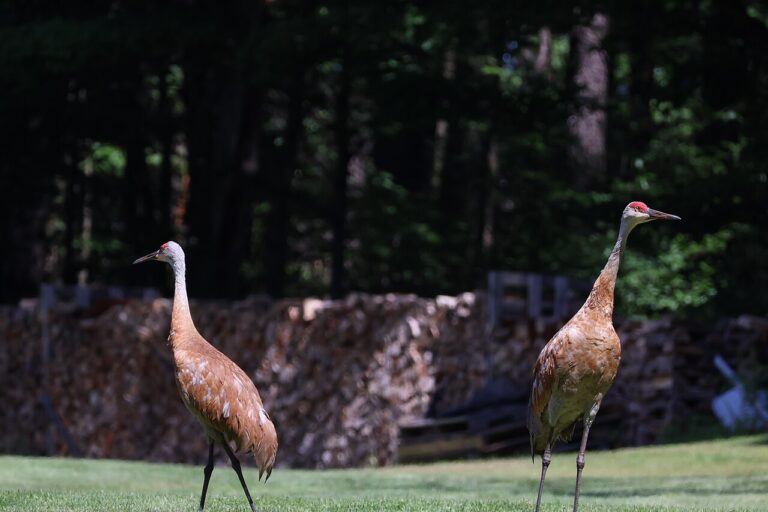 Sandhill Crane Migration on the Platte River