Vietnam has some of the world’s most threatened primates, from gibbons with extraordinary songs to langurs found only in a few limestone hills. Two national parks, Cat Tien in the south and Cuc Phuong in the north, offer the best introduction, together with rescue centres that care for animals confiscated from the wildlife trade.
At a glance
| Best time | November to April (dry season) |
| Getting there | Cat Tien: about 4 hours from Ho Chi Minh City. Cuc Phuong: about 3 hours from Hanoi |
| Time needed | 2 to 3 nights in each |
| Big draws | Gibbons, langurs, rescue centres, birds, night drives |
| Good for | Primate lovers, birders, travellers seeking nature in Vietnam |
Cat Tien National Park
A lowland forest of about 720 km² in the south.
- Gibbon trekking: early-morning walks to hear and see the southern yellow-cheeked crested gibbon singing.
- Primates: black-shanked douc langurs, pygmy slow lorises and macaques.
- Night drives and walks: sambar, civets, slow lorises, porcupines and, occasionally, gaur.
- Birds: over 350 species, including Siamese firebacks, germain’s peacock-pheasants and green peafowl.
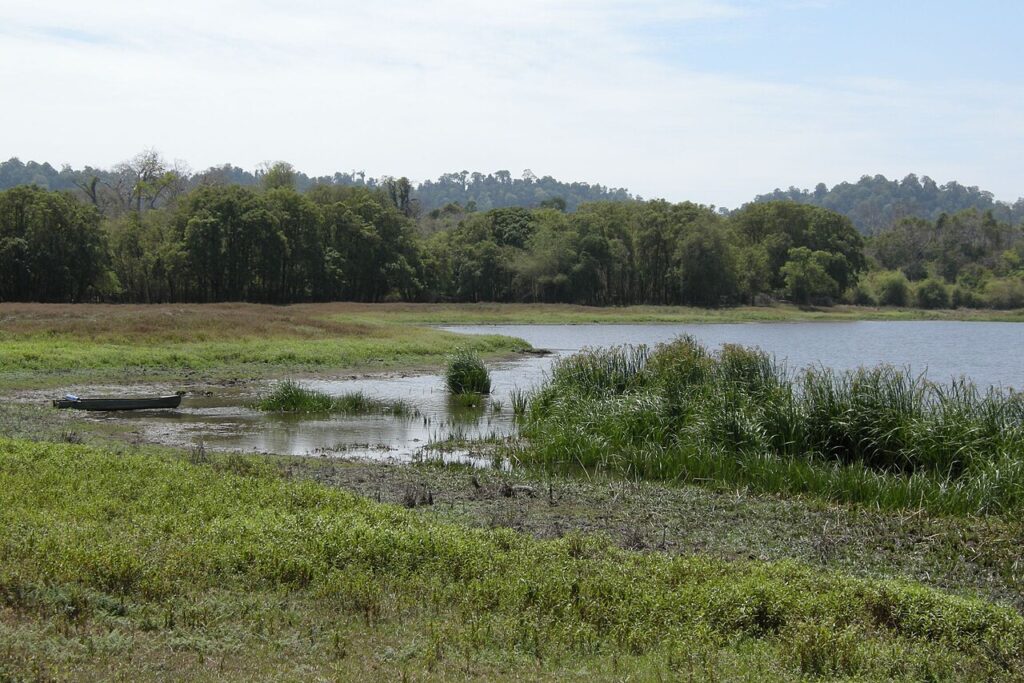
- Crocodile Lake: a wetland reached by hiking or cycling, with reintroduced Siamese crocodiles.
- Dao Tien Endangered Primate Species Centre: on an island in the Dong Nai River, where rescued gibbons and langurs are rehabilitated. Visits must be booked.
Cuc Phuong National Park
Vietnam’s first national park (1962), in limestone hills south-west of Hanoi.
- Endangered Primate Rescue Center: cares for rare primates such as Delacour’s langurs, Cat Ba langurs and gibbons, many found almost nowhere else.
- Turtle Conservation Center: rescues turtles from the illegal trade.
- Forest trails: to a thousand-year-old tree and caves with prehistoric remains.
- Birds and butterflies: excellent in spring.
Wildlife trade
Vietnam is both a source and a transit route for the illegal wildlife trade, which has emptied many of its forests. Rescue centres, anti-poaching work and campaigns to reduce demand for wildlife products are vital. Never buy wildlife products, and avoid restaurants that serve wild meat.
When to go
- November to April: the dry season; best for trekking and night drives.
- May to October: rainy season; leeches are common, and some trails may close.
Getting there
- Cat Tien: about 150 km (4 hours) from Ho Chi Minh City, then a short ferry across the Dong Nai River.
- Cuc Phuong: about 120 km (3 hours) from Hanoi; combine with Ninh Binh’s limestone landscapes.
Frequently asked questions
Can I see gibbons in Cat Tien? Yes, on early-morning gibbon treks, though sightings in the canopy are not guaranteed. You are very likely to hear them.
Is Cuc Phuong worth visiting? Yes, especially for the primate and turtle rescue centres and forest walks.
What is the best time to visit Vietnam’s national parks? November to April, the dry season.
Can I help the rescue centres? Yes, by visiting, donating or supporting their work online.
Related guides
- Khao Yai and Kaeng Krachan
- Wildlife tourism to avoid
- Danum Valley rainforest guide
- Animal profiles: Lar gibbon, Slow loris, Sunda pangolin
Cover photo: Vyacheslav Argenberg, CC BY 2.0, via Wikimedia Commons