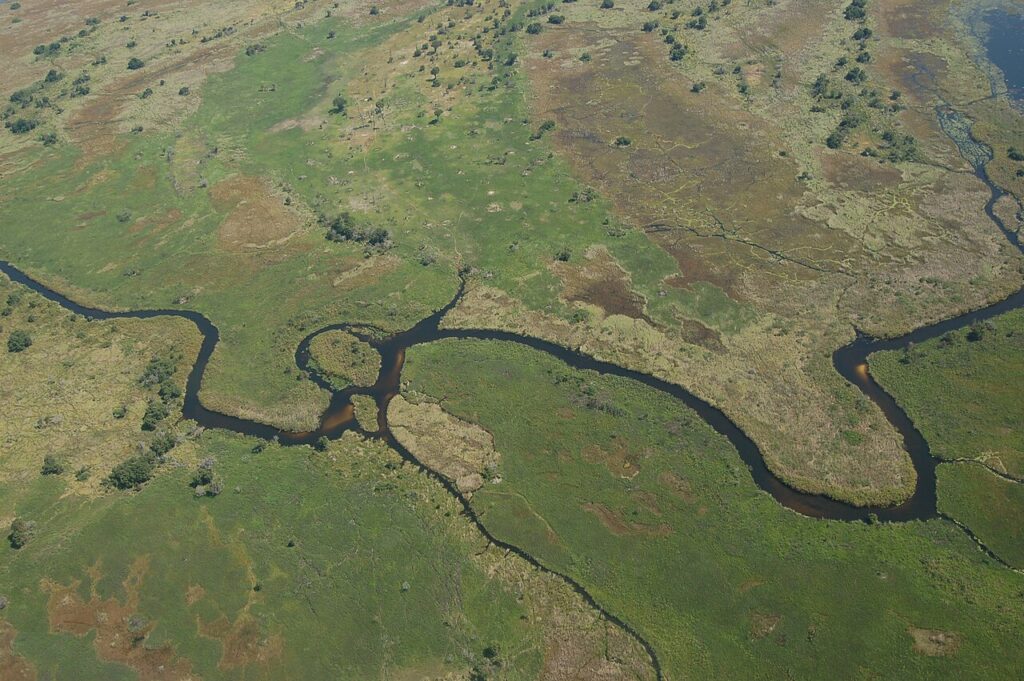
The Okavango Delta in northern Botswana is one of the most beautiful and wildlife-rich places in Africa. The Okavango River flows from the highlands of Angola and, instead of reaching the sea, spreads into a vast inland delta of channels, lagoons, islands and floodplains in the Kalahari. It is a UNESCO World Heritage Site and one of the best places in Africa to see African wild dogs, as well as lions, leopards, elephants and hundreds of bird species.
How the flood works
The Okavango’s flood is driven by rain that falls in the Angolan highlands between November and March. The water takes months to travel down the river, so it arrives in the delta during Botswana’s dry season, usually peaking around June to August. This creates a green oasis just when the surrounding land is driest, drawing animals from far and wide.
When to go
| Season | Months | What to expect |
|---|---|---|
| High water, dry season | June to October | Best game viewing; mokoro and boat trips at their best; peak prices |
| Hot, dry | October to November | Very hot; excellent predator activity as water shrinks |
| Green season | December to March | Rain, lush scenery, newborn animals, migrant birds, lower prices; some areas harder to access |
| Transition | April to May | Water starts arriving; good value |
Types of camps
- Water camps, deep in the permanent wetlands: mokoro (dugout canoe) and boat trips, walking on islands, superb birds; fewer big predators.
- Land camps, on drier islands and edges: game drives, big cats, wild dogs, elephants.
- Mixed camps, offering both, depending on season and water levels.
Many visitors combine two or three camps to experience both water and land activities.
Moremi Game Reserve and private concessions
- Moremi Game Reserve protects the eastern part of the delta and is open to self-drivers and mobile safaris, with areas such as Third Bridge, Xakanaxa and South Gate.
- Private concessions, such as Vumbura, Mombo (Chief’s Island area), Khwai and Linyanti nearby, host small, exclusive camps with off-road driving, night drives and walking.
Botswana follows a “high value, low volume” tourism model, keeping visitor numbers low and prices high to reduce impact.
Activities
- Mokoro trips: gliding silently through reed channels poled by local guides, watching for reed frogs, kingfishers and elephants.
- Game drives on land, day and, in concessions, at night.
- Walking safaris on islands with armed guides.
- Boat trips on deeper channels.
- Scenic flights by light aircraft or helicopter over the delta.
Wildlife highlights
- African wild dogs: northern Botswana is one of their strongholds.
- Lions, some of which swim between islands, leopards and cheetahs.
- Elephants and buffalo in large herds.
- Red lechwe, an antelope adapted to wetlands, and the shy sitatunga in papyrus.
- Birds: more than 400 species, including Pel’s fishing owl, African fish eagle, wattled crane and slaty egret.
Getting there and costs
Most visitors fly into Maun, then take light aircraft to camp airstrips. Luggage is limited to about 20 kg in soft bags. Okavango safaris are among the most expensive in Africa, particularly in private concessions during peak season. Self-drive camping in Moremi and mobile safaris are more affordable, but require experience or a guide.
Frequently asked questions
When is the best time to visit the Okavango Delta? June to October, when the floodwaters are high and game viewing is excellent. The green season from December to March offers lower prices and excellent birding.
Can I visit the Okavango Delta on a budget? It is expensive, but mobile camping safaris, self-drive camping in Moremi and day trips from Maun are cheaper than fly-in camps.
What is a mokoro? A mokoro is a traditional dugout canoe, now usually made of fibreglass, poled through the shallow channels by a local guide.
How many days do I need? Five to seven nights split between two or three camps, combining water and land activities, is ideal.
Related guides
- Chobe National Park guide
- Where to see the Big Five
- How much does a safari cost?
- Animal profiles: African Wild Dog, Hippopotamus
Cover photo: Joachim Huber, CC BY-SA 2.0, via Wikimedia Commons