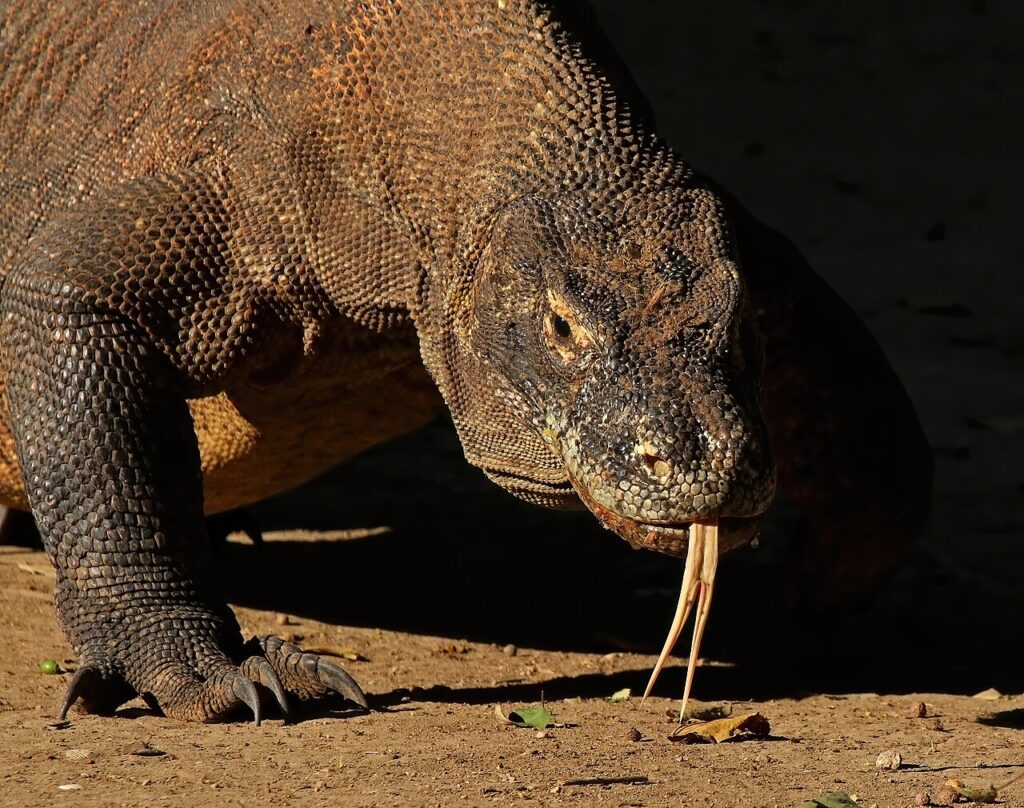
Komodo National Park in eastern Indonesia protects the only wild home of the Komodo dragon, the largest living lizard, along with some of the richest coral reefs on the planet. Established in 1980 and named a UNESCO World Heritage Site in 1991, the park covers the islands of Komodo, Rinca and Padar, many smaller islands and the surrounding seas. About 3,000 dragons live in the park and on nearby parts of Flores.
Komodo at a glance
| Gateway | Labuan Bajo, western Flores (about 1 hour by air from Bali) |
| Main dragon sites | Loh Liang (Komodo Island) and Loh Buaya (Rinca Island) |
| Best time | April to December (dry season); April to June and September to November for the best balance of weather and seas |
| Wet season | January to March: rougher seas, some trips cancelled |
| How to visit | Day trips by speedboat, or 2 to 4 day liveaboard boats |
| Entry | Booked in advance through the park’s online system (SiOra) via a licensed operator |
Seeing Komodo dragons
Dragons can only be visited with a park ranger, who carries a forked stick and leads you on marked trails.
- Komodo Island (Loh Liang): longer treks through savanna and forest, with dragons, Timor deer, wild boar and cockatoos. Some walks explore further inland.
- Rinca Island (Loh Buaya): often the most reliable site for dragons. The infrastructure was upgraded with raised boardwalks in 2021–22.
Dragons can be over 3 metres long and weigh more than 70 kg. They can run fast in short bursts, so always follow the ranger’s instructions and keep your distance. Their bite contains venom that prevents blood clotting. The species is listed as Endangered by the IUCN, which cited the threat of rising sea levels to its small, low-lying island habitats.
Beyond the dragons
- Padar Island: a short, steep hike (about 30 to 45 minutes) to a famous viewpoint over three bays with white, black and pink sand. Go at sunrise to avoid heat and crowds.
- Pink Beach: named for sand coloured by fragments of red organ-pipe coral. Good snorkelling nearby.
- Manta Point (Makassar Reef): snorkel or dive with reef manta rays (and occasionally the larger oceanic manta) feeding in the current.
- Kalong Island: at sunset, thousands of flying foxes leave the mangroves to feed.
- Taka Makassar and Kanawa: sandbars and reefs for easy snorkelling.
Diving in Komodo
Komodo is one of the world’s great dive destinations. Strong currents bring nutrient-rich water from the Indian and Pacific oceans, supporting huge schools of fish, sharks, turtles, manta rays, dugongs (rare) and colourful macro life. Famous sites include Batu Bolong, Castle Rock, Crystal Rock and The Cauldron. Currents can be powerful, so many sites are best for experienced divers with a reputable dive centre.
Fees and rules
The park’s fees and booking system have changed several times in recent years. Since April 2026, all entries must be booked in advance through the SiOra online system by a licensed operator. There are no walk-in tickets. At the time of writing, the base entrance fee for foreign visitors was around IDR 250,000 per day, with extra charges for ranger-guided treks, landing fees and diving or snorkelling. Your boat operator usually handles bookings; ask for a clear breakdown of what is included.
Choosing a boat operator
- Safety first: check for life jackets for every passenger, a radio, a first aid kit and an experienced crew. There have been boat accidents in the area.
- Licensing: use operators licensed to work inside the park.
- Environmental practices: look for operators that use moorings rather than anchoring on coral, manage waste responsibly and brief guests on reef etiquette.
- Comfort: liveaboards range from simple wooden phinisi boats with shared cabins to luxury yachts.
Responsible travel
- Never feed dragons or try to get close for selfies.
- Don’t touch or stand on coral, and use reef-safe sunscreen.
- Take your rubbish home, especially plastic.
- Support local businesses in Labuan Bajo and villages inside the park.
Frequently asked questions
Is it safe to see Komodo dragons? Yes, when you follow the rangers. Attacks on visitors are very rare. Keep at least a few metres away, stay with your group and follow instructions.
Should I visit Komodo or Rinca? Both have dragons. Rinca is often more reliable for sightings, while Komodo Island offers longer walks. Many boat trips visit one of the two.
Is a day trip enough? A day trip by speedboat covers the highlights, but a two or three day liveaboard is more relaxed, reaches more snorkelling sites and lets you see sunrise at Padar.
Do I need to be a diver? No. Snorkelling is excellent at many sites, including Manta Point in the right conditions, Pink Beach and Kanawa Island.
Related guides
- Where to see orangutans in Borneo
- Great Barrier Reef guide
- Responsible wildlife tourism
- Animal profiles: Komodo Dragon, Giant Manta Ray, Green Sea Turtle
Cover photo: Charles J. Sharp, CC BY-SA 4.0, via Wikimedia Commons