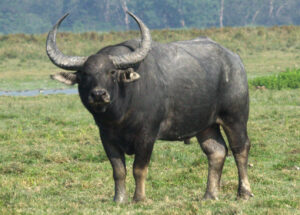
The gaur is a huge, muscular wild ox of South and Southeast Asian forests. Despite its size, it is shy and quick to disappear into the forest.
Interesting facts
- It is often called the Indian bison.
- India holds most of the world’s gaur.
- A high ridge on the back and white ‘stockings’ on its legs make it easy to recognise.
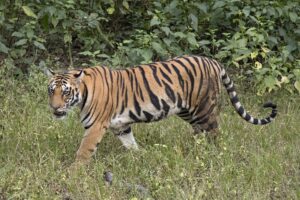
- Tigers prey on young gaur and sometimes on adults.
- A domesticated form of gaur, called the mithun or gayal, is kept in northeast India and Myanmar.
- Gaur herds often graze in forest clearings at dawn and dusk.
Behaviour
Gaur live in herds of about 8 to 11 animals, led by an older female, with one or more adult males. They graze and browse mainly in the morning and late afternoon.
Breeding and young
After about nine months, a single calf is born. Calves stay close to the herd, which protects them from predators.
Threats and conservation
Hunting for meat and horns, habitat loss, and diseases spread from domestic cattle. Populations are stable in some Indian reserves but have crashed in parts of Southeast Asia.
Where to see it
- Nagarhole (Kabini) and Bandipur national parks, India
- Kanha and Tadoba tiger reserves, India
- Periyar Tiger Reserve, Kerala, India
- Chitwan National Park, Nepal
Status source: IUCN Red List. Profile last reviewed September 2026.
Where to see the gaur
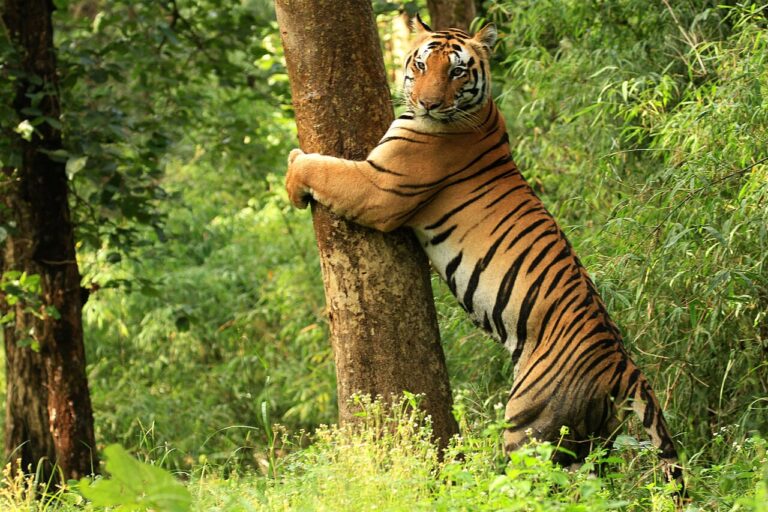 Kanha National Park: Tigers, Barasingha and Sal ForestsKanha's sal forests and grassy meadows are one of India's most beautiful tiger landscapes, and home to the…
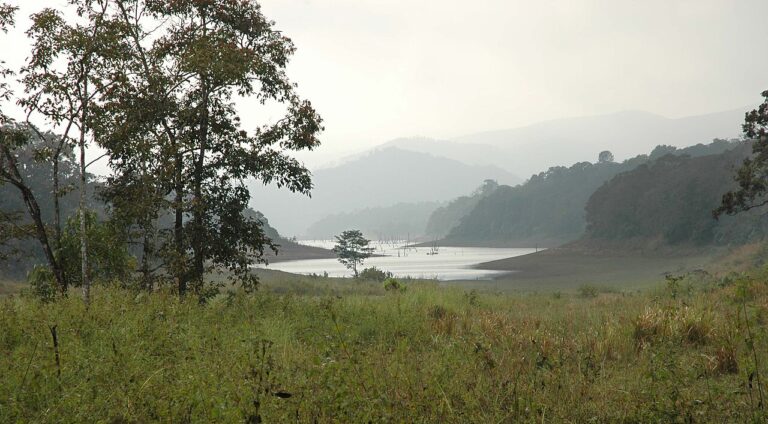 Periyar and the Western Ghats: Elephants and EndemicsThe Western Ghats are one of the world's biodiversity hotspots. Periyar, Munnar and the surrounding hills offer elephants,…