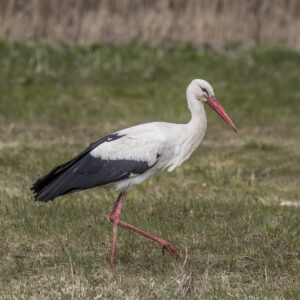
The great egret is a tall, elegant, all-white heron found worldwide. Its recovery from the plume trade is one of the earliest successes in bird conservation.
Interesting facts
- Its long breeding plumes, called aigrettes, were used to decorate hats.
- At the height of the trade, plumes were worth more than their weight in gold.
- The great egret is the symbol of the National Audubon Society.
- It began breeding in Britain in 2012.
- It hunts by standing still or walking slowly, then spearing prey.
- It is one of the most widespread herons in the world.
Behaviour
Great egrets feed alone or in loose groups in shallow water. They nest in colonies, often with other herons and storks.
Breeding and young
Pairs build stick nests in trees or reeds and lay two to four eggs. Chicks fledge after about six to seven weeks.
Threats and conservation
The species has recovered. Current threats include wetland loss and pollution.
Where to see it
- Everglades National Park, Florida
- Keoladeo National Park, India
- Pantanal, Brazil
- Somerset Levels, England
Status source: IUCN Red List. Profile last reviewed September 2026.
 Everglades National Park Wildlife Guide
 Kakadu National Park Wildlife Guide