The dingo is Australia’s wild dog and top land predator. It has lived there for thousands of years and plays an important role in Aboriginal culture and in ecosystems. Its relationship with farmers, however, remains contentious.
Interesting facts
- Dingoes arrived in Australia at least 3,500 years ago, probably with seafarers from Asia.
- They rarely bark; instead they howl, yelp and growl.
- Dingoes can rotate their wrists and climb better than most dogs.
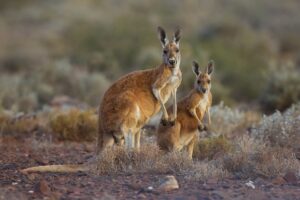
- As Australia’s largest land predator, dingoes help control foxes, feral cats and kangaroos.
- Dingoes on K’gari (Fraser Island) are among the most genetically pure.
- Interbreeding with domestic dogs is a major conservation concern.
Behaviour
Dingoes live alone or in packs of related animals with a dominant breeding pair. Packs defend territories and hunt cooperatively for large prey such as kangaroos. They are most active at dawn and dusk.
Breeding and young
Dingoes breed once a year. After about 63 days, a litter of four to six pups is born in a den. Other pack members may help raise the young.
Threats and conservation
Hybridisation with domestic dogs, lethal control through poisoning, trapping and shooting to protect livestock, and habitat loss.
Where to see it
- K’gari (Fraser Island), Queensland
- Kakadu National Park, Northern Territory
- Uluru-Kata Tjuta National Park, Northern Territory
- Never feed or approach dingoes, especially on K’gari
Status source: IUCN Red List. Profile last reviewed September 2026.
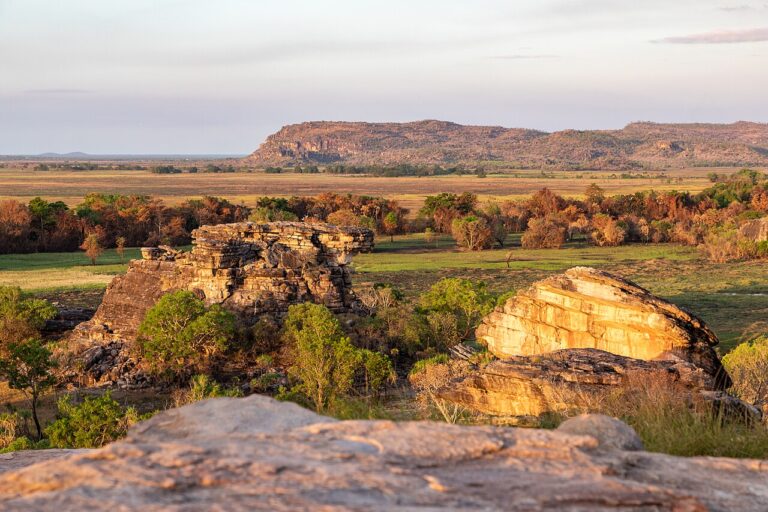 Kakadu National Park Wildlife Guide