The Sunda pangolin is one of four Asian pangolin species. Demand for its meat and scales has driven massive declines, and it is Critically Endangered. Rescue centres rehabilitate animals confiscated from traffickers.
Interesting facts
- Pangolins roll into a tight ball when threatened.
- They have no teeth and grind food with small stones in their stomachs.
- Their tongue can be longer than their body and is attached near the pelvis.
- Pangolins are thought to be the most trafficked wild mammals in the world.
- All eight pangolin species have been in CITES Appendix I since 2017.
- Mothers carry their young on their tails.
Behaviour
Pangolins are solitary and nocturnal. They climb well using their prehensile tails and break into ant and termite nests with strong claws.
Breeding and young
Females usually give birth to a single young, which rides on the mother’s tail.
Threats and conservation
Illegal hunting and trafficking for meat and traditional medicine, and deforestation.
Where to see it
- Very rarely seen; night walks in Singapore’s nature reserves and in Bornean and Thai forests occasionally reveal one
Status source: IUCN Red List. Profile last reviewed September 2026.
Where to see the sunda pangolin
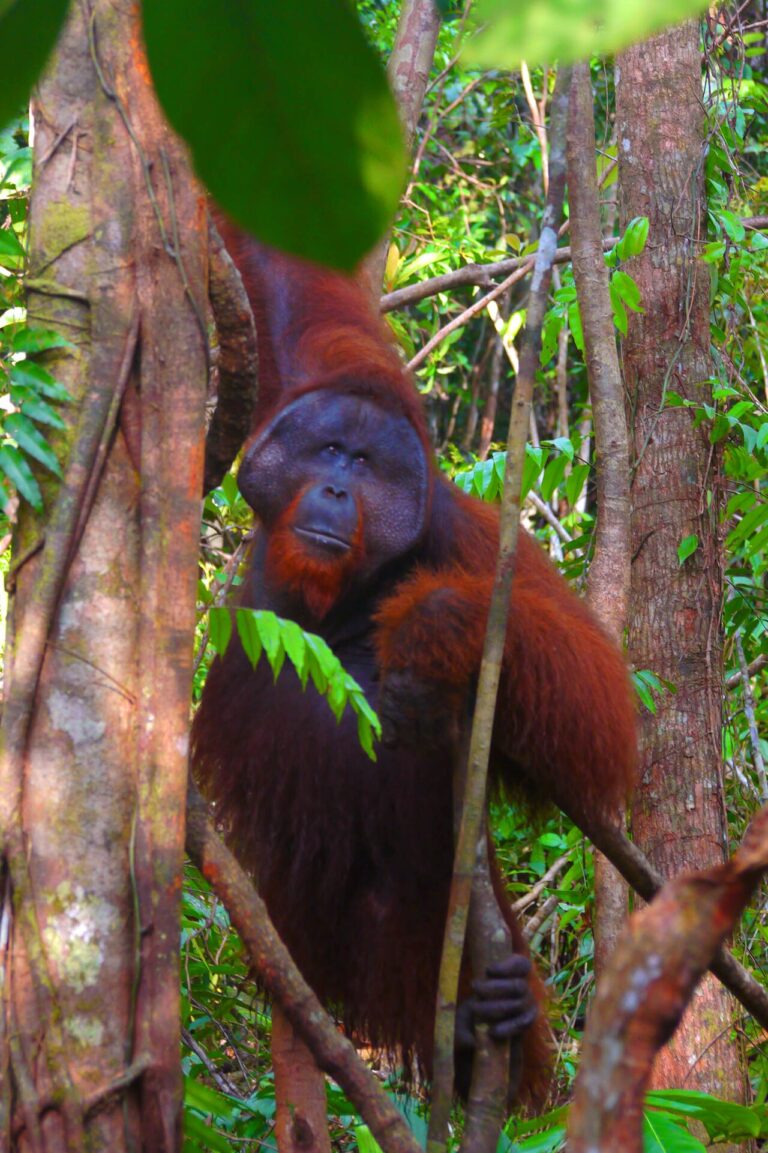 Where to See Orangutans in Borneo and SumatraFrom rehabilitation centres to river cruises and primary rainforest, the best places to see Asia's only great ape,…
 Cat Tien and Cuc Phuong: Primates of VietnamVietnam's forests are home to some of the world's rarest primates. How to see gibbons, langurs and the…
 Wildlife Tourism to Avoid: Captive Encounters and Red FlagsSome popular wildlife experiences cause real harm. Which ones to avoid, how to spot red flags, and what…