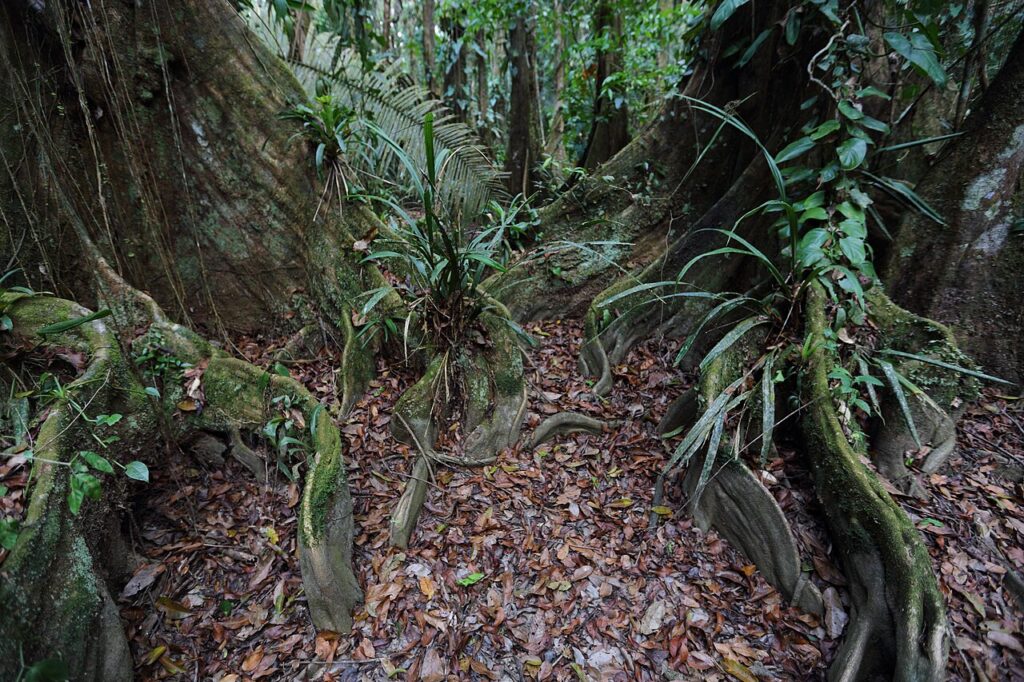
Belize is small, but its wildlife is big. Around 40% of its land is protected, it has the world’s first jaguar reserve, and its barrier reef is the largest in the Western Hemisphere. Add Maya ruins, English as the official language and easy travel, and it is an excellent country for wildlife lovers.
At a glance
| Best time | December to May (dry season) |
| Getting there | Fly to Belize City |
| Time needed | 7 to 12 days |
| Big draws | Barrier reef, howler monkeys, manatees, birds, jaguar reserve |
| Good for | Families, divers, combining land and sea |
Cockscomb Basin Wildlife Sanctuary
- Established in 1984 as the world’s first jaguar reserve, following research by the zoologist Alan Rabinowitz.
- Jaguars are present but rarely seen; tracks and camera-trap images are more common. See our jaguar profile.
- Trails lead to waterfalls, and you may see howler monkeys, tapirs’ tracks, coatis and many birds.
- Victoria Peak, Belize’s second-highest mountain, rises above the basin.
The Belize Barrier Reef
- Part of the Mesoamerican Reef, the barrier reef is a UNESCO World Heritage Site.
- Hol Chan Marine Reserve and Shark Ray Alley (near Ambergris Caye) offer snorkelling with nurse sharks, stingrays and turtles.
- The Great Blue Hole, a huge marine sinkhole, is a famous dive for experienced divers.
- Whale sharks gather at Gladden Spit near Placencia around the full moons from about April to June to feed on snapper spawn. See our whale shark profile.
Howler monkeys
- The Community Baboon Sanctuary, run by local landowners since 1985, protects black howler monkeys (locally called “baboons”) on private land. Guided walks almost always find them. See our howler monkey profile.
Manatees
West Indian manatees are seen around Swallow Caye near Caye Caulker, in lagoons and rivers. Watch from boats with licensed guides; swimming with manatees is not allowed. See our West Indian manatee profile.
Birds
Belize has around 600 bird species. Crooked Tree Wildlife Sanctuary is famous for jabiru storks, herons and waterbirds, especially from February to May. Keel-billed toucans, Belize’s national bird, are common in forests.
When to go
- December to May: the dry season, best for travel and wildlife.
- June to November: rainy season, with the risk of hurricanes from about August to October.
Frequently asked questions
Can I see jaguars in Belize? Jaguars live in Belize, but sightings are rare. Cockscomb is the best-known reserve, but you are more likely to see tracks than the cat.
Is Belize good for snorkelling? Yes, the barrier reef offers superb snorkelling, especially at Hol Chan and Shark Ray Alley.
When can I see whale sharks in Belize? At Gladden Spit, around the full moons from about April to June.
Is Belize expensive? It is more expensive than neighbouring countries, but there are options for all budgets.
Related guides
- Where to see jaguars in the wild
- Panama wildlife guide
- Swimming with whale sharks in Holbox
- Animal profiles: Jaguar, Howler monkey, West Indian manatee
Cover photo: Cephas, CC BY-SA 4.0, via Wikimedia Commons