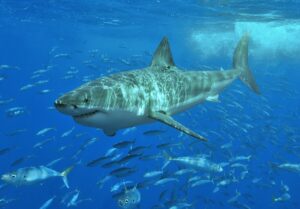
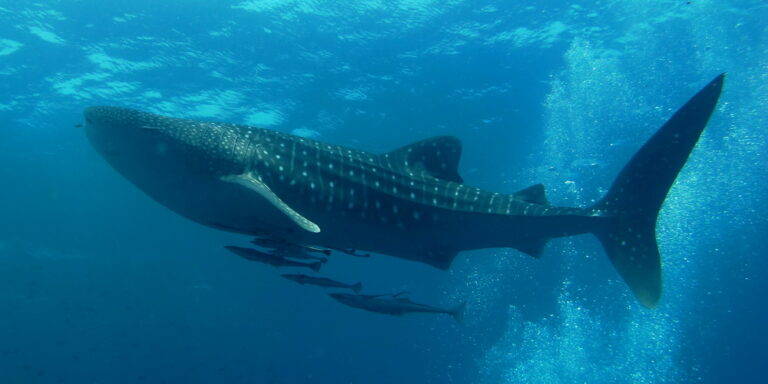
The whale shark is a gentle giant that feeds on plankton. It migrates long distances and gathers at predictable sites, making it the focus of popular, and when managed well, sustainable wildlife tourism.
Interesting facts
- Despite its size, it is harmless to people.
- It filters thousands of litres of water an hour through its gills.
- Its mouth can be up to about 1.5 m wide.
- Whale sharks gather seasonally at feeding hotspots.
- A female was once found with around 300 embryos inside her.
- Photo-identification databases have catalogued thousands of individuals.
Behaviour
Whale sharks cruise slowly near the surface to feed, sometimes hanging vertically to suck in food.
Breeding and young
Eggs hatch inside the mother, who gives birth to live young; little else is known.
Threats and conservation
Fishing and bycatch, ship strikes and poorly managed tourism.
Where to see it
- Ningaloo Reef, Australia (March–July)
- Isla Holbox, Mexico (June–September)
- Donsol, Philippines
- Tofo, Mozambique
Status source: IUCN Red List. Profile last reviewed September 2026.
Where to see the whale shark
 Madagascar Wildlife Guide: Lemurs, Chameleons and the Best ParksMadagascar's wildlife exists nowhere else on Earth. The parks, seasons and practical tips you need to see lemurs,…
 Swimming with Whale Sharks and Mantas in TofoTofo's warm Indian Ocean waters offer whale sharks, manta rays and migrating humpbacks. How to plan an ocean…
 Swimming with Whale Sharks Responsibly in the PhilippinesThe Philippines offers some of the world's best whale shark encounters, but not all are ethical. Where to…