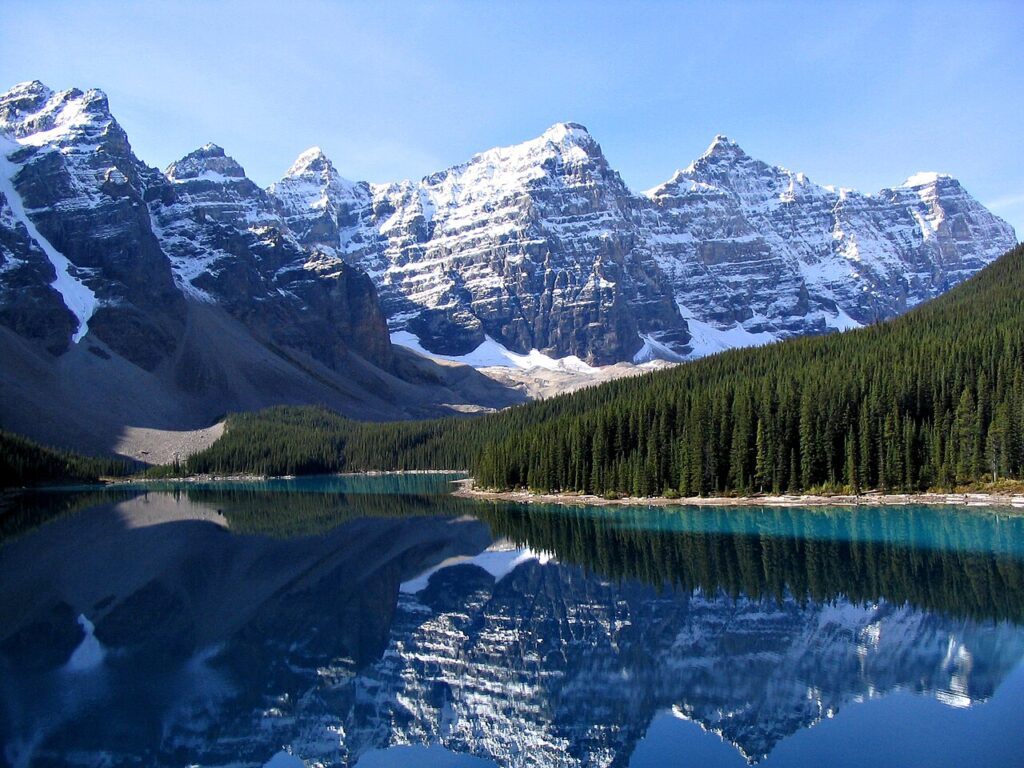
Banff and Jasper national parks, in the Canadian Rockies of Alberta, are part of a UNESCO World Heritage Site famous for turquoise lakes, glaciers and jagged peaks. They are also excellent for wildlife: grizzly and black bears, elk, bighorn sheep, mountain goats, moose and wolves all live here. The Icefields Parkway, the 230-km road that connects the two parks, is one of the world’s great wildlife drives.
At a glance
| Best time | May to June and September to October |
| Getting there | Banff is about 1.5 hours from Calgary; Jasper about 4 hours from Edmonton |
| Time needed | 5 to 8 days |
| Big draws | Bears, elk, bighorn sheep, mountain goats, landscapes |
| Good for | Road trips, families, hikers |
Where to see wildlife
- Bow Valley Parkway (Banff): a quieter road between Banff and Lake Louise, good for elk, black bears and occasionally wolves. Parts may close at night in spring to protect wildlife.
- Icefields Parkway: bighorn sheep, mountain goats at mineral licks, black and grizzly bears in spring.
- Maligne Lake Road (Jasper): moose, bears, elk and caribou (rarely) near Medicine Lake and Maligne Lake.
- Jasper townsite: elk often wander through town, especially in the autumn rut.
- Lake Minnewanka Road (Banff): bighorn sheep.
Wildlife
- Grizzly bears and black bears: most visible in spring, when they feed on new grass along roadsides. See our brown bear and American black bear profiles.
- Elk: common; stay well away during the September rut and the calving season (May to June). See our elk profile.
- Bighorn sheep and mountain goats. See our bighorn sheep and mountain goat profiles.
- Moose, wolves, coyotes, pikas, hoary marmots and wolverines (rare). See our moose and wolverine profiles.
- Woodland caribou: Jasper’s small herds are critically endangered, and some have disappeared. A captive breeding programme aims to restore them.
Wildlife crossings
Banff has more than 40 wildlife crossings, including overpasses and underpasses, built over and under the Trans-Canada Highway. Research here has shown how they reduce collisions and reconnect habitat, and they have become a model for road ecology worldwide.
Jasper wildfire
In July 2024, a major wildfire burned parts of Jasper National Park and the town of Jasper. Some areas and trails may still be affected; check Parks Canada for the latest information.
When to go
- May to June: bears on roadsides, newborn animals, snow on the peaks.
- July to August: busy summer; wildlife is active early and late.
- September to October: the elk rut, autumn colours, fewer visitors.
- Winter: elk, bighorn sheep, and the chance of wolves; some roads close.
Safety
- Stay in your car when you see bears near the road, and do not stop in dangerous places.
- Keep at least 100 metres from bears and wolves, 30 metres from elk, sheep and goats.
- Carry bear spray on trails and hike in groups.
- Never feed wildlife.
Frequently asked questions
Where can I see bears in Banff? Along the Bow Valley Parkway, the Icefields Parkway and near Lake Louise, especially in May and June.
Is the Icefields Parkway good for wildlife? Yes, it is one of the best wildlife drives in North America.
When is elk rutting season? Mid-September to mid-October. Bulls can be aggressive, so keep your distance.
Do I need a park pass? Yes, a Parks Canada pass is required for Banff and Jasper.
Related guides
- Grand Teton wildlife guide
- Great Bear Rainforest: grizzlies and spirit bears
- Denali National Park wildlife guide
- Animal profiles: Bighorn sheep, Mountain goat, Elk (wapiti)
Cover photo: Gorgo, Public domain, via Wikimedia Commons