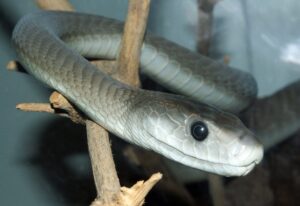
The honey badger, or ratel, is a stocky, powerful member of the weasel family with a reputation as one of the toughest animals on Earth. Its thick skin, strong jaws and bold temperament let it take on venomous snakes, bees and much larger predators.
Interesting facts
- Honey badgers have partial resistance to some snake venoms.
- They raid beehives for larvae and honey, tolerating many stings.
- Despite their name, they are more closely related to weasels and martens than to true badgers.
- Long, strong claws make them fast diggers.
- They are known for their fearlessness and will confront lions and leopards.
- Captive honey badgers have been filmed escaping enclosures by using sticks, rocks and rakes.
Behaviour
Honey badgers are mostly solitary and cover large distances each day while foraging, digging for prey and investigating holes. They are often nocturnal, but active by day in quieter areas.
Breeding and young
Females usually give birth to a single cub in a burrow. The cub stays with its mother for over a year, a long time for a small carnivore, learning to find food.
Threats and conservation
Honey badgers are widespread, but they are persecuted by beekeepers and poultry farmers, and killed in traps and poison baits set for other predators. Bee-friendly hive stands help reduce conflict.
Where to see it
- Kgalagadi Transfrontier Park, South Africa and Botswana
- Central Kalahari, Botswana
- Kruger National Park, South Africa
- Maasai Mara, Kenya (usually at night)
Status source: IUCN Red List. Profile last reviewed September 2026.
 Central Kalahari Game Reserve: Desert Lions and the Green Season