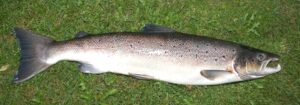
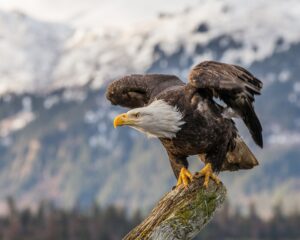
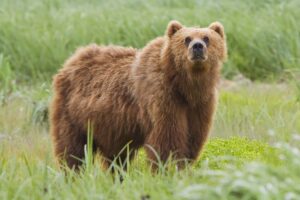
The sockeye salmon is a Pacific salmon famous for its bright red spawning colours. Its huge runs feed bears, eagles and people and carry nutrients from the ocean to rivers and forests.
Interesting facts
- Sockeye usually spend one to three years in a lake before migrating to sea.
- Alaska’s Bristol Bay has the largest sockeye run in the world, with tens of millions of fish in good years.
- Like most Pacific salmon, sockeye die after spawning.
- Nitrogen from salmon carcasses has been found in trees growing along salmon rivers.
- The Adams River run in British Columbia peaks every four years, including in 2026.
- A landlocked form, called kokanee, spends its whole life in lakes.
Behaviour
After years at sea, sockeye return to the river where they hatched, swimming upstream and leaping waterfalls to reach lakes and spawning streams.
Breeding and young
Females dig nests in gravel and lay thousands of eggs, which males fertilise. Both die within weeks of spawning.
Threats and conservation
Warming rivers and oceans, habitat loss, dams and overfishing.
Where to see it
- Brooks Falls, Katmai National Park, Alaska (July), with bears fishing
- Adams River (Tsútswecw Provincial Park), British Columbia, in October
- Bristol Bay, Alaska
- Kurile Lake, Kamchatka, Russia
Status source: IUCN Red List. Profile last reviewed September 2026.
Where to see the sockeye salmon
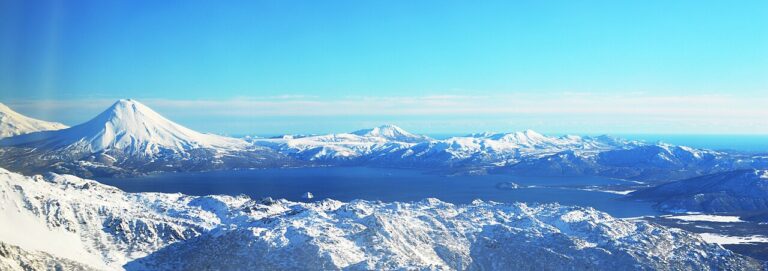 Kamchatka Brown Bears at Kurile LakeKurile Lake hosts one of the largest gatherings of brown bears on Earth. What makes it special, and…
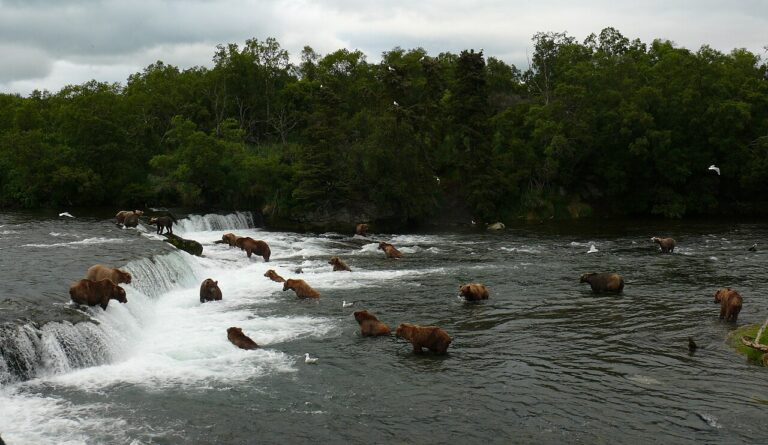 Brooks Falls, Katmai: Watching Bears Catch SalmonAt Brooks Falls, brown bears stand at the lip of a waterfall and catch leaping salmon in their…
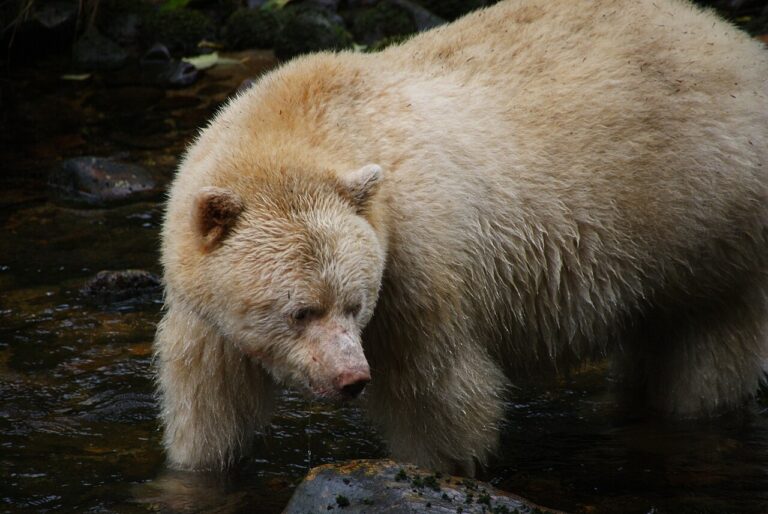 Great Bear Rainforest: Grizzlies and Spirit BearsThe Great Bear Rainforest is home to the rare white spirit bear, grizzlies fishing for salmon and coastal…