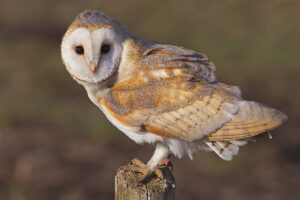
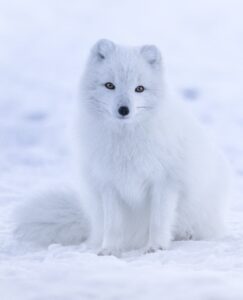
The snowy owl is a large, powerful owl of the Arctic tundra. Its life is tied to the boom-and-bust cycles of lemmings. It is nomadic, moving across the Arctic to wherever prey is plentiful.
Interesting facts
- Males become almost pure white with age; females and young have dark barring.
- Unlike most owls, snowy owls hunt by day, especially during the 24-hour Arctic summer daylight.
- Thick feathers cover their legs and feet.
- In lemming boom years, a pair may raise up to about 11 chicks; in poor years they may not breed at all.
- Some years, large numbers move far south in winter, an event called an irruption.
- The snowy owl was listed as Vulnerable in 2017 after evidence of population decline.
Behaviour
Snowy owls hunt from low perches or the ground, watching for movement. They are fiercely territorial when nesting and will attack Arctic foxes and even wolves that approach.
Breeding and young
Nests are simple scrapes on raised ground on the tundra. Females lay 3 to 11 eggs, which hatch over several days, so chicks in a brood vary in size.
Threats and conservation
Climate change affecting lemming cycles and tundra habitat, collisions with vehicles and aircraft, and electrocution.
Where to see it
- Utqiaġvik (Barrow), Alaska (summer)
- Southern Canada and northern US prairies and coasts in winter irruption years
- Northern Scandinavia
Status source: IUCN Red List. Profile last reviewed September 2026.
Where to see the snowy owl
 Churchill Polar Bears Guide: Seeing Polar Bears in ManitobaEvery autumn, polar bears gather near Churchill waiting for Hudson Bay to freeze. How to see them safely,…
 Varanger: Arctic Birding in NorwayNorway's far north-east corner offers Arctic birds that are hard to find anywhere else in Europe. When to…