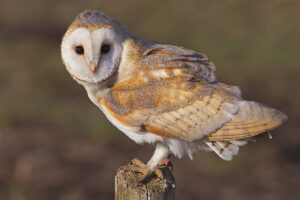
The great horned owl is a large, powerful owl found across most of the Americas. Adaptable and fierce, it thrives in habitats from Arctic forests to deserts and city parks.
Interesting facts
- Its ‘horns’ are tufts of feathers, not ears.
- It has a very powerful grip and can kill prey larger than itself.
- Great horned owls start nesting in mid-winter, often in old nests of hawks or crows.
- Their deep hoots are a classic night sound across the Americas.
- Their eyes are fixed in place, so they turn their heads to look around.
- They are found in more habitats than almost any other bird in the Americas.
Behaviour
Great horned owls hunt mostly at night, waiting on a perch before swooping silently onto prey. Pairs defend territories year-round and duet with deep hoots.
Breeding and young
Females lay one to four eggs, usually in late winter. Incubation takes about a month. Owlets leave the nest after about six weeks, often before they can fly well, and are cared for by their parents for months.
Threats and conservation
The species is widespread and common. Threats include collisions with vehicles, electrocution, poisoning and illegal shooting.
Where to see it
- Yellowstone and other national parks in North America
- City parks such as Central Park, New York
- Deserts of the southwestern United States
- Listen for their hoots on winter nights
Status source: IUCN Red List. Profile last reviewed September 2026.