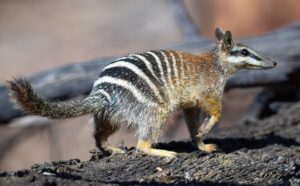
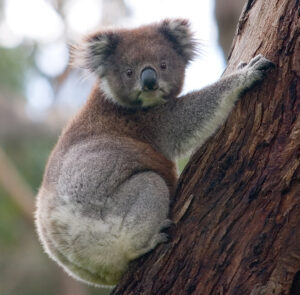
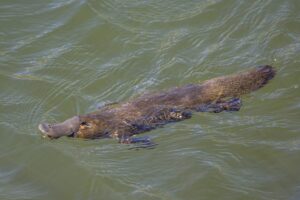
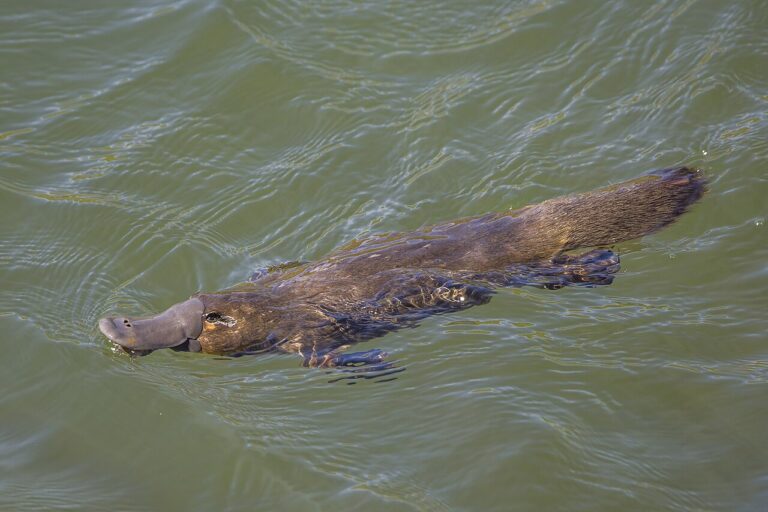
The short-beaked echidna is a spiny, egg-laying mammal found across Australia and New Guinea. Along with the platypus, it belongs to the monotremes, an ancient group of mammals that lay eggs.
Interesting facts
- A baby echidna is called a puggle.
- Echidnas have electroreceptors in their beak, which may help them detect prey.
- Their long, sticky tongue can extend about 15–18 cm.
- In winter, a line of up to ten males may follow a female for days, forming an ‘echidna train’.
- It is Australia’s most widespread native mammal.
- Echidnas have a low body temperature for a mammal, about 32 °C.
Behaviour
Echidnas are solitary and can be active by day or night, depending on temperature. When threatened, they curl into a spiky ball or dig straight down into the soil until only spines show.
Breeding and young
About three weeks after mating, the female lays one egg into her pouch. It hatches after about 10 days, and the puggle stays in the pouch until its spines develop, then is left in a burrow and visited for feeding.
Threats and conservation
Echidnas are widespread and common. Local threats include road deaths, predation by foxes and dogs, and habitat loss.
Where to see it
- Kangaroo Island, South Australia
- Maria Island and Freycinet National Park, Tasmania
- Wilsons Promontory National Park, Victoria
- Bush walks almost anywhere in Australia
Status source: IUCN Red List. Profile last reviewed September 2026.
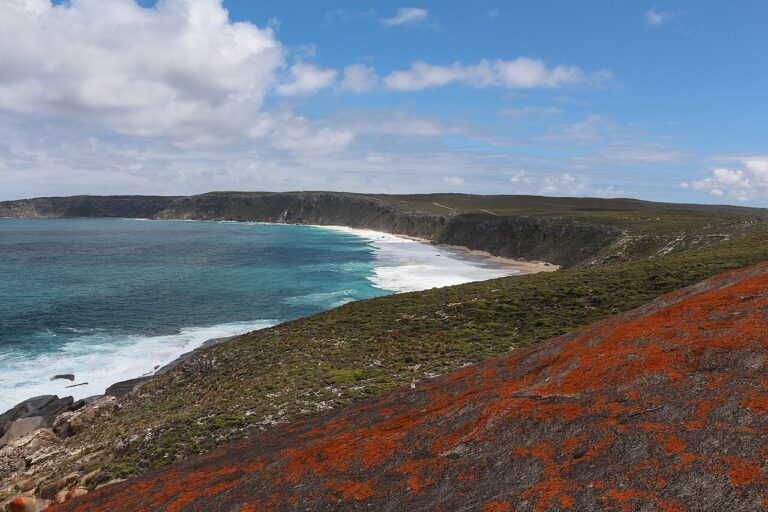 Kangaroo Island Wildlife Guide
 Where to See a Platypus in the Wild