Mudskippers are amphibious fish of mangroves and mudflats. They are superbly adapted to life between the tides, spending as much time out of water as in it.
Interesting facts
- They breathe through their skin and the lining of their mouth when out of water.
- They keep water in their gill chambers, like carrying a scuba tank in reverse.
- Their eyes sit on top of their heads and can be pulled down into their sockets to moisten them, a kind of blinking.
- Males leap into the air and flare their fins to attract females.
- They dig burrows in the mud and store air inside for their eggs.
- They are studied to understand how early animals moved from water to land.
Behaviour
Mudskippers are active at low tide, feeding and defending small territories on the mud. At high tide, they shelter in burrows or climb mangrove roots.
Breeding and young
Males dig burrows and court females with displays. Eggs are laid in an air chamber inside the burrow, which the male guards.
Threats and conservation
Loss of mangroves and pollution of coastal mudflats.
Where to see it
- Sungei Buloh Wetland Reserve, Singapore
- Sundarbans, India and Bangladesh
- Mangroves around Darwin, Australia
- Kuala Selangor Nature Park, Malaysia
Status source: IUCN Red List. Profile last reviewed September 2026.
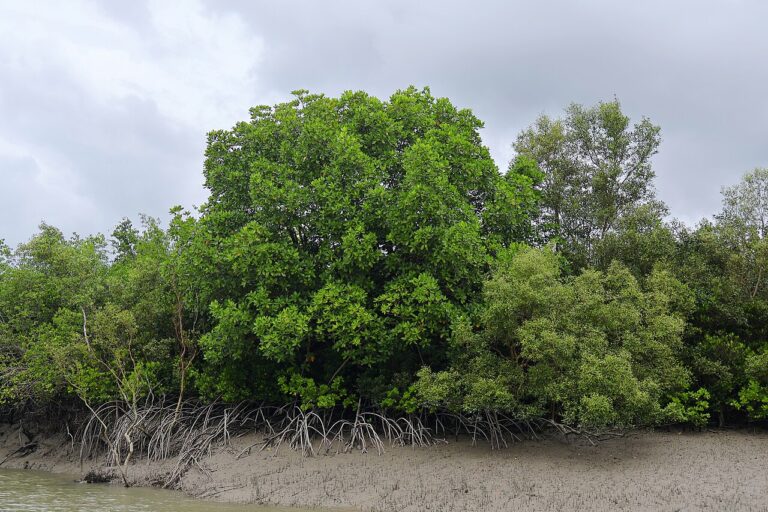 The Sundarbans: Tigers of the Mangroves