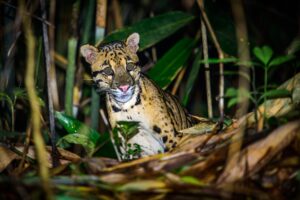
The fishing cat is a medium-sized wild cat of South and Southeast Asia’s wetlands. It is one of the few cats that loves water, and a key indicator of healthy marshes and mangroves.
Interesting facts
- It scoops fish out of the water with its paws or dives in after them.
- The fishing cat is the state animal of West Bengal, India.
- Its short tail may act like a rudder when swimming.
- About twice the size of a domestic cat, it is stocky and powerful.
- Fishing cats live in Colombo, Sri Lanka, in urban wetlands.
- Wetland loss has made it one of Asia’s most threatened small cats.
Behaviour
Fishing cats are solitary and mostly nocturnal. They crouch at the water’s edge and tap the surface to lure fish, then pounce. They are strong swimmers and can travel long distances along waterways.
Breeding and young
After about 63–70 days, females give birth to two or three kittens in a dense thicket or reedbed. Kittens start eating solid food at about two months.
Threats and conservation
Draining and conversion of wetlands for farming, aquaculture and development, killing by fishermen and farmers, and road deaths.
Where to see it
- Chilika Lake, Odisha, India
- Sundarbans, India and Bangladesh
- Koshi Tappu Wildlife Reserve and Chitwan, Nepal
- Urban wetlands of Colombo, Sri Lanka (very rarely seen)
Status source: IUCN Red List. Profile last reviewed September 2026.
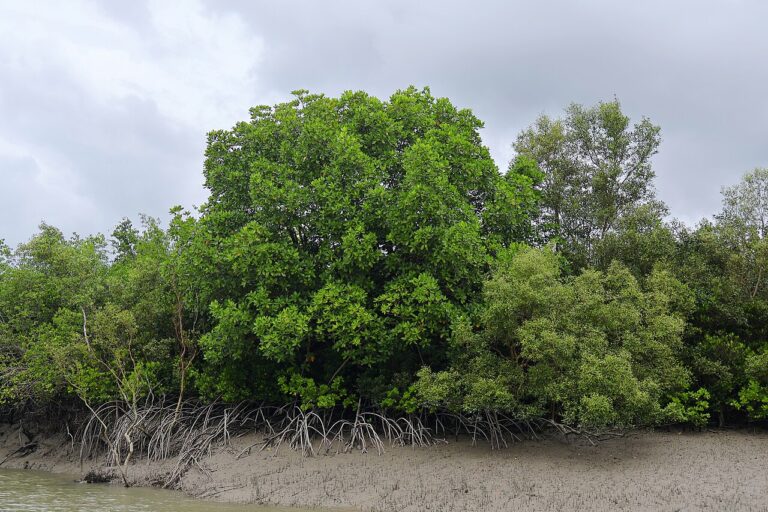 The Sundarbans: Tigers of the Mangroves