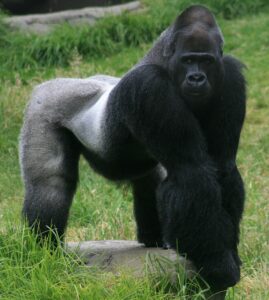
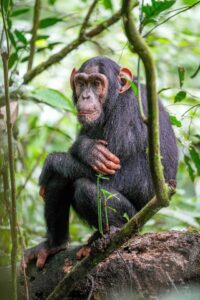
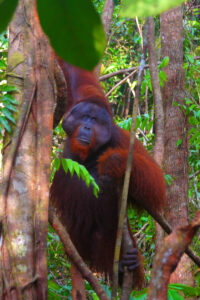
The mountain gorilla is a subspecies of the eastern gorilla living in two small populations in the mountains of East-Central Africa. Its recovery, driven by strict protection, veterinary care and well-managed tourism, is one of conservation’s greatest successes. Dian Fossey’s research in the 1960s–80s drew world attention to its plight.
Interesting facts
- Mature males are called silverbacks because of the silver hair that develops on their backs.
- A silverback can be around ten times stronger than an adult man.
- Gorillas beat their chests to communicate size and strength; the sound can carry over 1 km.
- They build nests of vegetation on the ground or in trees to sleep in each night.
- Gorilla tourism funds conservation and local communities in Rwanda and Uganda.
- Mountain gorillas were moved from Critically Endangered to Endangered in 2018.
Behaviour
Gorillas live in groups of about 5 to 30, usually led by a dominant silverback who decides where the group travels and protects it. They are generally calm and spend most of the day feeding and resting.
Breeding and young
Females give birth to a single infant after about eight and a half months, typically every four years. Infants ride on their mothers’ backs and are weaned at three to four years.
Threats and conservation
Small population size, habitat loss, snares set for other animals, human diseases, and political instability in the region.
Where to see it
- Volcanoes National Park, Rwanda
- Bwindi Impenetrable National Park, Uganda
- Mgahinga Gorilla National Park, Uganda
- Virunga National Park, DR Congo
Status source: IUCN Red List. Profile last reviewed September 2026.
Where to see the mountain gorilla
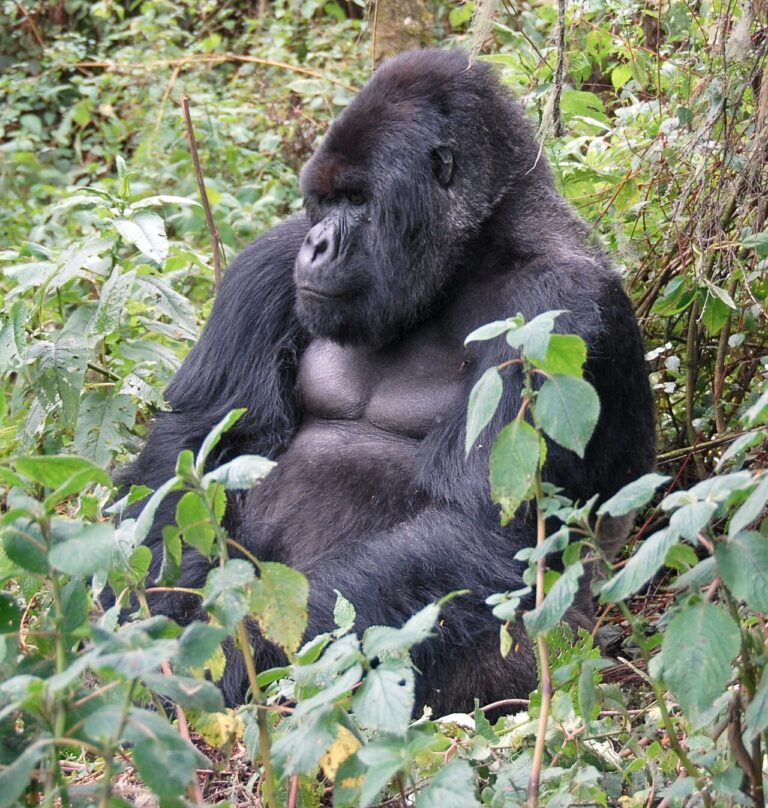 Gorilla Trekking in Uganda vs Rwanda: Permits, Costs and TipsUganda or Rwanda for mountain gorillas? A clear comparison of permits, parks, difficulty, logistics and costs, plus what…
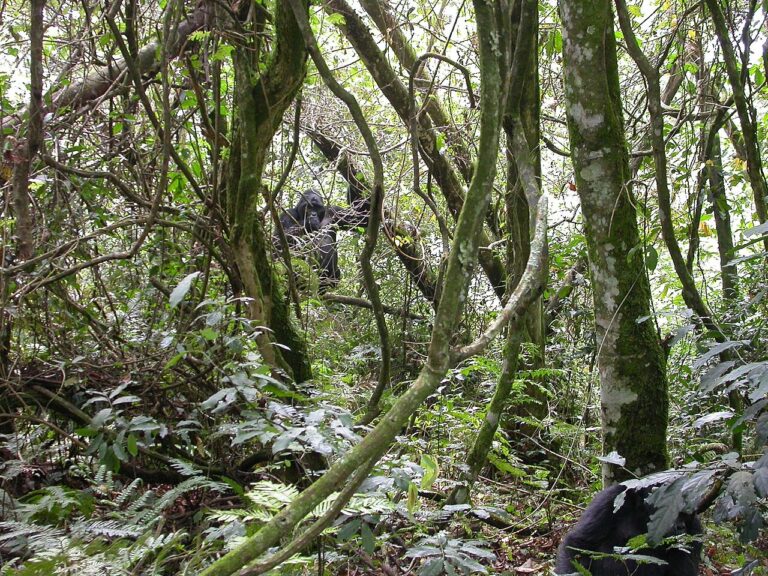 Bwindi Impenetrable Forest: Complete Gorilla Trekking GuideBwindi is home to almost half the world's mountain gorillas. How permits work, which sector to choose, what…
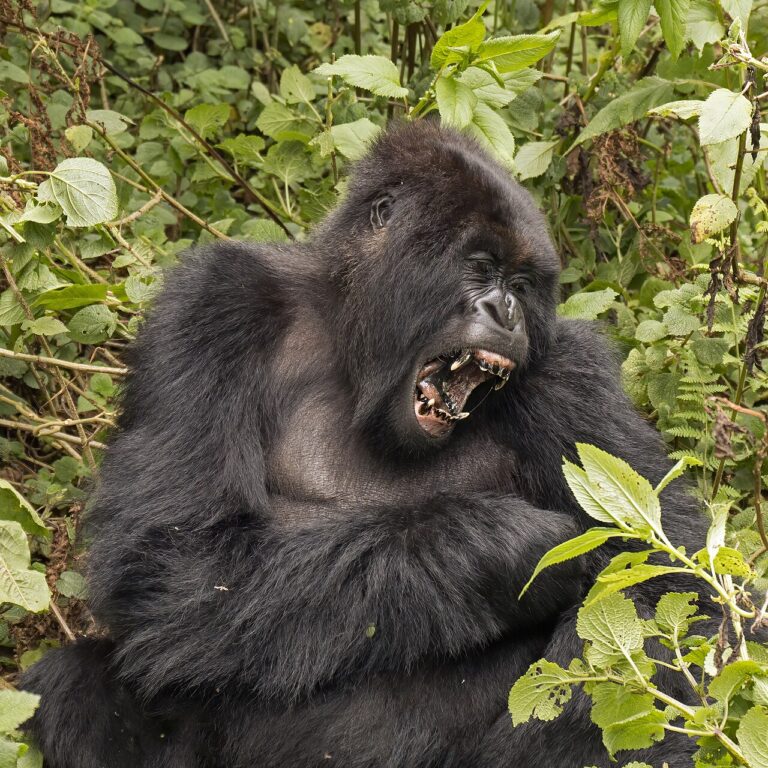 Volcanoes National Park: Gorillas and Golden MonkeysJust a few hours from Kigali, Rwanda's Volcanoes National Park offers mountain gorillas, golden monkeys and the legacy…