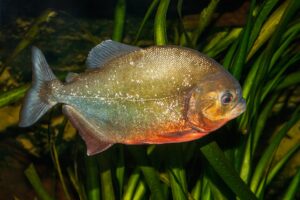
The electric eel is a long, dark fish of South American rivers that can generate powerful electric shocks. It uses electricity to hunt, defend itself and sense its surroundings in muddy water.
Interesting facts
- Despite its name, the electric eel is not a true eel but a knifefish, more closely related to catfish.
- About 80 percent of its body is taken up by organs that produce electricity.
- It breathes air, rising to the surface roughly every 10 minutes.
- Electric eels can leap out of the water to shock animals that threaten them.
- They use weak electric signals to navigate and find prey in murky water.
- In 2019, scientists split the electric eel into three species.
Behaviour
Electric eels are mostly nocturnal. They use low-voltage pulses to locate prey, then stun it with high-voltage shocks. Researchers have seen groups of one species hunting together, herding fish into tight balls before shocking them.
Breeding and young
Males build nests from saliva foam in the dry season, where females lay their eggs. Males guard the nest and young.
Threats and conservation
The species is widespread. Local threats include dams, pollution and habitat loss.
Where to see it
- Amazon rivers in Brazil and Peru (rarely seen by visitors)
- Orinoco basin, Venezuela
- Public aquariums worldwide
- Never touch one in the wild
Status source: IUCN Red List. Profile last reviewed September 2026.