The saiga is a small, strange-looking antelope of the Central Asian steppe. It has survived dramatic population crashes and made one of the most remarkable comebacks of any large mammal.
Interesting facts
- In 2015, about 200,000 saigas, over half the world’s population, died within weeks from a bacterial infection.
- Saigas have recovered from fewer than 50,000 in the early 2000s to well over a million in Kazakhstan.
- Only males have horns, which have been heavily poached for traditional medicine.
- Saigas roamed alongside woolly mammoths during the Ice Age.
- Females give birth together in huge calving aggregations.
- Many males die after the exhausting winter rut.
Behaviour
Saigas live in herds that migrate hundreds of kilometres between summer and winter pastures. During the rut, males fight fiercely and gather harems.
Breeding and young
In spring, females gather to give birth, often to twins, within a few days. Calves hide in the grass during their first days.
Threats and conservation
Poaching for horns, disease outbreaks linked to heat and humidity, harsh winters, fences and roads blocking migration, and conflict with farmers as numbers grow.
Where to see it
- Altyn Dala region, Kazakhstan
- Chernye Zemli Nature Reserve, Kalmykia, Russia
- Sharga and Mankhan, western Mongolia
- Specialist steppe wildlife tours
Status source: IUCN Red List. Profile last reviewed September 2026.
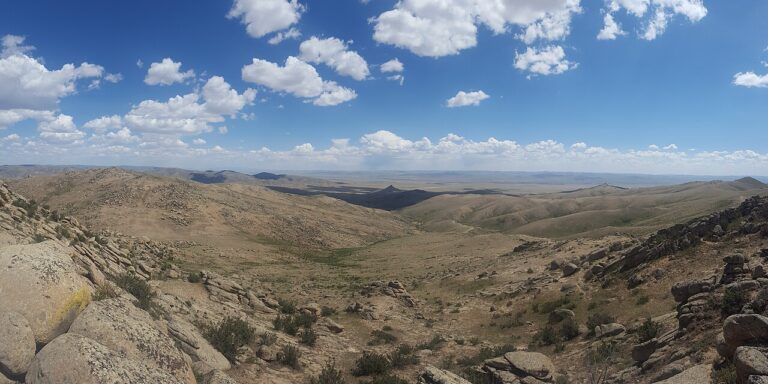 Mongolia Wildlife: Przewalski’s Horses, Snow Leopards and Steppe Eagles